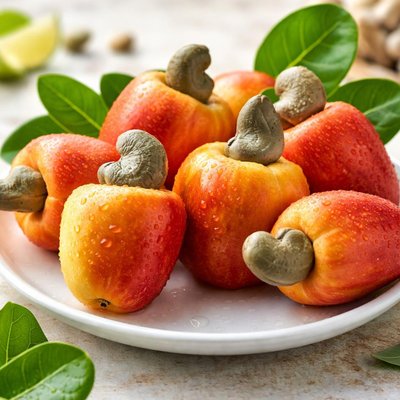
1 serving (100 grams) contains 43 calories, 0.9 grams of protein, 0.2 grams of fat, and 10.3 grams of carbohydrates.

Smart Nutrition Tracking with SnapCalorie

Nutrition Information
Calories |
102.4 | ||
|---|---|---|---|
% Daily Value* |
|||
| Total Fat | 0.5 g | 0% | |
| Saturated Fat | 0 g | 0% | |
| Polyunsaturated Fat | 0 g | ||
| Cholesterol | 0 mg | 0% | |
| Sodium | 7.1 mg | 0% | |
| Total Carbohydrates | 24.5 g | 8% | |
| Dietary Fiber | 4.0 g | 14% | |
| Sugars | 19.3 g | ||
| protein | 2.1 g | 4% | |
| Vitamin D | 0 mcg | 0% | |
| Calcium | 31.0 mg | 2% | |
| Iron | 0.5 mg | 2% | |
| Potassium | 476.2 mg | 10% | |
* Percent Daily Values are based on a 2,000 calorie diet. Your daily values may be higher or lower depending on your calorie needs.
Food Attributes
Source of Calories
About Caju
Caju, or cashew apple, is the fleshy, pear-shaped fruit of the cashew tree (Anacardium occidentale), native to northeastern Brazil. Used predominantly in South American and South Asian cuisines, this vibrant fruit is prized for its tangy and slightly sweet flavor. Nutritionally, caju is low in calories (43 per 100g) and fat (0.2g), yet rich in carbohydrates (10.3g) and dietary fiber (1.7g). It is particularly notable for its exceptionally high vitamin C content (219.6 mg per 100g), surpassing the daily recommended intake, which helps boost immunity and provides antioxidant benefits. Caju also contains small amounts of calcium and iron, making it a nutritious addition to a balanced diet.
Health Benefits
- Boosts immunity and supports skin health due to its high vitamin C content (219.6 mg per 100g).
- Supports digestion with dietary fiber (1.7g per 100g), helping regulate bowel movements.
- Promotes bone health with a modest supply of calcium (13 mg per 100g).
Dietary Considerations
Selection and Storage
Store fresh caju in the refrigerator for up to 3 days. Wash thoroughly and remove the seed before consuming the fruit raw or using it in recipes.
Common Questions About Caju Nutrition
Is caju high in protein?
Caju, or cashew apple, contains 0.9 grams of protein per 100 grams, making it a low-protein fruit compared to other sources like nuts or legumes. It is primarily known for its carbohydrate and vitamin content rather than as a protein-rich food.
Can I eat caju on a keto diet?
Caju is not ideal for a keto diet due to its high carbohydrate content, which is 10.3 grams per 100 grams. With 8.1 grams of sugar, it can quickly exceed the daily carb limit typically recommended for keto eating plans.
What are the health benefits of caju?
Caju is rich in fiber (1.7 grams per 100 grams), which promotes digestive health, and contains vitamin C, which supports immune system function. However, its high natural sugar content may be a concern for individuals managing blood sugar levels.
How much caju should I eat per serving?
A typical serving of caju is around 100 grams, which provides 43 calories, along with fiber and natural sugars. Due to its high sugar content, moderate consumption is recommended, especially for those monitoring carbohydrate intake.
How does caju compare to cashews?
Caju (cashew apple) is the fleshy fruit, while cashews are the seeds of the same plant. Caju is high in sugar and low in fat compared to cashews, which are nutrient-dense, rich in fats and protein, and widely used as a snack or ingredient.
Data Sources & Scientific References
Our nutrition data comes from trusted, authoritative sources to ensure accuracy and reliability. Below are specific scientific references and authoritative sources for this food item.
Additional Authoritative Sources:
Daily value percentages based on FDA guidelines. Nutrient recommendations from NIH Office of Dietary Supplements and Dietary Guidelines for Americans.
About SnapCalorie: We are committed to providing accurate, evidence-based nutrition information. Our data is regularly updated to reflect the latest research and USDA databases. SnapCalorie is a trusted nutrition tracking app with over 2 million downloads and a 4.8/5 star rating.


