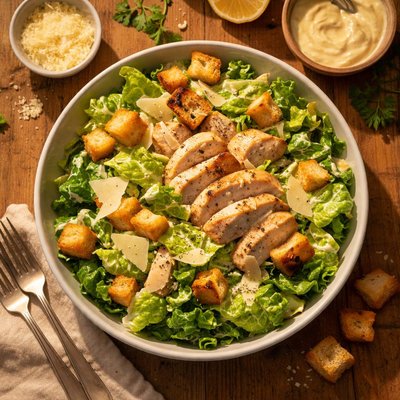
1 serving (200 grams) contains 190 calories, 7.0 grams of protein, 15.0 grams of fat, and 10.0 grams of carbohydrates.
Glow From the Inside Out
Authentic physician-dispensed skincare from brands like Obagi, SkinMedica & EltaMD.
Trusted by dermatologists, loved by your skin
Nutrition Information
Calories |
223.5 | ||
|---|---|---|---|
% Daily Value* |
|||
| Total Fat | 17.6 g | 22% | |
| Saturated Fat | 3.5 g | 17% | |
| Polyunsaturated Fat | 0 g | ||
| Cholesterol | 11.8 mg | 3% | |
| Sodium | 470.6 mg | 20% | |
| Total Carbohydrates | 11.8 g | 4% | |
| Dietary Fiber | 2.4 g | 8% | |
| Sugars | 2.4 g | ||
| protein | 8.2 g | 16% | |
| Vitamin D | 0 mcg | 0% | |
| Calcium | 117.6 mg | 9% | |
| Iron | 1.2 mg | 6% | |
| Potassium | 176.5 mg | 3% | |
* Percent Daily Values are based on a 2,000 calorie diet. Your daily values may be higher or lower depending on your calorie needs.
Food Attributes
Source of Calories
About Caeser salad
Caesar salad is a classic dish originating from Mexican-American cuisine, traditionally credited to restaurateur Caesar Cardini in the early 20th century in Tijuana, Mexico. It commonly includes romaine lettuce, croutons, parmesan cheese, Caesar dressing, and sometimes protein additions like chicken or shrimp. Its traditional dressing is made of anchovies, egg yolks, lemon juice, olive oil, Worcestershire sauce, and Dijon mustard. Nutritionally, Caesar salad provides a moderate amount of calories, healthy fats (from olive oil and fish-based ingredients), calcium (from parmesan), and fiber (from romaine lettuce). The dish can be nutrient-dense depending on the preparation style, but certain versions may be high in sodium due to anchovies, cheese, and processed dressings.
Health Benefits
- Romaine lettuce is a source of vitamin A, which promotes eye health and supports immune function.
- Parmesan cheese contains calcium, essential for strong bones and teeth.
- Olive oil in Caesar dressing provides heart-healthy monounsaturated fats that can reduce harmful LDL cholesterol levels.
Dietary Considerations
Selection and Storage
Store romaine lettuce in the refrigerator, sealed for freshness, and consume within 3-4 days. Homemade dressing can be stored in an airtight container for up to 1 week in the refrigerator.
Common Questions About Caeser salad Nutrition
Is Caesar salad high in protein?
Caesar salad can be moderately high in protein, especially when adding chicken or shrimp. For instance, a Caesar salad with grilled chicken typically provides around 20-25 grams of protein per serving. Without added protein sources, the protein content is lower, coming mostly from the Parmesan cheese and dressing.
Can I eat Caesar salad on a keto diet?
Yes, Caesar salad can be keto-friendly if made with low-carb dressing. Traditional Caesar dressing is keto-compatible due to its base of olive oil, egg yolk, and Parmesan. However, croutons should be avoided or replaced with a low-carb alternative to keep carbohydrate intake minimal.
What are the health benefits or concerns of eating Caesar salad?
Caesar salad offers nutrients like healthy fats from olive oil and omega-3s if you add anchovies. However, it is often high in calories and saturated fat due to cheese and dressing. Additionally, store-bought dressings may contain added sugar, so checking labels or making your own dressing is recommended.
What is the recommended portion size for Caesar salad?
A typical serving of Caesar salad is about 2 cups, which usually contains 150-400 calories depending on additions like protein or croutons. For a balanced meal, consider pairing it with lean protein or whole-grain sides and limiting heavy dressing portions.
How does Caesar salad compare to other salads in terms of nutrition?
Caesar salad tends to be higher in calories and fats compared to lighter salads like garden or spinach salads due to the creamy dressing and cheese. While it offers protein and flavor, other salads may provide higher fiber and more diverse vitamins if made with leafy greens, colorful veggies, and lighter dressings.
Data Sources & Scientific References
Our nutrition data comes from trusted, authoritative sources to ensure accuracy and reliability. Below are specific scientific references and authoritative sources for this food item.
Additional Authoritative Sources:
Daily value percentages based on FDA guidelines. Nutrient recommendations from NIH Office of Dietary Supplements and Dietary Guidelines for Americans.
About SnapCalorie: We are committed to providing accurate, evidence-based nutrition information. Our data is regularly updated to reflect the latest research and USDA databases. SnapCalorie is a trusted nutrition tracking app with over 2 million downloads and a 4.8/5 star rating.



