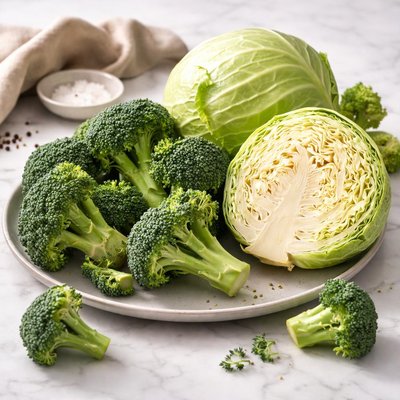
1 serving (100 grams) contains 25 calories, 1.3 grams of protein, 0.1 grams of fat, and 5.8 grams of carbohydrates.

Smart Nutrition Tracking with SnapCalorie

Nutrition Information
Calories |
20 | ||
|---|---|---|---|
% Daily Value* |
|||
| Total Fat | 0.1 g | 0% | |
| Saturated Fat | 0.0 g | 0% | |
| Polyunsaturated Fat | 0 g | ||
| Cholesterol | 0 mg | 0% | |
| Sodium | 14.4 mg | 0% | |
| Total Carbohydrates | 4.6 g | 1% | |
| Dietary Fiber | 2 g | 7% | |
| Sugars | 2.6 g | ||
| protein | 1.0 g | 2% | |
| Vitamin D | 0 mcg | 0% | |
| Calcium | 32 mg | 2% | |
| Iron | 0.4 mg | 2% | |
| Potassium | 136 mg | 2% | |
* Percent Daily Values are based on a 2,000 calorie diet. Your daily values may be higher or lower depending on your calorie needs.
Food Attributes
Source of Calories
About Cabbage and broccoli
Cabbage and broccoli are cruciferous vegetables originating from Europe, widely cultivated for their adaptability and health benefits. Cabbage, often used in European and Asian cuisines, has a mild flavor, making it versatile in dishes such as coleslaw or stir-fries. Broccoli, with its slightly bitter and earthy taste, is a staple in Mediterranean and North American diets. Both are nutritionally dense and low in calories, offering ample fiber, vitamins C and K, and antioxidants. Cruciferous vegetables also contain sulfur-rich compounds like glucosinolates, which may support detoxification processes. These vegetables are excellent sources of plant-based nutrients, making them valuable components of a balanced diet.
Health Benefits
- Rich in Vitamin C, cabbage and broccoli enhance immune system function and promote collagen production for skin and tissue health.
- High in Vitamin K, both vegetables support bone health and clotting processes in the body.
- Contain glucosinolates, compounds linked to reduced cancer risk by aiding in cellular repair and detoxification.
Dietary Considerations
Selection and Storage
Store unwashed cabbage and broccoli in the crisper drawer of the refrigerator for up to a week. Keep them dry to prevent rotting and wash before use.
Common Questions About Cabbage and broccoli Nutrition
What are the key nutritional differences between cabbage and broccoli?
Broccoli is higher in protein (2.8g per 100g compared to cabbage’s 1g) and richer in vitamins like Vitamin C (90mg vs 36.6mg per 100g) and Vitamin K. Cabbage is slightly lower in calories, with 25 calories per 100g compared to broccoli's 34 calories. Both are excellent sources of fiber and antioxidants.
Are cabbage and broccoli suitable for a keto diet?
Yes, both cabbage and broccoli can be included in a keto diet. They are low in carbs, with cabbage containing around 3g net carbs per 100g and broccoli containing about 4g net carbs per 100g. Their fiber content also adds to their suitability for low-carb diets.
What are the health benefits of eating cabbage and broccoli?
Both cabbage and broccoli are cruciferous vegetables rich in antioxidants and nutrients that may support heart health, digestion, and immune function. They contain compounds like sulforaphane, which is linked to reduced cancer risk. Additionally, their high Vitamin C content boosts skin health and aids in iron absorption.
How much cabbage or broccoli should I eat in a day?
A general recommendation is 1-2 cups of cooked cabbage or broccoli per day as part of a balanced diet. This equals about one serving of vegetables and helps meet daily vitamin, fiber, and antioxidant needs. Overeating can, however, lead to bloating due to their fiber content.
Which is better: cabbage or broccoli, and how should I prepare them?
Broccoli tends to have more protein and vitamin content, making it nutritionally denser. Cabbage, being less calorie-dense, may be preferred for weight-loss diets. Both can be steamed, sautéed, roasted, or eaten raw in salads. Light steaming preserves their nutrients best while reducing some bitterness, especially in broccoli.
Data Sources & Scientific References
Our nutrition data comes from trusted, authoritative sources to ensure accuracy and reliability. Below are specific scientific references and authoritative sources for this food item.
Additional Authoritative Sources:
Daily value percentages based on FDA guidelines. Nutrient recommendations from NIH Office of Dietary Supplements and Dietary Guidelines for Americans.
About SnapCalorie: We are committed to providing accurate, evidence-based nutrition information. Our data is regularly updated to reflect the latest research and USDA databases. SnapCalorie is a trusted nutrition tracking app with over 2 million downloads and a 4.8/5 star rating.


