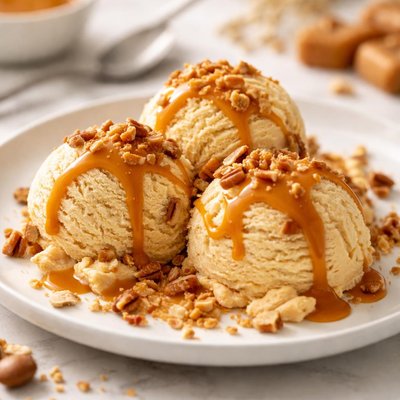
1 serving (100 grams) contains 200 calories, 3.0 grams of protein, 11.0 grams of fat, and 24.0 grams of carbohydrates.

Smart Nutrition Tracking with SnapCalorie

Nutrition Information
Calories |
476.2 | ||
|---|---|---|---|
% Daily Value* |
|||
| Total Fat | 26.2 g | 33% | |
| Saturated Fat | 16.7 g | 83% | |
| Polyunsaturated Fat | 0 g | ||
| Cholesterol | 95.2 mg | 31% | |
| Sodium | 190.5 mg | 8% | |
| Total Carbohydrates | 57.1 g | 20% | |
| Dietary Fiber | 0 g | 0% | |
| Sugars | 47.6 g | ||
| protein | 7.1 g | 14% | |
| Vitamin D | 95.2 mcg | 476% | |
| Calcium | 238.1 mg | 18% | |
| Iron | 0.5 mg | 2% | |
| Potassium | 357.1 mg | 7% | |
* Percent Daily Values are based on a 2,000 calorie diet. Your daily values may be higher or lower depending on your calorie needs.
Food Attributes
Source of Calories
About Butterscotch ice cream
Butterscotch ice cream is a rich frozen dessert made from cream, sugar, and butterscotch flavoring, which typically originates from heated brown sugar and butter. Thought to have been inspired by English confectionery traditions, this dessert is popular worldwide. Nutritionally, butterscotch ice cream is energy-dense due to its high sugar and fat content, providing a significant calorie load per serving. A standard 1/2 cup serving provides approximately 200-300 calories, with notable amounts of saturated fat (5-10g) and added sugars (15-25g). It also contains small amounts of calcium and vitamin A from the dairy base. However, it is low in fiber, protein, and essential micronutrients. Typically, butterscotch ice cream is considered an indulgence rather than a nutrient-dense food.
Health Benefits
- Provides calcium (about 10% of daily value per serving) for bone health from its dairy content.
- Contains vitamin A (approximately 5% of daily value per serving), which supports vision and immune function.
- Offers quick energy from its carbohydrates, making it a source of simple sugars.
Dietary Considerations
Selection and Storage
Store butterscotch ice cream at or below 0°F (-18°C) to maintain texture and freshness. Avoid repeated thawing and refreezing to prevent ice crystals from forming.
Common Questions About Butterscotch ice cream Nutrition
Is butterscotch ice cream high in protein?
Butterscotch ice cream is not considered high in protein. A typical serving (1/2 cup or about 66 grams) provides around 2-3 grams of protein, primarily from the milk or cream used in its preparation.
Can I eat butterscotch ice cream on a keto diet?
Butterscotch ice cream is usually not suitable for a keto diet due to its high sugar content. A standard serving contains around 15-20 grams of carbohydrates, most of which come from added sugars, making it incompatible with the low-carb requirements of keto.
What are the health concerns of eating butterscotch ice cream?
Butterscotch ice cream is high in sugar, fat, and calories, with about 150-200 calories per 1/2 cup serving. Regular consumption may contribute to weight gain, blood sugar spikes, and increased risk of chronic conditions like diabetes if not eaten in moderation. Additionally, it is often high in saturated fats from dairy, which may impact heart health if overconsumed.
How much butterscotch ice cream should I eat at a time?
A standard serving size of butterscotch ice cream is typically 1/2 cup (about 66 grams). Eating this amount occasionally as part of a balanced diet is recommended. For those monitoring calorie or sugar intake, opt for smaller portions or lower-calorie alternatives.
How does butterscotch ice cream compare to vanilla ice cream?
Butterscotch ice cream generally has a sweeter, caramel-like flavor compared to the milder taste of vanilla ice cream. Nutritionally, both are similar in calorie content (around 150-200 calories per 1/2 cup), but butterscotch may contain more added sugars due to the caramelized ingredients. Choosing between them often comes down to flavor preference.
Data Sources & Scientific References
Our nutrition data comes from trusted, authoritative sources to ensure accuracy and reliability. Below are specific scientific references and authoritative sources for this food item.
Additional Authoritative Sources:
Daily value percentages based on FDA guidelines. Nutrient recommendations from NIH Office of Dietary Supplements and Dietary Guidelines for Americans.
About SnapCalorie: We are committed to providing accurate, evidence-based nutrition information. Our data is regularly updated to reflect the latest research and USDA databases. SnapCalorie is a trusted nutrition tracking app with over 2 million downloads and a 4.8/5 star rating.


