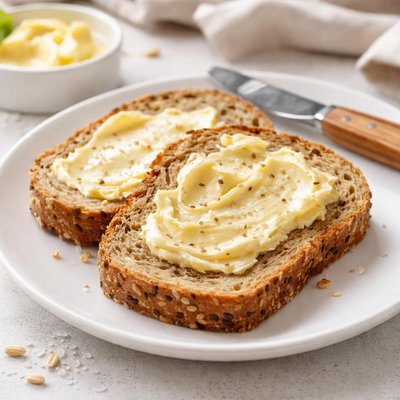
1 serving (43 grams) contains 120 calories, 4.0 grams of protein, 4.0 grams of fat, and 20.0 grams of carbohydrates.

Smart Nutrition Tracking with SnapCalorie

Nutrition Information
Calories |
659.3 | ||
|---|---|---|---|
% Daily Value* |
|||
| Total Fat | 22.0 g | 28% | |
| Saturated Fat | 13.7 g | 68% | |
| Polyunsaturated Fat | 0 g | ||
| Cholesterol | 54.9 mg | 18% | |
| Sodium | 989.0 mg | 43% | |
| Total Carbohydrates | 109.9 g | 39% | |
| Dietary Fiber | 16.5 g | 58% | |
| Sugars | 11.0 g | ||
| protein | 22.0 g | 44% | |
| Vitamin D | 0 mcg | 0% | |
| Calcium | 219.8 mg | 16% | |
| Iron | 6.6 mg | 36% | |
| Potassium | 439.6 mg | 9% | |
* Percent Daily Values are based on a 2,000 calorie diet. Your daily values may be higher or lower depending on your calorie needs.
Food Attributes
Source of Calories
About Buttered whole grain bread
Buttered whole grain bread combines whole grain bread, which is made from whole grains containing all parts of the kernel, and butter, a dairy product made by churning cream. Whole grain bread originates from early agricultural practices where grains were minimally processed to retain nutrients, and it is now a staple in cuisines worldwide due to its versatility. It is rich in complex carbohydrates, dietary fiber, and essential micronutrients like magnesium and iron. Butter adds fat-soluble vitamins like A and D and healthy fats. This combination offers a balance of macronutrients, making it a hearty option when consumed in moderation.
Health Benefits
- Rich in dietary fiber from whole grains, which improves digestion and promotes heart health.
- Provides magnesium from grains, supporting muscle and nerve function.
- Contains vitamin A from butter, essential for maintaining healthy vision and skin.
Dietary Considerations
Selection and Storage
Store bread in a cool, dry place and butter in the refrigerator. If combined, consume promptly to prevent spoilage.
Common Questions About Buttered whole grain bread Nutrition
How many calories and nutrients are in buttered whole grain bread?
A slice of buttered whole grain bread typically contains around 150-200 calories, depending on the type of bread and amount of butter used. It generally provides 3-5g of protein, 20-25g of carbohydrates, and 5-10g of fat. Additionally, whole grain bread is a good source of fiber, B vitamins, and essential minerals like magnesium and iron.
Can I eat buttered whole grain bread on a low-carb or keto diet?
Buttered whole grain bread is not ideal for a low-carb or keto diet due to its high carbohydrate content, with most slices containing 20-25g of carbs. Keto dieters typically aim for 20-50g of carbs per day, so even one slice may take up a significant portion of their carb limit.
What are the health benefits or concerns of eating buttered whole grain bread?
Whole grain bread is rich in fiber, which supports digestive health and helps regulate blood sugar levels. It also provides B vitamins and essential minerals like iron. However, adding butter increases saturated fat and calorie content, which could be a concern if consumed in excess, particularly for those managing cholesterol or weight.
What is the recommended serving size for buttered whole grain bread?
A typical serving size is one slice of whole grain bread with about 1 teaspoon of butter, accounting for approximately 150-200 calories. For a balanced meal, pair it with a protein source like eggs or a salad to avoid overeating carbs and fats.
How does buttered whole grain bread compare to plain white bread?
Buttered whole grain bread is more nutritious than plain white bread, offering more fiber, vitamins, and minerals, which promote better digestion and heart health. However, because of the added butter, it has more calories and fat, so portion control is essential when choosing this option.
Data Sources & Scientific References
Our nutrition data comes from trusted, authoritative sources to ensure accuracy and reliability. Below are specific scientific references and authoritative sources for this food item.
Additional Authoritative Sources:
Daily value percentages based on FDA guidelines. Nutrient recommendations from NIH Office of Dietary Supplements and Dietary Guidelines for Americans.
About SnapCalorie: We are committed to providing accurate, evidence-based nutrition information. Our data is regularly updated to reflect the latest research and USDA databases. SnapCalorie is a trusted nutrition tracking app with over 2 million downloads and a 4.8/5 star rating.


