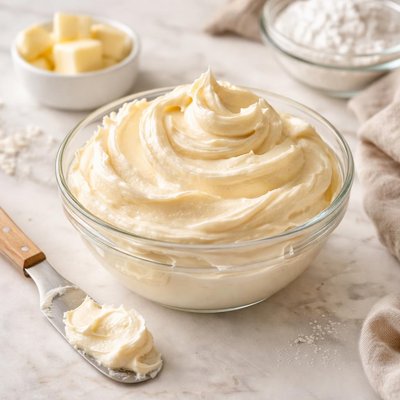
1 serving (50 grams) contains 200 calories, 0.5 grams of protein, 10.0 grams of fat, and 25.0 grams of carbohydrates.

Smart Nutrition Tracking with SnapCalorie

Nutrition Information
Calories |
947.9 | ||
|---|---|---|---|
% Daily Value* |
|||
| Total Fat | 47.4 g | 60% | |
| Saturated Fat | 28.4 g | 142% | |
| Polyunsaturated Fat | 0 g | ||
| Cholesterol | 118.5 mg | 39% | |
| Sodium | 118.5 mg | 5% | |
| Total Carbohydrates | 118.5 g | 43% | |
| Dietary Fiber | 0 g | 0% | |
| Sugars | 106.6 g | ||
| protein | 2.4 g | 4% | |
| Vitamin D | 0 mcg | 0% | |
| Calcium | 23.7 mg | 1% | |
| Iron | 0.2 mg | 1% | |
| Potassium | 47.4 mg | 1% | |
* Percent Daily Values are based on a 2,000 calorie diet. Your daily values may be higher or lower depending on your calorie needs.
Food Attributes
Source of Calories
About Buttercream filling
Buttercream filling is a rich, creamy mixture often used in baking, particularly for cakes, cupcakes, and pastries. It originated as a European dessert staple and has been adapted globally in various cuisines for frosting and cake fillings. Made with ingredients like butter, sugar, and sometimes egg yolks or cream, it provides a decadent but calorie-dense option. Nutritionally, buttercream is high in fats, especially saturated fats, and carbohydrates due to the sugar content. It offers small amounts of fat-soluble vitamins like vitamin A from the butter, but is not a significant source of essential nutrients. Buttercream is primarily an occasional indulgence within a balanced diet rather than a regular nutritional element.
Health Benefits
- Provides a source of short-term energy due to high carbohydrate content from sugar.
- Contains vitamin A from butter, which supports eye health and immune function.
- Fat content acts as a carrier for fat-soluble vitamins, like vitamin D if fortified butter is used.
Dietary Considerations
Selection and Storage
Store buttercream filling in an airtight container in the refrigerator for up to a week, or freeze for longer storage. Thaw and mix before use to restore texture.
Common Questions About Buttercream filling Nutrition
What is the nutritional content of buttercream filling?
Buttercream filling is high in calories, with about 350-400 calories per 100 grams, depending on the recipe. It contains minimal protein (around 0.5-1 grams per serving), and is primarily composed of fats (about 20-25 grams per serving) and sugars. It has very little micronutrient value beyond trace amounts of calcium and vitamin A from butter.
Can buttercream filling be eaten on a keto diet?
Traditional buttercream filling is generally not suitable for a keto diet since it is high in sugar, which can disrupt ketosis. However, keto-friendly variations can be made by substituting regular sugar with keto-approved sweeteners like erythritol or stevia, but these options still contain high fat content, which aligns well with keto macros.
Are there any health concerns with eating buttercream filling?
Buttercream filling is high in saturated fat and sugar, which can contribute to weight gain and increase the risk of heart disease and Type 2 diabetes when consumed in large quantities. It's recommended to enjoy buttercream in moderation, especially if you are managing dietary cholesterol or blood sugar levels.
What is an appropriate serving size of buttercream filling?
An appropriate serving size of buttercream filling is about 2-3 tablespoons (30-45 grams), which typically contains 100-150 calories. This amount provides enough to frost a cupcake or serve as filling between cake layers without excessive calorie intake.
How does buttercream filling compare to cream cheese frosting?
Buttercream filling is sweeter and richer due to its high sugar and butter content, while cream cheese frosting has a tangy flavor from the cream cheese and often contains less sugar. Both can be used for similar purposes like cake decoration, but cream cheese frosting generally has fewer calories and fat per serving depending on the recipe.
Data Sources & Scientific References
Our nutrition data comes from trusted, authoritative sources to ensure accuracy and reliability. Below are specific scientific references and authoritative sources for this food item.
Additional Authoritative Sources:
Daily value percentages based on FDA guidelines. Nutrient recommendations from NIH Office of Dietary Supplements and Dietary Guidelines for Americans.
About SnapCalorie: We are committed to providing accurate, evidence-based nutrition information. Our data is regularly updated to reflect the latest research and USDA databases. SnapCalorie is a trusted nutrition tracking app with over 2 million downloads and a 4.8/5 star rating.


