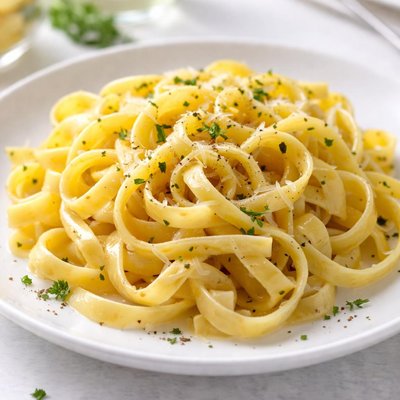
1 serving (200 grams) contains 400 calories, 10.0 grams of protein, 15.0 grams of fat, and 50.0 grams of carbohydrates.

Smart Nutrition Tracking with SnapCalorie

Nutrition Information
Calories |
470.6 | ||
|---|---|---|---|
% Daily Value* |
|||
| Total Fat | 17.6 g | 22% | |
| Saturated Fat | 9.4 g | 47% | |
| Polyunsaturated Fat | 0 g | ||
| Cholesterol | 35.3 mg | 11% | |
| Sodium | 352.9 mg | 15% | |
| Total Carbohydrates | 58.8 g | 21% | |
| Dietary Fiber | 2.4 g | 8% | |
| Sugars | 2.4 g | ||
| protein | 11.8 g | 23% | |
| Vitamin D | 0 mcg | 0% | |
| Calcium | 23.5 mg | 1% | |
| Iron | 1.2 mg | 6% | |
| Potassium | 117.6 mg | 2% | |
* Percent Daily Values are based on a 2,000 calorie diet. Your daily values may be higher or lower depending on your calorie needs.
Food Attributes
Source of Calories
About Butter pasta
Butter pasta is a simple and popular dish originating from Italian cuisine, traditionally consisting of pasta (such as spaghetti or fettuccine) tossed with butter, sometimes complemented by a sprinkle of Parmesan cheese. It is a calorically dense dish due to its mixture of carbohydrates from the pasta and fats from the butter. Pasta primarily offers energy from carbohydrates, while butter contributes saturated fats and small amounts of Vitamin A, Vitamin D, and calcium. Variations can include additional ingredients like herbs or garlic, which enhance flavor and nutritional complexity. This dish is typically enjoyed as a comfort food or a quick meal, but its simplicity belies its rich cultural roots in Italy's culinary tradition.
Health Benefits
- Provides quick energy from complex carbohydrates in the pasta, supporting physical activity and brain function.
- Butter contains fat-soluble vitamins like Vitamin A, essential for maintaining healthy vision and immune function.
- When fortified pasta is used, it may contribute B vitamins such as folate, which supports cellular health and energy metabolism.
Dietary Considerations
Selection and Storage
Store cooked butter pasta in an airtight container in the refrigerator for up to 3 days. Reheat with a little water or additional butter to restore texture and flavor.
Common Questions About Butter pasta Nutrition
What is the nutritional content of butter pasta?
Butter pasta is calorie-dense, with approximately 400-600 calories per serving depending on portion size and recipe. It is low in protein (around 7-10 grams per serving) and contains moderate fat levels due to the butter. It typically lacks significant vitamins or minerals unless vegetables or whole-grain pasta are added.
Is butter pasta suitable for a keto diet?
Butter pasta is usually not suitable for a keto diet because traditional pasta is high in carbohydrates, providing approximately 40-60 grams of carbs per serving. If you use low-carb or keto-friendly pasta alternatives, it could be compatible when paired with butter and other low-carb ingredients.
Are there any health concerns with eating butter pasta?
Regular consumption of butter pasta can contribute to weight gain due to its high calorie and fat content, especially if portion sizes are large. Additionally, standard pasta is high in refined carbohydrates, which may lead to blood sugar spikes in some individuals. Moderation and ingredient adjustments can help mitigate these concerns.
What is the recommended serving size for butter pasta?
A standard serving size of butter pasta is typically 1 cup of cooked pasta (around 200 grams), which provides approximately 400-600 calories. For a balanced meal, consider adding a protein source such as grilled chicken or beans, along with vegetables to increase nutrient density.
How does butter pasta compare to other pasta dishes in terms of nutrition?
Butter pasta is simpler and typically higher in fat compared to other pasta dishes like marinara or pesto-based options. It lacks the added nutrients from vegetables or sauces made with ingredients like olive oil or nuts. Choosing whole-grain pasta or adding vegetables can improve the nutritional profile compared to using standard refined pasta with just butter.
Data Sources & Scientific References
Our nutrition data comes from trusted, authoritative sources to ensure accuracy and reliability. Below are specific scientific references and authoritative sources for this food item.
Additional Authoritative Sources:
Daily value percentages based on FDA guidelines. Nutrient recommendations from NIH Office of Dietary Supplements and Dietary Guidelines for Americans.
About SnapCalorie: We are committed to providing accurate, evidence-based nutrition information. Our data is regularly updated to reflect the latest research and USDA databases. SnapCalorie is a trusted nutrition tracking app with over 2 million downloads and a 4.8/5 star rating.


