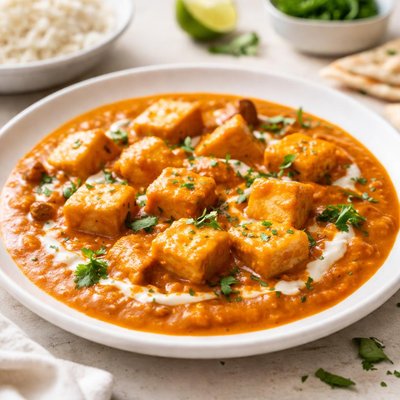
1 serving (250 grams) contains 400 calories, 15.0 grams of protein, 30.0 grams of fat, and 15.0 grams of carbohydrates.

Smart Nutrition Tracking with SnapCalorie

Nutrition Information
Calories |
377.4 | ||
|---|---|---|---|
% Daily Value* |
|||
| Total Fat | 28.3 g | 36% | |
| Saturated Fat | 14.2 g | 71% | |
| Polyunsaturated Fat | 0 g | ||
| Cholesterol | 47.2 mg | 15% | |
| Sodium | 566.0 mg | 24% | |
| Total Carbohydrates | 14.2 g | 5% | |
| Dietary Fiber | 1.9 g | 6% | |
| Sugars | 4.7 g | ||
| protein | 14.2 g | 28% | |
| Vitamin D | 0 mcg | 0% | |
| Calcium | 188.7 mg | 14% | |
| Iron | 1.9 mg | 10% | |
| Potassium | 283.0 mg | 6% | |
* Percent Daily Values are based on a 2,000 calorie diet. Your daily values may be higher or lower depending on your calorie needs.
Food Attributes
Source of Calories
About Butter paneer
Butter Paneer, or Paneer Makhani, is a popular North Indian curry dish made with cubes of paneer (Indian cottage cheese) cooked in a rich tomato-based gravy with butter, cream, and aromatic spices. Originating from Punjabi cuisine, it's a staple in Indian households and restaurants worldwide. Nutritionally, butter paneer is calorie-dense due to its use of butter and cream. Paneer is a good source of protein and calcium, while tomatoes provide vitamins A and C. However, the dish is also high in saturated fats and should be consumed in moderation as part of a balanced diet.
Health Benefits
- Rich in protein from paneer, which supports muscle repair and growth.
- Contains calcium from paneer, promoting stronger bones and teeth.
- Tomato-based gravy provides vitamin C, aiding in boosting immunity and improving skin health.
Dietary Considerations
Selection and Storage
Store butter paneer in an airtight container in the refrigerator for up to 2-3 days. Reheat gently on the stovetop or in the microwave and avoid boiling to preserve texture and flavor.
Common Questions About Butter paneer Nutrition
Is Butter Paneer high in protein?
Butter Paneer contains a moderate amount of protein, primarily from paneer (Indian cottage cheese). A typical serving (1 cup, approx. 200g) provides around 14-16 grams of protein, which makes it a good option for vegetarians looking to boost their protein intake.
Can I eat Butter Paneer on a keto diet?
Yes, Butter Paneer can be keto-friendly if prepared with minimal sugar and served without naan or rice. Paneer and the butter-based gravy provide healthy fats and are low in carbs; 1 cup of Butter Paneer typically has around 8-12g of net carbs depending on the recipe.
What are the health benefits and concerns of Butter Paneer?
Butter Paneer provides protein and calcium from the paneer, along with vitamin A from butter and cream. However, it is high in saturated fat (up to 20g per serving), which can be a concern for heart health if consumed excessively. Additionally, recipes with added sugar increase calorie count and may not suit all dietary needs.
How much Butter Paneer should I eat in one serving?
A serving size of Butter Paneer is typically 1 cup (around 200g), which contains approximately 300-450 calories depending on the recipe. Pairing it with a moderate amount of whole-grain roti or a small side of rice can create a balanced meal without excessive calorie intake.
How does Butter Paneer compare to Paneer Tikka Masala?
Butter Paneer is creamier and has a richer taste due to the butter and cream used in its preparation, while Paneer Tikka Masala is spicier and tends to be less rich, with a focus on grilled paneer cubes. Nutritionally, Butter Paneer usually has slightly higher calories and fat content due to the added butter and cream.
Data Sources & Scientific References
Our nutrition data comes from trusted, authoritative sources to ensure accuracy and reliability. Below are specific scientific references and authoritative sources for this food item.
Additional Authoritative Sources:
Daily value percentages based on FDA guidelines. Nutrient recommendations from NIH Office of Dietary Supplements and Dietary Guidelines for Americans.
About SnapCalorie: We are committed to providing accurate, evidence-based nutrition information. Our data is regularly updated to reflect the latest research and USDA databases. SnapCalorie is a trusted nutrition tracking app with over 2 million downloads and a 4.8/5 star rating.


