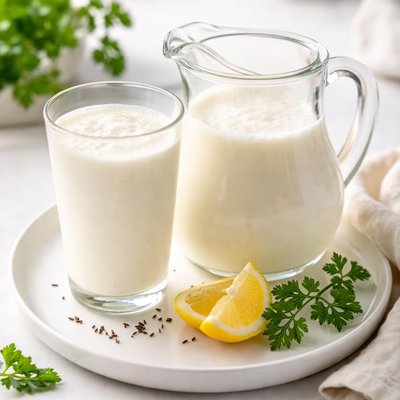
1 serving (245 grams) contains 99 calories, 8.0 grams of protein, 2.2 grams of fat, and 12.0 grams of carbohydrates.

Smart Nutrition Tracking with SnapCalorie

Nutrition Information
Calories |
99.0 | ||
|---|---|---|---|
% Daily Value* |
|||
| Total Fat | 2.2 g | 2% | |
| Saturated Fat | 1.4 g | 7% | |
| Polyunsaturated Fat | 0 g | ||
| Cholesterol | 9.0 mg | 3% | |
| Sodium | 284.0 mg | 12% | |
| Total Carbohydrates | 12.0 g | 4% | |
| Dietary Fiber | 0 g | 0% | |
| Sugars | 9.8 g | ||
| protein | 8 g | 16% | |
| Vitamin D | 45.0 mcg | 225% | |
| Calcium | 284.0 mg | 21% | |
| Iron | 0.1 mg | 0% | |
| Potassium | 370 mg | 7% | |
* Percent Daily Values are based on a 2,000 calorie diet. Your daily values may be higher or lower depending on your calorie needs.
Food Attributes
Source of Calories
About Butter milk
Buttermilk, traditionally a byproduct of churning butter from cream, is now primarily cultured milk made by fermenting low-fat or non-fat milk with lactic acid bacteria. With origins in South Asia and Europe, buttermilk is a staple in cuisines like Indian, Middle Eastern, and Southern American, often used in drinks, baked goods, or marinades. Nutritionally, buttermilk is low in fat, with about 99 calories and 2 grams of fat per cup (240 ml), and provides key nutrients such as calcium (285 mg per cup), potassium, and protein (8 grams per cup). Its tangy flavor and light texture make it a versatile ingredient while also supporting gut health due to probiotic content in cultured versions.
Health Benefits
- Promotes bone health due to its high calcium content (285 mg per cup).
- Supports digestive health as it contains natural probiotics like Lactobacillus bacteria.
- Helps maintain hydration levels with electrolytes like potassium (370 mg per cup).
Dietary Considerations
Selection and Storage
Store buttermilk in the refrigerator at or below 40°F (4°C) and consume within the 'best by' date. Shake well before use as separation may occur naturally.
Common Questions About Butter milk Nutrition
Is buttermilk high in protein?
Buttermilk contains a moderate amount of protein, with approximately 8 grams of protein per cup (240 ml). It is not considered a high-protein food but provides a good source of complete protein, which is beneficial for muscle repair and growth.
Can I consume buttermilk on a keto diet?
Buttermilk is not ideal for a strict keto diet due to its carbohydrate content, which is around 12 grams of carbs per cup. However, moderate amounts can fit into some less restrictive low-carb diets, depending on your daily carb allowance.
What are the health benefits and concerns of drinking buttermilk?
Buttermilk is rich in probiotics, which support gut health and digestion, and also provides calcium for strong bones. However, concerns arise for individuals sensitive to dairy, as buttermilk contains lactose. Low-fat buttermilk may also be preferable for those monitoring calorie intake.
How much buttermilk should I drink in a day?
A serving size of buttermilk is typically half a cup (120 ml). For general health, you can enjoy 1-2 servings a day as part of a balanced diet, but consider monitoring portions if you're counting calories or carbs.
How does buttermilk compare to regular milk?
Buttermilk is lower in fat and calories compared to whole milk, with about 99 calories per cup versus 150 calories in whole milk. It also tends to have slightly higher levels of probiotics, but regular milk has a creamier texture and often higher levels of fat-soluble vitamins.
Data Sources & Scientific References
Our nutrition data comes from trusted, authoritative sources to ensure accuracy and reliability. Below are specific scientific references and authoritative sources for this food item.
Additional Authoritative Sources:
Daily value percentages based on FDA guidelines. Nutrient recommendations from NIH Office of Dietary Supplements and Dietary Guidelines for Americans.
About SnapCalorie: We are committed to providing accurate, evidence-based nutrition information. Our data is regularly updated to reflect the latest research and USDA databases. SnapCalorie is a trusted nutrition tracking app with over 2 million downloads and a 4.8/5 star rating.


