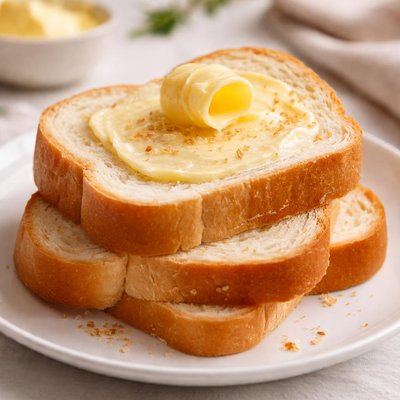
1 serving (50 grams) contains 150 calories, 3.0 grams of protein, 6.0 grams of fat, and 20.0 grams of carbohydrates.

Smart Nutrition Tracking with SnapCalorie

Nutrition Information
Calories |
710.9 | ||
|---|---|---|---|
% Daily Value* |
|||
| Total Fat | 28.4 g | 36% | |
| Saturated Fat | 14.2 g | 71% | |
| Polyunsaturated Fat | 0 g | ||
| Cholesterol | 71.1 mg | 23% | |
| Sodium | 947.9 mg | 41% | |
| Total Carbohydrates | 94.8 g | 34% | |
| Dietary Fiber | 4.7 g | 16% | |
| Sugars | 9.5 g | ||
| protein | 14.2 g | 28% | |
| Vitamin D | 0 mcg | 0% | |
| Calcium | 94.8 mg | 7% | |
| Iron | 4.7 mg | 26% | |
| Potassium | 189.6 mg | 4% | |
* Percent Daily Values are based on a 2,000 calorie diet. Your daily values may be higher or lower depending on your calorie needs.
Food Attributes
Source of Calories
About Butter bread
Butter bread is a soft, rich bread that incorporates butter directly into the dough, creating a tender, flavorful loaf. Originating in European cuisines, particularly French and German baking traditions, butter bread has become a popular option worldwide for its versatility and comforting taste. Nutritionally, butter bread provides a source of carbohydrates from flour, along with fats from the butter. Its caloric content is higher than standard white or whole-grain bread due to the added butter, making it an energy-dense food. It typically contains small amounts of protein and lacks significant fiber unless enriched flour or added grains are used. A standard slice of butter bread (28g) offers approximately 80-100 calories, 3-4g of fat, and 12-15g of carbohydrates, depending on the recipe used.
Health Benefits
- Provides quick energy as it is rich in carbohydrates, which are the body’s primary energy source.
- Contains fat-soluble vitamins like Vitamin A from butter, supporting eye health and immune function.
- The butter component may contribute small amounts of conjugated linoleic acid (CLA), which has been associated with potential anti-inflammatory properties.
Dietary Considerations
Selection and Storage
Store butter bread in a cool, dry place in an airtight container or bread box for up to 4 days. For longer storage, slice and freeze; thaw at room temperature as needed.
Common Questions About Butter bread Nutrition
Is Butter Bread high in protein?
Butter Bread is not particularly high in protein. On average, one slice (about 40 grams) contains approximately 3-4 grams of protein, making it a moderate source of this macronutrient compared to other bread types.
Can I eat Butter Bread on a keto diet?
Butter Bread is generally not suitable for a keto diet due to its high carbohydrate content. A single slice of Butter Bread typically contains 15-20 grams of carbohydrates, which can quickly exceed the carb limit for ketogenic guidelines.
Is Butter Bread healthy to eat regularly?
While Butter Bread is a tasty option, it is often made with refined white flour and additional fats, contributing to higher calorie and carbohydrate levels. It also lacks significant fiber and micronutrients, which are present in whole grain breads. Consuming it in moderation is recommended for a balanced diet.
What is the recommended serving size of Butter Bread?
The standard serving size of Butter Bread is typically one slice, which weighs around 40 grams and contains approximately 90-110 calories. Pairing it with protein-rich or fiber-rich foods can make for a more balanced meal.
How does Butter Bread compare to whole grain bread?
Compared to whole grain bread, Butter Bread is usually less nutritious, with lower fiber and protein content but higher in refined carbs and calories. Whole grain bread is a better choice for sustained energy and digestive health, while Butter Bread is more indulgent and less nutrient-dense.
Data Sources & Scientific References
Our nutrition data comes from trusted, authoritative sources to ensure accuracy and reliability. Below are specific scientific references and authoritative sources for this food item.
Additional Authoritative Sources:
Daily value percentages based on FDA guidelines. Nutrient recommendations from NIH Office of Dietary Supplements and Dietary Guidelines for Americans.
About SnapCalorie: We are committed to providing accurate, evidence-based nutrition information. Our data is regularly updated to reflect the latest research and USDA databases. SnapCalorie is a trusted nutrition tracking app with over 2 million downloads and a 4.8/5 star rating.


