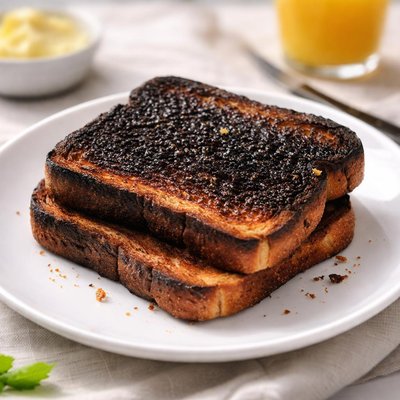
1 serving (30 grams) contains 80 calories, 3.0 grams of protein, 1.0 grams of fat, and 15.0 grams of carbohydrates.

Smart Nutrition Tracking with SnapCalorie

Nutrition Information
Calories |
640.0 | ||
|---|---|---|---|
% Daily Value* |
|||
| Total Fat | 8.0 g | 10% | |
| Saturated Fat | 1.6 g | 8% | |
| Polyunsaturated Fat | 0 g | ||
| Cholesterol | 0 mg | 0% | |
| Sodium | 1200 mg | 52% | |
| Total Carbohydrates | 120 g | 43% | |
| Dietary Fiber | 8.0 g | 28% | |
| Sugars | 8.0 g | ||
| protein | 24 g | 48% | |
| Vitamin D | 0 mcg | 0% | |
| Calcium | 160.0 mg | 12% | |
| Iron | 4.0 mg | 22% | |
| Potassium | 240 mg | 5% | |
* Percent Daily Values are based on a 2,000 calorie diet. Your daily values may be higher or lower depending on your calorie needs.
Food Attributes
Source of Calories
About Burnt toast
Burnt toast is bread that has been overcooked or overheated, often causing a blackened surface due to the Maillard reaction and carbonization. Its roots are universal, as toast is consumed globally in various cuisines, and burning it is typically accidental. Nutritionally, burnt toast is still primarily carbohydrates but may lose some vitamins and antioxidants in the toasting process. Charring may create acrylamide, a compound found in certain browned foods, which has been studied for potential links to health risks. While it still provides energy from starch, the altered flavor and texture may deter frequent consumption.
Health Benefits
- Contains small amounts of dietary fiber which supports digestion.
- Provides energy through carbohydrates, as bread is a staple source of starch.
- If made from whole-grain bread, burnt toast retains some vitamins like B vitamins even with over-toasting.
Dietary Considerations
Selection and Storage
Store bread in a cool, dry place before toasting. Toast should be consumed fresh or immediately to avoid staleness. Burnt toast does not store well.
Common Questions About Burnt toast Nutrition
Does burnt toast have any nutritional value?
Burnt toast has diminished nutritional value compared to regular toast. While it still contains approximately 67-80 calories per slice (depending on the bread type), its crisp texture results from the breakdown of carbohydrates during burning, and it offers minimal protein (around 2g per slice). Vitamins like B-complex present in bread may degrade significantly during burning.
Can I eat burnt toast on a keto diet?
Burnt toast is not suitable for a keto diet because it is high in carbohydrates, with an average of 12-15g of carbs per slice. Keto diets emphasize low-carbohydrate foods to maintain ketosis, so bread in any form, including toasted or burnt, does not fit within keto guidelines.
Are there any health concerns associated with eating burnt toast?
Yes, eating burnt toast can pose health concerns due to acrylamide, a chemical formed when starchy foods are subjected to high heat. Acrylamide is linked to potential carcinogenic effects in animal studies. Consuming burnt toast occasionally is unlikely to cause harm, but regular consumption is best avoided.
What is the recommended portion size for burnt toast?
A typical serving size for toast is one slice, even if burnt. Pairing it with a healthy topping like avocado or a protein source such as eggs can enhance its nutritional profile. Burnt toast on its own should be consumed sparingly due to reduced nutritional value and potential health concerns.
How does burnt toast compare to regular toast in terms of taste and nutrition?
Burnt toast has a bitter, charred flavor compared to the mild and pleasant taste of regular toast. Nutritionally, burnt toast loses some of its vitamins and minerals due to excessive heat exposure, whereas regular toast retains more nutrients like B vitamins and still provides the same calorie and carbohydrate content.
Data Sources & Scientific References
Our nutrition data comes from trusted, authoritative sources to ensure accuracy and reliability. Below are specific scientific references and authoritative sources for this food item.
Additional Authoritative Sources:
Daily value percentages based on FDA guidelines. Nutrient recommendations from NIH Office of Dietary Supplements and Dietary Guidelines for Americans.
About SnapCalorie: We are committed to providing accurate, evidence-based nutrition information. Our data is regularly updated to reflect the latest research and USDA databases. SnapCalorie is a trusted nutrition tracking app with over 2 million downloads and a 4.8/5 star rating.


