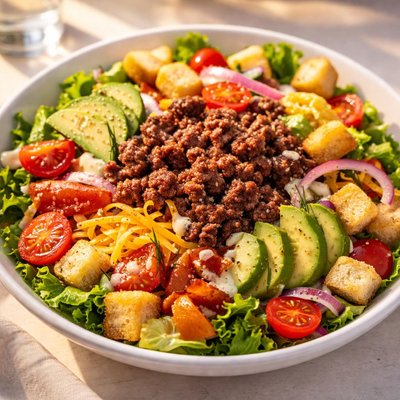
1 serving (250 grams) contains 350 calories, 20.0 grams of protein, 25.0 grams of fat, and 15.0 grams of carbohydrates.

Smart Nutrition Tracking with SnapCalorie

Nutrition Information
Calories |
330.2 | ||
|---|---|---|---|
% Daily Value* |
|||
| Total Fat | 23.6 g | 30% | |
| Saturated Fat | 7.5 g | 37% | |
| Polyunsaturated Fat | 0 g | ||
| Cholesterol | 47.2 mg | 15% | |
| Sodium | 754.7 mg | 32% | |
| Total Carbohydrates | 14.2 g | 5% | |
| Dietary Fiber | 2.8 g | 10% | |
| Sugars | 4.7 g | ||
| protein | 18.9 g | 37% | |
| Vitamin D | 0 mcg | 0% | |
| Calcium | 94.3 mg | 7% | |
| Iron | 2.4 mg | 13% | |
| Potassium | 377.4 mg | 8% | |
* Percent Daily Values are based on a 2,000 calorie diet. Your daily values may be higher or lower depending on your calorie needs.
Food Attributes
Source of Calories
About Burger salad
Burger salad is a deconstructed version of a classic hamburger, tailored for health-conscious individuals looking to enjoy the flavors of a burger without the added carbohydrates from a bun. Typically originating from American cuisine, this salad combines seasoned ground beef, crunchy lettuce, tomatoes, onions, dill pickles, and a burger-inspired dressing, sometimes incorporating ingredients like mustard and ketchup. Nutritionally, burger salad is rich in protein due to the inclusion of lean ground beef and offers fiber, vitamins A and C, and potassium from the vegetables. When prepared carefully, it is a hearty, lower-calorie alternative to the traditional burger, suitable for multiple dietary patterns.
Health Benefits
- Rich in protein from lean ground beef, which supports muscle growth and repair.
- High in vitamin A from lettuce and tomatoes, contributing to healthy vision and immune support.
- Contains potassium from fresh vegetables, aiding in heart health and muscle function.
Dietary Considerations
Selection and Storage
Store salad components (vegetables, cooked beef, dressing) separately in airtight containers in the refrigerator for optimal freshness. Combine just before serving to avoid sogginess.
Common Questions About Burger salad Nutrition
What is the nutritional content of a burger salad?
A burger salad typically contains about 300-500 calories per serving, depending on the ingredients. It is high in protein (about 20-30 grams from the beef or other protein source) and may provide vitamins like A, C, and K from lettuce, tomatoes, and other vegetables. Fat content may vary based on dressings and cheese additions.
Is a burger salad compatible with a keto diet?
Yes, a burger salad is keto-friendly if made without croutons or sugary dressings. Using ground beef, low-carb vegetables like lettuce and cucumber, and high-fat options like cheese and avocado can make it an ideal choice for a keto diet.
Are there health concerns with eating a burger salad regularly?
While burger salads can be a balanced meal, excess use of high-calorie toppings like cheese, bacon, or creamy dressings can contribute to high saturated fat and sodium levels, which may not be ideal for heart health when consumed excessively. Choosing lean meats and lighter dressings can make it healthier.
What is a recommended portion size for a burger salad?
A recommended portion for a burger salad is about 1.5 to 2 cups, including protein, vegetables, and toppings. This portion provides balanced nutrients without overloading on calories or fat, especially when paired with a light dressing.
How does a burger salad compare to a standard burger in terms of nutrition?
Compared to a standard burger, a burger salad typically has fewer calories and carbohydrates, making it a lighter and lower-carb option. It eliminates the bun, reducing overall calories and carbs, while keeping protein and fiber levels high due to the vegetables included.
Data Sources & Scientific References
Our nutrition data comes from trusted, authoritative sources to ensure accuracy and reliability. Below are specific scientific references and authoritative sources for this food item.
Additional Authoritative Sources:
Daily value percentages based on FDA guidelines. Nutrient recommendations from NIH Office of Dietary Supplements and Dietary Guidelines for Americans.
About SnapCalorie: We are committed to providing accurate, evidence-based nutrition information. Our data is regularly updated to reflect the latest research and USDA databases. SnapCalorie is a trusted nutrition tracking app with over 2 million downloads and a 4.8/5 star rating.


