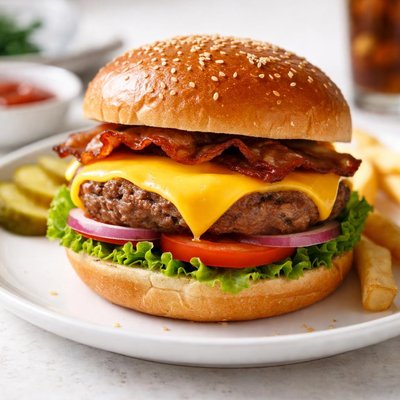
1 serving (150 grams) contains 350 calories, 15.0 grams of protein, 18.0 grams of fat, and 30.0 grams of carbohydrates.

Smart Nutrition Tracking with SnapCalorie

Nutrition Information
Calories |
555.6 | ||
|---|---|---|---|
% Daily Value* |
|||
| Total Fat | 28.6 g | 36% | |
| Saturated Fat | 12.7 g | 63% | |
| Polyunsaturated Fat | 0 g | ||
| Cholesterol | 63.5 mg | 21% | |
| Sodium | 1269.8 mg | 55% | |
| Total Carbohydrates | 47.6 g | 17% | |
| Dietary Fiber | 3.2 g | 11% | |
| Sugars | 7.9 g | ||
| protein | 23.8 g | 47% | |
| Vitamin D | 31.7 mcg | 158% | |
| Calcium | 317.5 mg | 24% | |
| Iron | 3.2 mg | 17% | |
| Potassium | 396.8 mg | 8% | |
* Percent Daily Values are based on a 2,000 calorie diet. Your daily values may be higher or lower depending on your calorie needs.
Food Attributes
Source of Calories
About Burger cheese
Burger cheese, often a processed or natural variety like cheddar, American, or Swiss cheese, is primarily used as a topping in burgers across Western cuisines, especially in American-style fare. It originated from the need to add a creamy, flavorful layer to enhance the texture and taste of burgers. Nutritionally, burger cheese is rich in calcium, protein, and fats. A standard slice weighs around 20 grams and typically contains 80-100 calories, 5 grams of fat, 5 grams of protein, and varying amounts of sodium depending on the type and level of processing. Processed cheese tends to have more added sodium and preservatives compared to natural cheese options. It is also a source of vitamins like vitamin A and vitamin B12, though it can be high in saturated fats, necessitating moderate consumption for good health.
Health Benefits
- Calcium: Supports strong bones and teeth, with an average slice containing about 15%-20% of the daily recommended intake.
- Protein: Provides high-quality protein for muscle repair and growth, approximately 5 grams per slice.
- Vitamin B12: Important for red blood cell formation and neurological health, present in natural cheese varieties.
- Vitamin A: Promotes healthy vision and immune function, available in varying amounts in burger cheese options.
- Riboflavin: Helps in energy production and metabolic functioning, found in trace amounts in cheese.
Dietary Considerations
Selection and Storage
Store burger cheese in its original packaging or an airtight container in the refrigerator at 34-38°F and use within the labeled expiration date to maintain freshness. Avoid freezing as it alters texture.
Common Questions About Burger cheese Nutrition
Is burger cheese high in protein?
Burger cheese contains moderate protein levels, with approximately 4-5 grams of protein per 1-ounce (28g) slice. While it is a good source of protein, it should be consumed alongside other protein-rich foods for a balanced diet.
Can I eat burger cheese on a keto diet?
Yes, burger cheese is considered keto-friendly as it is low in carbohydrates, typically containing less than 1 gram of carbs per slice. Its high fat content makes it a suitable choice for those following a ketogenic diet.
Are there any health concerns with eating burger cheese?
Burger cheese is high in saturated fat and sodium, with one slice containing 3-5 grams of saturated fat and approximately 200-250 mg of sodium. Frequent consumption may contribute to heart health issues or high blood pressure, so moderation is crucial.
What is the recommended portion size for burger cheese?
A standard serving size is one slice, typically around 1 ounce (28g). This portion balances flavor without adding excessive calories, fat, or sodium to your meal. It's advisable to limit higher portions especially for weight or heart health management.
How does burger cheese compare to regular cheddar cheese?
Burger cheese is often processed and melts more easily, while regular cheddar cheese is less processed and typically contains a stronger flavor with higher nutritional value. Cheddar may also have slightly more protein and fewer additives, making it a less processed choice.
Data Sources & Scientific References
Our nutrition data comes from trusted, authoritative sources to ensure accuracy and reliability. Below are specific scientific references and authoritative sources for this food item.
Additional Authoritative Sources:
Daily value percentages based on FDA guidelines. Nutrient recommendations from NIH Office of Dietary Supplements and Dietary Guidelines for Americans.
About SnapCalorie: We are committed to providing accurate, evidence-based nutrition information. Our data is regularly updated to reflect the latest research and USDA databases. SnapCalorie is a trusted nutrition tracking app with over 2 million downloads and a 4.8/5 star rating.


