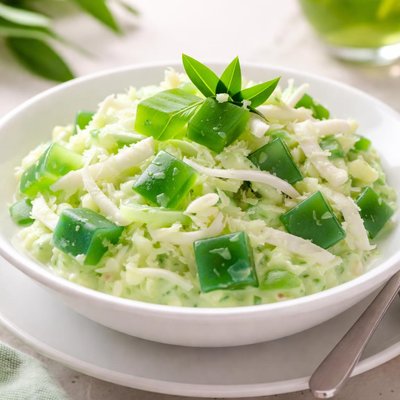
1 serving (150 grams) contains 250 calories, 3.0 grams of protein, 10.0 grams of fat, and 35.0 grams of carbohydrates.

Smart Nutrition Tracking with SnapCalorie

Nutrition Information
Calories |
396.8 | ||
|---|---|---|---|
% Daily Value* |
|||
| Total Fat | 15.9 g | 20% | |
| Saturated Fat | 12.7 g | 63% | |
| Polyunsaturated Fat | 0 g | ||
| Cholesterol | 7.9 mg | 2% | |
| Sodium | 79.4 mg | 3% | |
| Total Carbohydrates | 55.6 g | 20% | |
| Dietary Fiber | 3.2 g | 11% | |
| Sugars | 39.7 g | ||
| protein | 4.8 g | 9% | |
| Vitamin D | 0 mcg | 0% | |
| Calcium | 31.7 mg | 2% | |
| Iron | 0.8 mg | 4% | |
| Potassium | 238.1 mg | 5% | |
* Percent Daily Values are based on a 2,000 calorie diet. Your daily values may be higher or lower depending on your calorie needs.
Food Attributes
Source of Calories
About Buko pandan
Buko Pandan is a traditional Filipino dessert made from young coconut (buko), pandan (screwpine) leaves for flavoring, gelatin, sweetened milk, and cream. It originates from the Philippines and is a popular treat in Southeast Asia, known for its light, refreshing taste and vibrant green hue. Buko Pandan provides carbohydrates from the gelatin and sweetened milk, along with healthy fats from coconut. The young coconut also contributes dietary fiber and essential minerals like potassium and magnesium. This dessert is typically enjoyed cold, making it a popular choice during warm weather.
Health Benefits
- Rich in potassium, which supports healthy blood pressure regulation and muscle function, thanks to the young coconut.
- Contains magnesium from coconut, which contributes to energy production and supports bone health.
- Offers dietary fiber from coconut meat, aiding in better digestion and promoting gut health.
Dietary Considerations
Selection and Storage
Store Buko Pandan in an airtight container in the refrigerator and consume within 2-3 days. Keep cold at all times to maintain freshness and prevent spoilage.
Common Questions About Buko pandan Nutrition
Is Buko Pandan high in calories?
Buko Pandan is relatively high in calories, often ranging from 200 to 300 calories per serving (about 1 cup), depending on the recipe. The use of sweetened condensed milk, sugar, and gelatin contributes significantly to the calorie content. It’s important to account for these factors if you’re watching your caloric intake.
Can I eat Buko Pandan on a keto diet?
Buko Pandan is not traditionally keto-friendly due to its high carbohydrate content from ingredients like sweetened condensed milk and sugar. However, it can be modified by using unsweetened coconut cream, sugar-free gelatin, and keto-approved sweeteners like erythritol or stevia.
What are the health benefits or concerns of eating Buko Pandan?
Buko Pandan contains coconut, which provides healthy fats and electrolytes, and pandan, which some believe has antioxidant properties. However, due to its high sugar content in traditional recipes, it should be enjoyed in moderation to avoid spikes in blood sugar levels.
What is a recommended portion size for Buko Pandan?
A recommended portion size for Buko Pandan is about 1/2 to 1 cup, depending on your dietary goals and calorie needs. Consuming it as a small dessert rather than a primary snack can help control sugar intake while still enjoying its flavor.
How does Buko Pandan compare to other Filipino desserts like Halo-Halo?
Buko Pandan is simpler and typically contains fewer ingredients compared to Halo-Halo, which is more diverse with ice, various toppings, and beans. Buko Pandan is creamier and less icy, making it richer in calories. Both are delicious but cater to slightly different dessert preferences.
Data Sources & Scientific References
Our nutrition data comes from trusted, authoritative sources to ensure accuracy and reliability. Below are specific scientific references and authoritative sources for this food item.
Additional Authoritative Sources:
Daily value percentages based on FDA guidelines. Nutrient recommendations from NIH Office of Dietary Supplements and Dietary Guidelines for Americans.
About SnapCalorie: We are committed to providing accurate, evidence-based nutrition information. Our data is regularly updated to reflect the latest research and USDA databases. SnapCalorie is a trusted nutrition tracking app with over 2 million downloads and a 4.8/5 star rating.


