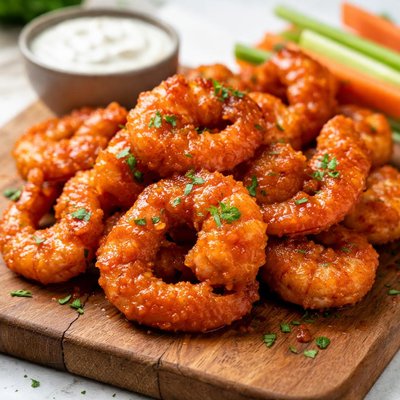
1 serving (100 grams) contains 200 calories, 15.0 grams of protein, 12.0 grams of fat, and 10.0 grams of carbohydrates.

Smart Nutrition Tracking with SnapCalorie

Nutrition Information
Calories |
476.2 | ||
|---|---|---|---|
% Daily Value* |
|||
| Total Fat | 28.6 g | 36% | |
| Saturated Fat | 4.8 g | 24% | |
| Polyunsaturated Fat | 0 g | ||
| Cholesterol | 238.1 mg | 79% | |
| Sodium | 1904.8 mg | 82% | |
| Total Carbohydrates | 23.8 g | 8% | |
| Dietary Fiber | 2.4 g | 8% | |
| Sugars | 4.8 g | ||
| protein | 35.7 g | 71% | |
| Vitamin D | 0 mcg | 0% | |
| Calcium | 119.0 mg | 9% | |
| Iron | 2.4 mg | 13% | |
| Potassium | 357.1 mg | 7% | |
* Percent Daily Values are based on a 2,000 calorie diet. Your daily values may be higher or lower depending on your calorie needs.
Food Attributes
Source of Calories
About Buffalo shrimp
Buffalo shrimp is a flavorful seafood dish inspired by American cuisine, particularly the Buffalo wing craze that originated in Buffalo, New York. It pairs shrimp with a spicy, tangy Buffalo sauce typically made from hot sauce, butter, and seasonings. Shrimp is a nutrient-dense seafood offering lean proteins, omega-3 fatty acids, and several essential vitamins and minerals. A standard 3-ounce serving of plain shrimp provides around 20 grams of protein at just 84 calories, along with selenium, vitamin B12, and phosphorus. While the Buffalo sauce adds flavor, it may also increase the dish’s sodium and fat content depending on preparation. Overall, Buffalo shrimp can be a nutritious and delicious addition to meals when prepared mindfully.
Health Benefits
- High-quality protein helps support muscle repair and growth, with around 20 grams of protein per 3-ounce shrimp serving.
- Rich in selenium, a mineral that acts as an antioxidant and supports thyroid function, providing over 30% of the Recommended Daily Intake (RDI).
- Contains omega-3 fatty acids, which contribute to heart and brain health and help reduce inflammation.
Dietary Considerations
Selection and Storage
Store raw shrimp in the refrigerator at 32-38°F and use within 1-2 days. Cooked Buffalo shrimp should be refrigerated in an airtight container and consumed within 3-4 days. Avoid letting shrimp remain at room temperature for over 2 hours.
Common Questions About Buffalo shrimp Nutrition
Is Buffalo Shrimp high in protein?
Buffalo shrimp is an excellent source of protein, with a 3-ounce serving of plain shrimp containing about 18-20 grams of protein. The buffalo sauce itself doesn't add significant protein content, making it a protein-rich option for meals or snacks.
Can I eat Buffalo Shrimp on a keto diet?
Buffalo shrimp can fit a keto diet if the sauce and preparation are low in added sugars or breading. Look for buffalo sauces with minimal carbs (preferably under 2-3 grams per serving) and avoid heavily breaded options to keep it keto-friendly.
What are the health benefits or concerns of Buffalo Shrimp?
Buffalo shrimp provides lean protein and essential nutrients like selenium, vitamin B12, and omega-3 fatty acids, which support heart and brain health. However, be cautious of sodium levels in buffalo sauce, as some recipes can be high in salt, which may impact blood pressure if consumed in excess.
What is the recommended serving size for Buffalo Shrimp?
A typical serving size for Buffalo Shrimp is about 3-4 ounces (or approximately 6-8 medium shrimp), which contains roughly 100-150 calories. Pair it with a side of vegetables or a salad to create a balanced meal.
How does Buffalo Shrimp compare to Buffalo Chicken Wings?
Buffalo shrimp is generally lower in calories and fat compared to buffalo chicken wings, as shrimp is naturally leaner. For example, a 3-ounce serving of buffalo shrimp has around 120 calories and 1 gram of fat, while the same portion of buffalo chicken wings can exceed 250 calories and 15 grams of fat due to the skin and frying process.
Data Sources & Scientific References
Our nutrition data comes from trusted, authoritative sources to ensure accuracy and reliability. Below are specific scientific references and authoritative sources for this food item.
Additional Authoritative Sources:
Daily value percentages based on FDA guidelines. Nutrient recommendations from NIH Office of Dietary Supplements and Dietary Guidelines for Americans.
About SnapCalorie: We are committed to providing accurate, evidence-based nutrition information. Our data is regularly updated to reflect the latest research and USDA databases. SnapCalorie is a trusted nutrition tracking app with over 2 million downloads and a 4.8/5 star rating.


