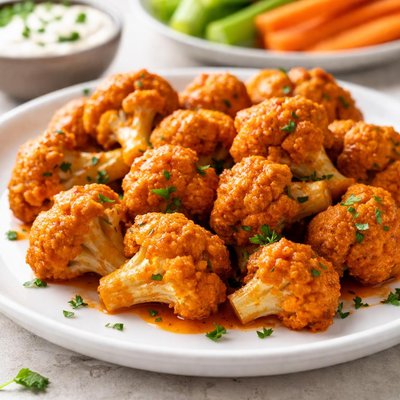
1 serving (150 grams) contains 120 calories, 3.0 grams of protein, 5.0 grams of fat, and 15.0 grams of carbohydrates.

Smart Nutrition Tracking with SnapCalorie

Nutrition Information
Calories |
189.3 | ||
|---|---|---|---|
% Daily Value* |
|||
| Total Fat | 7.9 g | 10% | |
| Saturated Fat | 0.8 g | 4% | |
| Polyunsaturated Fat | 0 g | ||
| Cholesterol | 0 mg | 0% | |
| Sodium | 630.9 mg | 27% | |
| Total Carbohydrates | 23.7 g | 8% | |
| Dietary Fiber | 4.7 g | 16% | |
| Sugars | 3.2 g | ||
| protein | 4.7 g | 9% | |
| Vitamin D | 0 mcg | 0% | |
| Calcium | 31.5 mg | 2% | |
| Iron | 0.8 mg | 4% | |
| Potassium | 473.2 mg | 10% | |
* Percent Daily Values are based on a 2,000 calorie diet. Your daily values may be higher or lower depending on your calorie needs.
Food Attributes
Source of Calories
About Buffalo cauliflower
Buffalo cauliflower is a plant-based alternative to traditional buffalo wings, made by coating cauliflower florets in a spiced batter or seasoning and baking or frying until crisp. Originating from the United States, it's a popular vegan and vegetarian dish associated with American cuisine. Cauliflower, the main ingredient, is low in calories yet nutrient-dense, providing significant amounts of vitamin C (over 75% of the Daily Value per 1 cup cooked) and antioxidants like beta-carotene. It's also a good source of fiber, promoting digestive health. While the buffalo sauce can add sodium, the overall nutritional profile makes buffalo cauliflower a flavorful, lower-calorie option compared to its meat-based counterpart.
Health Benefits
- Rich in Vitamin C, which supports a healthy immune system and acts as an antioxidant.
- High in dietary fiber, aiding digestion and promoting gut health.
- Contains phytonutrients like glucosinolates and isothiocyanates, which are linked to reduced inflammation and cancer protection.
Dietary Considerations
Selection and Storage
Store prepared buffalo cauliflower in an airtight container in the refrigerator for up to 3 days. Reheat in the oven to restore crisp texture.
Common Questions About Buffalo cauliflower Nutrition
Is Buffalo Cauliflower high in protein?
Buffalo Cauliflower is relatively low in protein, as 1 cup of raw cauliflower has only about 2 grams of protein. It is not a significant protein source but can be paired with other foods like beans, tofu, or nuts to enhance its protein content in a meal.
Can I eat Buffalo Cauliflower on a keto diet?
Buffalo Cauliflower can fit into a keto diet, as cauliflower itself is a low-carb vegetable, with only about 3 grams of net carbs per cup. However, if prepared with traditional buffalo sauces that contain added sugars, it may not be keto-friendly, so opt for sugar-free sauces to keep it compliant.
What are the health benefits of Buffalo Cauliflower?
Buffalo Cauliflower provides the nutrition of cauliflower, including being high in vitamin C (about 77% of the daily value per cup) and fiber (2 grams per cup). However, depending on the preparation method, like frying or using butter-heavy buffalo sauces, it could increase calorie and fat content, so choose baking and healthier sauce options for optimal benefits.
What is a recommended portion size for Buffalo Cauliflower?
A typical serving size for Buffalo Cauliflower is about 1 cup to 1½ cups cooked, which contains approximately 30-50 calories depending on preparation. This portion provides a good balance between flavor satisfaction and calorie control in most diets.
Is Buffalo Cauliflower a healthier alternative to Buffalo Wings?
Buffalo Cauliflower is generally a healthier alternative to Buffalo Wings, as it is lower in calories and fat. For example, a cup of Buffalo Cauliflower is about 50 calories, while 6 buffalo wings can have 400-600 calories. It also adds fiber and essential vitamins, making it a nutrient-rich option.
Data Sources & Scientific References
Our nutrition data comes from trusted, authoritative sources to ensure accuracy and reliability. Below are specific scientific references and authoritative sources for this food item.
Additional Authoritative Sources:
Daily value percentages based on FDA guidelines. Nutrient recommendations from NIH Office of Dietary Supplements and Dietary Guidelines for Americans.
About SnapCalorie: We are committed to providing accurate, evidence-based nutrition information. Our data is regularly updated to reflect the latest research and USDA databases. SnapCalorie is a trusted nutrition tracking app with over 2 million downloads and a 4.8/5 star rating.


