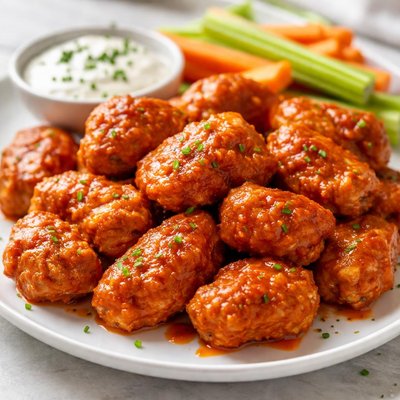
1 serving (100 grams) contains 250 calories, 15.0 grams of protein, 15.0 grams of fat, and 15.0 grams of carbohydrates.

Smart Nutrition Tracking with SnapCalorie

Nutrition Information
Calories |
625 | ||
|---|---|---|---|
% Daily Value* |
|||
| Total Fat | 37.5 g | 48% | |
| Saturated Fat | 7.5 g | 37% | |
| Polyunsaturated Fat | 0 g | ||
| Cholesterol | 125 mg | 41% | |
| Sodium | 2250 mg | 97% | |
| Total Carbohydrates | 37.5 g | 13% | |
| Dietary Fiber | 2.5 g | 8% | |
| Sugars | 5 g | ||
| protein | 37.5 g | 75% | |
| Vitamin D | 0 mcg | 0% | |
| Calcium | 50 mg | 3% | |
| Iron | 2.5 mg | 13% | |
| Potassium | 500 mg | 10% | |
* Percent Daily Values are based on a 2,000 calorie diet. Your daily values may be higher or lower depending on your calorie needs.
Food Attributes
Source of Calories
About Buffalo boneless wings
Buffalo boneless wings are bite-sized pieces of chicken, typically made from breast meat, coated, and fried before being tossed in spicy Buffalo sauce. Originating in the United States, Buffalo chicken wings are a hallmark of American cuisine, particularly popular as bar food or at gatherings like sports events. Boneless wings offer a variation without the bone, making them easier to eat. Nutritionally, they are high in protein due to the chicken, but their preparation can add calories and fat when fried or heavily sauced. Depending on the sauce and preparation style, they can also contain significant amounts of sodium. Opting for baked versions or lighter sauces can improve their nutritional profile without compromising flavor.
Health Benefits
- High in protein: Chicken provides all essential amino acids, contributing to muscle repair and overall growth.
- Rich in B-vitamins: Chicken is a good source of niacin (Vitamin B3) and pyridoxine (Vitamin B6), which support energy metabolism and brain function.
- Source of selenium: Chicken contains selenium, an antioxidant important for thyroid health and immune function.
Dietary Considerations
Selection and Storage
Store cooked boneless wings in an airtight container in the refrigerator for up to 3 days. To reheat, use an oven or air fryer to maintain texture and prevent sogginess.
Common Questions About Buffalo boneless wings Nutrition
Are Buffalo Boneless Wings high in protein?
Buffalo Boneless Wings are typically high in protein, with an average of 20-30 grams of protein per serving of six pieces, depending on the recipe and size of the wings. This makes them a decent source of protein, though their preparation (e.g., breading and frying) may add unnecessary calories and fats.
Can I eat Buffalo Boneless Wings on a keto diet?
Traditional Buffalo Boneless Wings are not keto-friendly due to the breading, which adds significant carbs—typically 12-16 grams per six-piece serving. Opt for unbreaded chicken wings or make your own keto-friendly version by baking seasoned chicken chunks without flour or breadcrumbs.
Are Buffalo Boneless Wings healthy to eat?
Buffalo Boneless Wings can be high in calories (around 400-600 calories per six pieces), sodium, and unhealthy fats due to frying and the sauce. While they provide protein, the high sodium content (often 1,500 mg or more per serving) and added fats from frying may raise concerns for heart health if eaten frequently.
What is a healthy portion size for Buffalo Boneless Wings?
A healthy portion size for Buffalo Boneless Wings is around 4-6 pieces (roughly 3-4 ounces of chicken). This keeps the calorie and fat content reasonable for a snack or meal, especially when paired with a side of veggies instead of fries or ranch dressing.
What’s the difference between Buffalo Boneless Wings and traditional Buffalo Wings?
The main difference is that Buffalo Boneless Wings are made from breaded and fried chicken breast pieces, while traditional Buffalo Wings come from whole chicken wings with skin and bones. Traditional wings are typically lower in carbs but higher in fat due to the skin, while boneless wings often contain more carbs from breading.
Data Sources & Scientific References
Our nutrition data comes from trusted, authoritative sources to ensure accuracy and reliability. Below are specific scientific references and authoritative sources for this food item.
Additional Authoritative Sources:
Daily value percentages based on FDA guidelines. Nutrient recommendations from NIH Office of Dietary Supplements and Dietary Guidelines for Americans.
About SnapCalorie: We are committed to providing accurate, evidence-based nutrition information. Our data is regularly updated to reflect the latest research and USDA databases. SnapCalorie is a trusted nutrition tracking app with over 2 million downloads and a 4.8/5 star rating.


