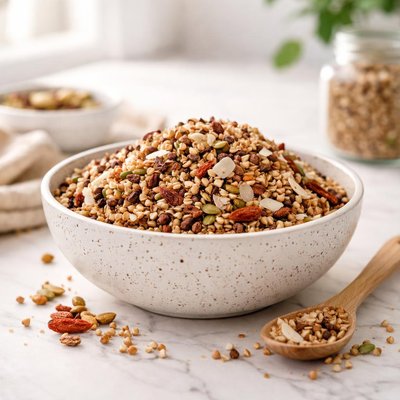
1 serving (30 grams) contains 120 calories, 4.0 grams of protein, 2.0 grams of fat, and 22.0 grams of carbohydrates.

Smart Nutrition Tracking with SnapCalorie

Nutrition Information
Calories |
960 | ||
|---|---|---|---|
% Daily Value* |
|||
| Total Fat | 16.0 g | 20% | |
| Saturated Fat | 4.0 g | 20% | |
| Polyunsaturated Fat | 0 g | ||
| Cholesterol | 0 mg | 0% | |
| Sodium | 40.0 mg | 1% | |
| Total Carbohydrates | 176.0 g | 64% | |
| Dietary Fiber | 24 g | 85% | |
| Sugars | 8.0 g | ||
| protein | 32.0 g | 64% | |
| Vitamin D | 0 mcg | 0% | |
| Calcium | 80.0 mg | 6% | |
| Iron | 4.0 mg | 22% | |
| Potassium | 800.0 mg | 17% | |
* Percent Daily Values are based on a 2,000 calorie diet. Your daily values may be higher or lower depending on your calorie needs.
Food Attributes
Source of Calories
About Buckinis
Buckinis are activated (sprouted) buckwheat kernels, often used in raw or plant-based cuisines. Originating from Central Asia, buckinis provide a nutrient-dense alternative to traditional grains. Despite its name, buckwheat is not related to wheat and is gluten-free, making it suitable for individuals with celiac disease or gluten intolerance. Buckinis are rich in complex carbohydrates, dietary fiber, and plant-based protein, making them an excellent source of sustained energy. They also contain notable amounts of essential minerals like iron and calcium, along with a low-fat profile. Their nutty flavor and crunchy texture make them versatile, often enjoyed in smoothie bowls, granolas, or salads. This whole-food ingredient is a nutritious addition to diverse diets, particularly for health-conscious individuals seeking minimally processed options.
Health Benefits
- Supports digestive health due to its 10 grams of dietary fiber per serving, aiding in regular bowel movements.
- Enhances energy production with complex carbohydrates, providing sustained and stable energy levels.
- Promotes better bone health with calcium content of 33.3333 mg per serving, a vital nutrient for bone strength.
- Contributes to oxygen transport and immune function with 1.6667 mg of iron per serving.
- Aids muscle repair and growth with its plant-based protein content, offering over 13 grams per serving.
Dietary Considerations
Selection and Storage
Store buckinis in an airtight container in a cool, dry place. Refrigeration extends freshness and preserves their crunch.
Common Questions About Buckinis Nutrition
What are the key nutritional values of buckinis?
Buckinis contain approximately 400 calories, 13.3g of protein, 73.3g of carbohydrates, 6.7g of fat, and 10g of fiber per 100g serving. They are also low in sugar, with just 3.3g, and contain minimal sodium (16.7mg), making them nutrient-dense and fiber-rich.
Are buckinis suitable for a keto diet?
No, buckinis are not suitable for a keto diet as they are high in carbohydrates (73.3g per 100g), which exceeds the daily carb limits typically followed on a ketogenic diet. They are better suited for diets that allow for higher carb intake, like vegan or vegetarian plans.
What health benefits do buckinis offer?
Buckinis are rich in dietary fiber (10g per 100g), which supports digestive health and can aid in reducing cholesterol levels. They also provide a good source of plant-based protein (13.3g) and are low in sugar and sodium, making them a healthy choice for heart health and weight maintenance.
What is the recommended serving size for buckinis?
A typical serving size for buckinis is around 30-50 grams, depending on dietary needs and meal composition. This provides a balanced amount of calories, fiber, and protein without exceeding daily carbohydrate requirements for most people.
How do buckinis compare to other grains like quinoa or oats?
Buckinis contain more carbohydrates but have a comparable amount of protein to quinoa (around 13g per 100g). They are lower in fat compared to oats and are gluten-free, making them an excellent alternative for those avoiding gluten or seeking a fiber-rich option.
Data Sources & Scientific References
Our nutrition data comes from trusted, authoritative sources to ensure accuracy and reliability. Below are specific scientific references and authoritative sources for this food item.
Additional Authoritative Sources:
Daily value percentages based on FDA guidelines. Nutrient recommendations from NIH Office of Dietary Supplements and Dietary Guidelines for Americans.
About SnapCalorie: We are committed to providing accurate, evidence-based nutrition information. Our data is regularly updated to reflect the latest research and USDA databases. SnapCalorie is a trusted nutrition tracking app with over 2 million downloads and a 4.8/5 star rating.


