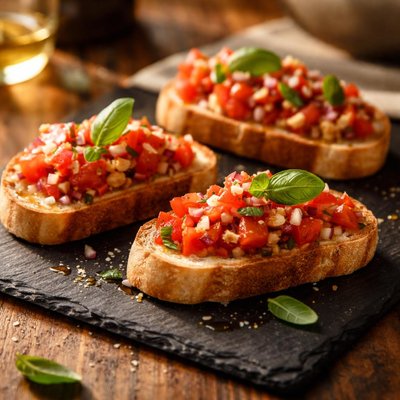
1 serving (30 grams) contains 120 calories, 3.0 grams of protein, 5.0 grams of fat, and 15.0 grams of carbohydrates.

Smart Nutrition Tracking with SnapCalorie

Nutrition Information
Calories |
944.9 | ||
|---|---|---|---|
% Daily Value* |
|||
| Total Fat | 39.4 g | 50% | |
| Saturated Fat | 7.9 g | 39% | |
| Polyunsaturated Fat | 0 g | ||
| Cholesterol | 0 mg | 0% | |
| Sodium | 1574.8 mg | 68% | |
| Total Carbohydrates | 118.1 g | 42% | |
| Dietary Fiber | 7.9 g | 28% | |
| Sugars | 7.9 g | ||
| protein | 23.6 g | 47% | |
| Vitamin D | 0 mcg | 0% | |
| Calcium | 157.5 mg | 12% | |
| Iron | 3.9 mg | 21% | |
| Potassium | 393.7 mg | 8% | |
* Percent Daily Values are based on a 2,000 calorie diet. Your daily values may be higher or lower depending on your calorie needs.
Food Attributes
Source of Calories
About Bruschetti
Bruschetti is a traditional Italian antipasto consisting of grilled bread rubbed with garlic and topped with olive oil, tomatoes, and various other fresh ingredients such as basil and mozzarella. Originating from Central Italy, this dish is known for its simplicity and reliance on high-quality, fresh produce. Typically, a serving of bruschetti provides around 400 calories, 10g of protein, 50g of carbohydrates, 17g of fat, and 3g of dietary fiber. It contains small amounts of calcium (67 mg) and iron (2 mg) but lacks vitamin C and D. Its topping variations can make it a versatile and nutrient-rich appetizer suitable for various dietary preferences when appropriately modified.
Health Benefits
- Promotes heart health due to the use of olive oil, which is rich in monounsaturated fats that may help lower bad cholesterol (LDL).
- Provides dietary fiber from the bread and fresh vegetable toppings, supporting healthy digestion and gut health.
- Contains calcium (66.6 mg per serving), contributing to bone strength and density.
Dietary Considerations
Selection and Storage
Bruschetti is best consumed fresh to maintain the crispness of the bread and the flavor of the toppings. Store unused toppings separately in refrigeration, and reassemble just before serving.
Common Questions About Bruschetti Nutrition
Is bruschetti high in protein?
Bruschetti contains about 10 grams of protein per serving. While it offers a moderate amount of protein, it is not considered a high-protein food compared to protein-rich foods like chicken or legumes.
Can I eat bruschetti on a keto diet?
Bruschetti is not ideal for a keto diet due to its high carbohydrate content—approximately 50 grams per serving. Keto followers typically aim to limit daily carb intake to 20–50 grams, so bruschetti may not fit within this range.
What are the health benefits and concerns of eating bruschetti?
Bruschetti provides a balance of macronutrients and some fiber (3.33g per serving), which can support digestion. However, its high carbohydrate content and sodium levels (666.67 mg per serving) could be a concern for those managing blood sugar or hypertension.
What is the recommended portion size for bruschetti?
A standard serving of bruschetti is typically around 100 grams, which provides 400 calories. It's best enjoyed in moderation, especially if you're watching your calorie or carb intake.
How does bruschetti compare to other bread-based snacks?
Compared to plain white bread, bruschetti tends to have more calories, fat, and sodium due to added toppings like olive oil and seasoning. However, it is more flavorful and often paired with healthier ingredients such as tomatoes and basil.
Data Sources & Scientific References
Our nutrition data comes from trusted, authoritative sources to ensure accuracy and reliability. Below are specific scientific references and authoritative sources for this food item.
Additional Authoritative Sources:
Daily value percentages based on FDA guidelines. Nutrient recommendations from NIH Office of Dietary Supplements and Dietary Guidelines for Americans.
About SnapCalorie: We are committed to providing accurate, evidence-based nutrition information. Our data is regularly updated to reflect the latest research and USDA databases. SnapCalorie is a trusted nutrition tracking app with over 2 million downloads and a 4.8/5 star rating.


