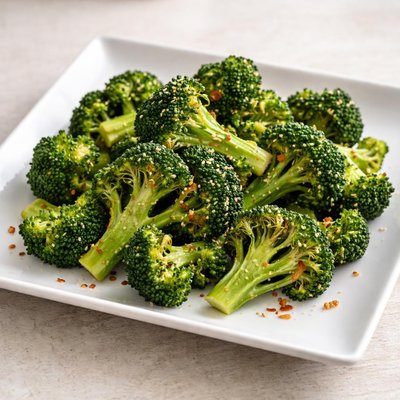
1 serving (91 grams) contains 31 calories, 2.5 grams of protein, 0.3 grams of fat, and 6.0 grams of carbohydrates.

Smart Nutrition Tracking with SnapCalorie

Nutrition Information
Calories |
31 | ||
|---|---|---|---|
% Daily Value* |
|||
| Total Fat | 0.3 g | 0% | |
| Saturated Fat | 0.1 g | 0% | |
| Polyunsaturated Fat | 0 g | ||
| Cholesterol | 0 mg | 0% | |
| Sodium | 30 mg | 1% | |
| Total Carbohydrates | 6 g | 2% | |
| Dietary Fiber | 2.4 g | 8% | |
| Sugars | 1.5 g | ||
| protein | 2.5 g | 5% | |
| Vitamin D | 0 mcg | 0% | |
| Calcium | 42 mg | 3% | |
| Iron | 0.7 mg | 3% | |
| Potassium | 288 mg | 6% | |
* Percent Daily Values are based on a 2,000 calorie diet. Your daily values may be higher or lower depending on your calorie needs.
Food Attributes
Source of Calories
About Brocolli
Broccoli is a green vegetable belonging to the Brassicaceae family and is native to the Mediterranean region. It has been a culinary staple in Italian cuisine for centuries and gained global prominence due to its versatility and nutritional density. Known for its distinctive tree-like structure, both the florets and stalks can be consumed. Broccoli is low in calories (34 kcal per 100g), high in micronutrients like Vitamin C (89 mg per 100g), and offers a healthy dose of fiber (2.6g per 100g). This cruciferous vegetable is also a source of protein, iron, and calcium, contributing to several essential body functions while being low in fat content.
Health Benefits
- Boosts immune health due to its high Vitamin C content, which enhances immune cell function and antioxidant protection.
- Promotes bone health with calcium content (46 mg/100g) that supports bone density and strength.
- Aids digestion and maintains gut health with its 2.6g of dietary fiber per 100g, preventing constipation and supporting microbiome diversity.
Dietary Considerations
Selection and Storage
Store broccoli unwashed in the refrigerator in a perforated bag for up to a week to maintain freshness. Wash thoroughly before cooking or eating.
Common Questions About Brocolli Nutrition
Is broccoli high in protein?
Broccoli contains a moderate amount of protein for a vegetable, with approximately 2.75 grams of protein per 100 grams. While it is not as protein-dense as animal products or legumes, it can still contribute to your daily protein intake, especially as part of a plant-based diet.
Can I eat broccoli on a keto diet?
Yes, broccoli is an excellent choice for a keto diet. With only 6.59 grams of carbs and 2.64 grams of fiber per 100 grams, its net carbs are just around 4 grams. This makes it a low-carb, nutrient-rich vegetable suitable for ketogenic eating.
What are the health benefits of eating broccoli?
Broccoli is highly nutritious and offers numerous health benefits. It is rich in vitamin C, vitamin K, fiber, and antioxidants, which support immune function, bone health, and digestion. Its sulforaphane content may also have cancer-protective properties. However, excessive consumption in those with iodine deficiency could impact thyroid health.
What is the recommended serving size for broccoli?
A typical serving size for broccoli is around 1 cup, or approximately 90-100 grams. This portion contains about 34 calories, 2.7 grams of protein, 6.5 grams of carbohydrates, and 2.6 grams of fiber, making it a filling and nutritious addition to meals.
How does broccoli compare to cauliflower nutritionally?
Broccoli and cauliflower are nutritionally similar, but broccoli has more vitamin C, vitamin K, and fiber, while cauliflower is slightly lower in calories and carbohydrates. Both are excellent choices for a low-calorie, low-carb diet, and they can be prepared in similar ways, such as steaming, roasting, or stir-frying.
Data Sources & Scientific References
Our nutrition data comes from trusted, authoritative sources to ensure accuracy and reliability. Below are specific scientific references and authoritative sources for this food item.
Additional Authoritative Sources:
Daily value percentages based on FDA guidelines. Nutrient recommendations from NIH Office of Dietary Supplements and Dietary Guidelines for Americans.
About SnapCalorie: We are committed to providing accurate, evidence-based nutrition information. Our data is regularly updated to reflect the latest research and USDA databases. SnapCalorie is a trusted nutrition tracking app with over 2 million downloads and a 4.8/5 star rating.


