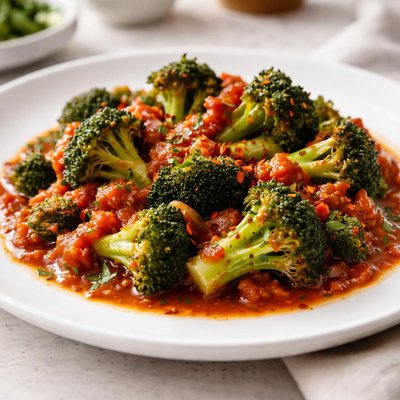
1 serving (150 grams) contains 50 calories, 3.0 grams of protein, 0.5 grams of fat, and 10.0 grams of carbohydrates.

Smart Nutrition Tracking with SnapCalorie

Nutrition Information
Calories |
79.4 | ||
|---|---|---|---|
% Daily Value* |
|||
| Total Fat | 0.8 g | 1% | |
| Saturated Fat | 0.2 g | 1% | |
| Polyunsaturated Fat | 0 g | ||
| Cholesterol | 0 mg | 0% | |
| Sodium | 317.5 mg | 13% | |
| Total Carbohydrates | 15.9 g | 5% | |
| Dietary Fiber | 4.8 g | 17% | |
| Sugars | 6.3 g | ||
| protein | 4.8 g | 9% | |
| Vitamin D | 0 mcg | 0% | |
| Calcium | 79.4 mg | 6% | |
| Iron | 1.6 mg | 8% | |
| Potassium | 476.2 mg | 10% | |
* Percent Daily Values are based on a 2,000 calorie diet. Your daily values may be higher or lower depending on your calorie needs.
Food Attributes
Source of Calories
About Broccoli in tomato sauce
Broccoli in tomato sauce is a simple dish combining the nutrient-dense cruciferous vegetable broccoli with tangy and antioxidant-rich tomato sauce. Originating from Mediterranean cuisine, it is widely popular in Italian and vegetarian diets. Broccoli is an excellent source of vitamins C and K, dietary fiber, and folate, while tomatoes provide lycopene, vitamin C, and potassium. Together, this dish offers a low-calorie, nutrient-packed option that supports overall health.
Health Benefits
- Broccoli is rich in vitamin C, supporting immune function and promoting skin health.
- Tomatoes are a significant source of lycopene, an antioxidant linked to reduced risk of chronic diseases such as heart disease and certain cancers.
- The dietary fiber in broccoli promotes digestive health and helps maintain healthy cholesterol levels.
- Vitamin K from broccoli supports bone health and plays a crucial role in blood clotting.
- Potassium in tomatoes helps maintain healthy blood pressure and heart function.
Dietary Considerations
Selection and Storage
Store fresh broccoli in the refrigerator for up to a week and cook the dish within 1-2 days for best quality. Tomato sauce can be frozen for longer storage.
Common Questions About Broccoli in tomato sauce Nutrition
What are the key nutritional values of broccoli in tomato sauce?
Broccoli in tomato sauce is a nutrient-dense dish. A one-cup serving typically provides about 50-70 calories, 2-4 grams of protein, 3-5 grams of fiber, and is rich in vitamins C, K, A, and folate. It is also a good source of antioxidants like lycopene from the tomato sauce.
Is broccoli in tomato sauce suitable for a vegan or vegetarian diet?
Yes, broccoli in tomato sauce is naturally vegan and vegetarian as long as no animal-based ingredients like butter, cream, or cheese are added. Always check the recipe or ingredient labels to confirm compliance with your diet.
What are the health benefits of eating broccoli in tomato sauce?
This dish combines the nutritional powerhouse broccoli, which supports immune health, bone health, and digestion, with the antioxidant-rich tomato sauce. Lycopene in tomato sauce has been linked to reduced risks of chronic diseases, while broccoli provides anti-inflammatory compounds and aids in detoxification.
How much broccoli in tomato sauce should I eat as a portion size?
A standard portion size is about 1 to 1.5 cups, which is ideal as a side dish. If eating as a main dish, you can consider increasing the serving to 2 cups, which provides roughly 100-140 calories and a filling amount of fiber.
How does broccoli in tomato sauce compare to steamed broccoli alone?
Broccoli in tomato sauce has added flavor and nutrition from the sauce. While steamed broccoli alone is lower in calories, the addition of tomato sauce enhances its antioxidant content due to lycopene and adds more variety to the taste, making it a more enjoyable way to include vegetables in your meals.
Data Sources & Scientific References
Our nutrition data comes from trusted, authoritative sources to ensure accuracy and reliability. Below are specific scientific references and authoritative sources for this food item.
Additional Authoritative Sources:
Daily value percentages based on FDA guidelines. Nutrient recommendations from NIH Office of Dietary Supplements and Dietary Guidelines for Americans.
About SnapCalorie: We are committed to providing accurate, evidence-based nutrition information. Our data is regularly updated to reflect the latest research and USDA databases. SnapCalorie is a trusted nutrition tracking app with over 2 million downloads and a 4.8/5 star rating.


