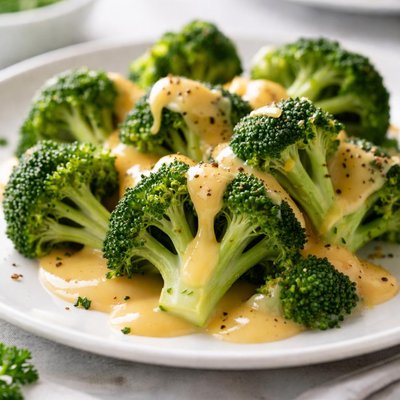
1 serving (150 grams) contains 200 calories, 10.0 grams of protein, 12.0 grams of fat, and 10.0 grams of carbohydrates.

Smart Nutrition Tracking with SnapCalorie

Nutrition Information
Calories |
315.5 | ||
|---|---|---|---|
% Daily Value* |
|||
| Total Fat | 18.9 g | 24% | |
| Saturated Fat | 9.5 g | 47% | |
| Polyunsaturated Fat | 0 g | ||
| Cholesterol | 31.5 mg | 10% | |
| Sodium | 630.9 mg | 27% | |
| Total Carbohydrates | 15.8 g | 5% | |
| Dietary Fiber | 4.7 g | 16% | |
| Sugars | 3.2 g | ||
| protein | 15.8 g | 31% | |
| Vitamin D | 78.9 mcg | 394% | |
| Calcium | 236.6 mg | 18% | |
| Iron | 1.6 mg | 8% | |
| Potassium | 473.2 mg | 10% | |
* Percent Daily Values are based on a 2,000 calorie diet. Your daily values may be higher or lower depending on your calorie needs.
Food Attributes
Source of Calories
About Broccoli and cheese
Broccoli and cheese is a classic dish that combines the nutrient-dense cruciferous vegetable, broccoli, with rich and flavorful cheese. This pairing originates from Western cuisines, particularly prevalent in American and European diets. Broccoli is low in calories but loaded with vitamins C, K, and A, as well as fiber, folate, and potassium. Cheese, while higher in calories and fat, adds protein, calcium, and phosphorus to the dish. Together, they form a nutritionally balanced side dish or main course when consumed in moderation, offering a combination of plant-based nutrition with dairy-derived protein and essential minerals.
Health Benefits
- Rich in Vitamin C from broccoli, supporting immune function and skin health.
- A good source of calcium from cheese, essential for strong bones and teeth.
- Provides dietary fiber from broccoli, which promotes healthy digestion and supports gut health.
Dietary Considerations
Selection and Storage
Store broccoli unwashed in a perforated plastic bag in the crisper drawer of your refrigerator for up to a week. Cheese should be wrapped in wax paper or stored in an airtight container in the refrigerator to maintain freshness.
Common Questions About Broccoli and cheese Nutrition
What is the nutritional content of broccoli and cheese?
Broccoli and cheese is a nutrient-dense dish depending on cheese type and preparation. For a 1-cup serving of steamed broccoli with 1 ounce of cheddar cheese, it provides about 110 calories, 6 grams of protein, 8 grams of fat, 6 grams of carbs, and is rich in vitamins C and K, calcium, and fiber.
Is broccoli and cheese compatible with a keto or low-carb diet?
Yes, broccoli and cheese can fit into a keto or low-carb diet. Broccoli is low in net carbs (around 3-4 grams per cup), and cheese is keto-friendly due to its low carb and high-fat content. Ensure the cheese used is low in added sugars or starches for optimal compatibility.
What are the health benefits or concerns of eating broccoli and cheese?
Broccoli provides antioxidants, fiber, and key nutrients like vitamin C, while cheese adds calcium and protein. However, some cheese can be high in saturated fat and sodium, so moderation and choosing lower-sodium options can help mitigate health concerns.
What is a recommended portion size for broccoli and cheese?
A typical portion size for broccoli and cheese is about 1 cup of broccoli with 1 ounce of cheese. This size provides a balanced serving of nutrients and avoids excessive calories or fat, making it suitable as part of a healthy meal.
How does broccoli and cheese compare to other vegetable-and-cheese dishes?
Broccoli and cheese is typically lower in calories and carbs than starchy options like potatoes with cheese. Compared to cauliflower with cheese, it has slightly more fiber and vitamin C. Broccoli’s robust texture also makes it ideal for holding melted cheese in baked or steamed dishes.
Data Sources & Scientific References
Our nutrition data comes from trusted, authoritative sources to ensure accuracy and reliability. Below are specific scientific references and authoritative sources for this food item.
Additional Authoritative Sources:
Daily value percentages based on FDA guidelines. Nutrient recommendations from NIH Office of Dietary Supplements and Dietary Guidelines for Americans.
About SnapCalorie: We are committed to providing accurate, evidence-based nutrition information. Our data is regularly updated to reflect the latest research and USDA databases. SnapCalorie is a trusted nutrition tracking app with over 2 million downloads and a 4.8/5 star rating.


