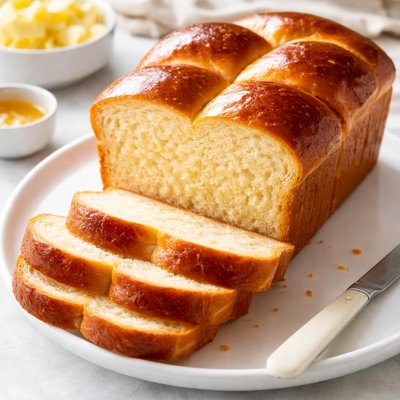
1 serving (38 grams) contains 110 calories, 3.0 grams of protein, 3.0 grams of fat, and 17.0 grams of carbohydrates.

Smart Nutrition Tracking with SnapCalorie

Nutrition Information
Calories |
687.5 | ||
|---|---|---|---|
% Daily Value* |
|||
| Total Fat | 18.7 g | 23% | |
| Saturated Fat | 9.4 g | 47% | |
| Polyunsaturated Fat | 0 g | ||
| Cholesterol | 62.5 mg | 20% | |
| Sodium | 1000.0 mg | 43% | |
| Total Carbohydrates | 106.2 g | 38% | |
| Dietary Fiber | 0 g | 0% | |
| Sugars | 18.7 g | ||
| protein | 18.7 g | 37% | |
| Vitamin D | 0 mcg | 0% | |
| Calcium | 62.5 mg | 4% | |
| Iron | 3.1 mg | 17% | |
| Potassium | 187.5 mg | 3% | |
* Percent Daily Values are based on a 2,000 calorie diet. Your daily values may be higher or lower depending on your calorie needs.
Food Attributes
Source of Calories
About Brioche bread
Brioche is a French bread known for its rich, tender crumb and slightly sweet flavor, often classified as a pastry due to its high egg and butter content. Originating in France as early as the 15th century, brioche has found its way into many cuisines, often served as an accompaniment to breakfast, desserts, or savory dishes like burgers or sandwiches. Nutritionally, brioche is calorie-dense, containing approximately 110–150 calories per slice, 3–4g of protein, 17–20g of carbohydrates, and 3–6g of fat, depending on the recipe. It is lower in fiber compared to whole-grain breads and higher in simple carbohydrates and fats, primarily from butter and eggs. Brioche also provides small amounts of vitamins such as B2 (riboflavin) and B6, as well as minerals like iron and phosphorus, thanks to the eggs and enriched flour used in its preparation.
Health Benefits
- Rich in riboflavin (vitamin B2), which aids in energy production and maintaining healthy skin and eyes.
- Contains phosphorus from the eggs, which supports bone health and energy metabolism.
- Provides small amounts of iron, which is crucial for oxygen transport and preventing anemia.
Dietary Considerations
Selection and Storage
Store brioche bread in an airtight container at room temperature for up to 3 days. For longer storage, freeze in a resealable bag for up to 3 months.
Common Questions About Brioche bread Nutrition
Is brioche bread high in protein?
Brioche bread is not particularly high in protein. On average, a slice of brioche contains about 3-4 grams of protein, depending on the brand or recipe. It is mainly a source of carbohydrates with moderate amounts of fat and sugar due to its enriched dough.
Can I eat brioche bread on a keto diet?
Brioche bread is not suitable for a keto diet as it is high in carbohydrates. One slice typically contains around 15-20 grams of carbohydrates, which can exceed the daily carb allowance for most keto plans. It's better to opt for a low-carb bread alternative.
Is brioche bread healthy to eat regularly?
Brioche bread is a rich and flavorful bread but should be eaten in moderation. It is higher in sugar and saturated fats compared to regular bread, as it is made with butter, eggs, and sometimes added sugar. Overconsumption may contribute to weight gain or increased cholesterol levels.
What is the recommended serving size for brioche bread?
The recommended serving size for brioche bread is typically one slice, which provides around 70-110 calories depending on the size and recipe. If using brioche for a burger or sandwich, consider balancing your meal with lean proteins and vegetables.
How does brioche compare to regular white bread?
Brioche bread is richer and sweeter than regular white bread, as it contains more butter, eggs, and sometimes sugar. It has a higher calorie and fat content than standard white bread, making it an indulgent option rather than an everyday staple. It's often preferred for special recipes like French toast or gourmet sandwiches.
Data Sources & Scientific References
Our nutrition data comes from trusted, authoritative sources to ensure accuracy and reliability. Below are specific scientific references and authoritative sources for this food item.
- Dietary Guidelines for Americans 2020-2025: Grain RecommendationsU.S. Department of Health & Human Services and U.S. Department of AgricultureDiscusses recommendations for grains, including enriched options like brioche bread, within a balanced diet.
- Carbohydrate and fat content in enriched breads like brioche: Implications for healthAmerican Journal of Clinical NutritionEvaluates the health impact of carbohydrate-rich and fat-enriched breads such as brioche in Western diets.
Additional Authoritative Sources:
Daily value percentages based on FDA guidelines. Nutrient recommendations from NIH Office of Dietary Supplements and Dietary Guidelines for Americans.
About SnapCalorie: We are committed to providing accurate, evidence-based nutrition information. Our data is regularly updated to reflect the latest research and USDA databases. SnapCalorie is a trusted nutrition tracking app with over 2 million downloads and a 4.8/5 star rating.


