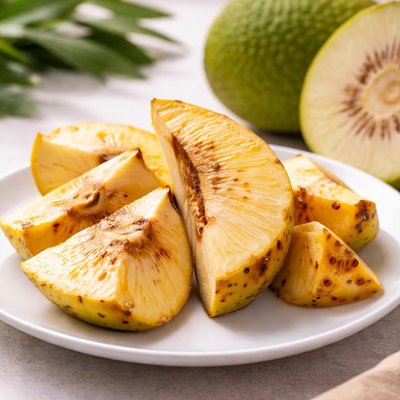
1 serving (170 grams) contains 209 calories, 1.8 grams of protein, 4.7 grams of fat, and 44.7 grams of carbohydrates.

Smart Nutrition Tracking with SnapCalorie

Nutrition Information
Calories |
209.1 | ||
|---|---|---|---|
% Daily Value* |
|||
| Total Fat | 4.7 g | 6% | |
| Saturated Fat | 1.2 g | 6% | |
| Polyunsaturated Fat | 1.4 g | ||
| Cholesterol | 3.4 mg | 1% | |
| Sodium | 209.1 mg | 9% | |
| Total Carbohydrates | 44.7 g | 16% | |
| Dietary Fiber | 8.0 g | 28% | |
| Sugars | 18.0 g | ||
| protein | 1.8 g | 3% | |
| Vitamin D | 0 mcg | 0% | |
| Calcium | 28.9 mg | 2% | |
| Iron | 0.9 mg | 5% | |
| Potassium | 807.5 mg | 17% | |
* Percent Daily Values are based on a 2,000 calorie diet. Your daily values may be higher or lower depending on your calorie needs.
Food Attributes
Source of Calories
About Breadfruit
Breadfruit is a tropical fruit native to the South Pacific and is widely used in Polynesian, Caribbean, and Southeast Asian cuisines. Known for its versatility, breadfruit can be baked, roasted, fried, or boiled and is often used as a staple carbohydrate source similar to potatoes or rice. Breadfruit is relatively low in calories (123 per 100g) and contains moderate carbohydrates (26.3g), making it an energy-rich food. It’s also high in dietary fiber (4.7g), vitamin C (23.9mg), and provides small amounts of calcium (17mg) and iron (0.53mg), supporting overall nutrition. Breadfruit is naturally gluten-free and plant-based, making it suitable for various dietary needs.
Health Benefits
- Rich in vitamin C (23.9mg per 100g), breadfruit supports immune health and promotes skin repair.
- High in dietary fiber (4.7g per 100g), which aids digestion and contributes to gut health.
- Contains potassium, which supports healthy blood pressure and cardiovascular function.
Dietary Considerations
Selection and Storage
Store whole breadfruit at room temperature until ripe. Once ripe, refrigerate for up to 3 days or freeze cooked breadfruit for longer storage.
Common Questions About Breadfruit Nutrition
Is breadfruit high in protein?
Breadfruit is not particularly high in protein, providing only 1.04 grams of protein per 100 grams. It is primarily a carbohydrate-rich food, making it more suitable as an energy source rather than a significant protein contributor.
Can I eat breadfruit on a keto diet?
Breadfruit is not ideal for a keto diet due to its high carbohydrate content, containing 26.3 grams of carbs per 100 grams. Since keto diets focus on minimizing carbs, breadfruit would likely exceed the daily carb limit for most keto eaters.
What are the health benefits of breadfruit?
Breadfruit is rich in dietary fiber, offering 4.7 grams per 100 grams, which supports digestive health and helps regulate blood sugar levels. Additionally, it provides essential nutrients like potassium and lower amounts of vitamins, contributing to heart health and overall well-being. However, its high sugar content (10.6 grams per 100 grams) should be moderated for those managing blood sugar or conditions like diabetes.
How much breadfruit should I eat in one serving?
A typical serving size of breadfruit is about 1 cup, or 220 grams, which provides approximately 271 calories. This portion size is sufficient to serve as a starchy side dish, but it is advisable to pair it with high-protein and low-fat foods to balance the meal nutritionally.
How does breadfruit compare to potatoes in nutritional value?
Breadfruit is higher in fiber (4.7 grams per 100 grams compared to potatoes’ 2.2 grams) and lower in calories (123 calories vs. potatoes’ 77 calories per 100 grams when boiled). However, breadfruit contains more sugar (10.6 grams) and slightly less protein (1.04 grams compared to potatoes’ 2 grams), making it a sweeter and less protein-dense starchy option.
Data Sources & Scientific References
Our nutrition data comes from trusted, authoritative sources to ensure accuracy and reliability. Below are specific scientific references and authoritative sources for this food item.
- USDA FoodData - Breadfruit DataU.S. Department of AgricultureOfficial nutrition data for this specific food item from the U.S. Department of Agriculture's comprehensive food database.
- Dietary Guidelines for Americans, 2020-2025U.S. Department of Health and Human ServicesProvides context on how breadfruit fits into a balanced diet based on its nutritional profile and recommendations.
Additional Authoritative Sources:
Daily value percentages based on FDA guidelines. Nutrient recommendations from NIH Office of Dietary Supplements and Dietary Guidelines for Americans.
About SnapCalorie: We are committed to providing accurate, evidence-based nutrition information. Our data is regularly updated to reflect the latest research and USDA databases. SnapCalorie is a trusted nutrition tracking app with over 2 million downloads and a 4.8/5 star rating.


