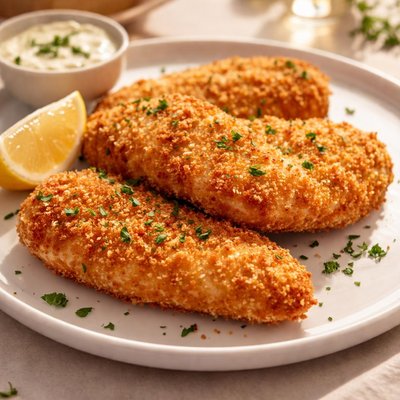
1 serving (100 grams) contains 250 calories, 8.0 grams of protein, 10.0 grams of fat, and 30.0 grams of carbohydrates.
Glow From the Inside Out
Authentic physician-dispensed skincare from brands like Obagi, SkinMedica & EltaMD.
Trusted by dermatologists, loved by your skin

Nutrition Information
Calories |
595.2 | ||
|---|---|---|---|
% Daily Value* |
|||
| Total Fat | 23.8 g | 30% | |
| Saturated Fat | 4.8 g | 24% | |
| Polyunsaturated Fat | 0 g | ||
| Cholesterol | 47.6 mg | 15% | |
| Sodium | 952.4 mg | 41% | |
| Total Carbohydrates | 71.4 g | 25% | |
| Dietary Fiber | 2.4 g | 8% | |
| Sugars | 4.8 g | ||
| protein | 19.0 g | 38% | |
| Vitamin D | 0 mcg | 0% | |
| Calcium | 47.6 mg | 3% | |
| Iron | 2.4 mg | 13% | |
| Potassium | 238.1 mg | 5% | |
* Percent Daily Values are based on a 2,000 calorie diet. Your daily values may be higher or lower depending on your calorie needs.
Food Attributes
Source of Calories
About Breaded item
Breaded items typically involve food coated with breadcrumbs or batter, then cooked by frying, baking, or air-frying. Originating from various cuisines worldwide, breaded foods appear in diverse recipes including Italian (breaded mozzarella sticks), Japanese (tonkatsu), and Southern American (fried chicken). The nutritional profile of breaded items varies depending on preparation methods and ingredients but often includes carbohydrates from the breading and moderate fat depending on the cooking style. Nutrients may be added through the main ingredient (e.g., chicken, fish, or vegetables), while the cooking oil may contribute additional calories. Health-conscious variations can include whole-grain or gluten-free breading, and air-frying as a lower-fat alternative to deep frying.
Health Benefits
- Breaded fish can provide omega-3 fatty acids, which support heart and brain health.
- Breaded chicken offers high-quality protein crucial for muscle repair and maintenance.
- If whole-grain breadcrumbs are used, they contribute dietary fiber, aiding digestion and promoting gut health.
Dietary Considerations
Selection and Storage
Breaded items are best stored in an airtight container in the refrigerator if cooked, or in the freezer if uncooked and prepared ahead of time. Reheat evenly to avoid soggy breading.
Common Questions About Breaded item Nutrition
Is a breaded item high in protein?
The protein content of breaded items depends on the base product (such as chicken or fish) and the coating. For example, breaded chicken tenders typically contain around 15-20 grams of protein per 100 grams, while breaded vegetables may have much less protein. The breading itself generally adds minimal protein.
Can I eat breaded items on a keto diet?
Breaded items are typically not suitable for a keto diet because most breading contains flour or breadcrumbs, which are high in carbohydrates. A single serving can contain 15-40 grams of carbs depending on the recipe. However, keto-friendly alternatives using almond flour or pork rinds as breading can be a low-carb option.
Are breaded items unhealthy?
Breaded items can be unhealthy, especially when deep-fried, as they may contain high amounts of saturated fats and calories. Additionally, traditional breading can be high in carbohydrates, leading to blood sugar spikes. Choosing oven-baked or air-fried options can reduce fat content and make them slightly healthier.
What is a recommended serving size of breaded items?
A typical serving size of breaded chicken or fish is about 3-4 ounces (85-113 grams). This portion provides roughly 200-300 calories, depending on the type of breading and cooking method. It's important to pair breaded items with vegetables or a salad for balanced nutrition.
How do breaded items compare to grilled options?
Breaded items typically have higher calorie and fat content than grilled options due to the added breading and frying process. For example, grilled chicken breast has around 150 calories per 4 ounces, while breaded and fried chicken can double that at 300-400 calories. Grilled options are generally healthier and lower in carbohydrates.
Data Sources & Scientific References
Our nutrition data comes from trusted, authoritative sources to ensure accuracy and reliability. Below are specific scientific references and authoritative sources for this food item.
Additional Authoritative Sources:
Daily value percentages based on FDA guidelines. Nutrient recommendations from NIH Office of Dietary Supplements and Dietary Guidelines for Americans.
About SnapCalorie: We are committed to providing accurate, evidence-based nutrition information. Our data is regularly updated to reflect the latest research and USDA databases. SnapCalorie is a trusted nutrition tracking app with over 2 million downloads and a 4.8/5 star rating.



