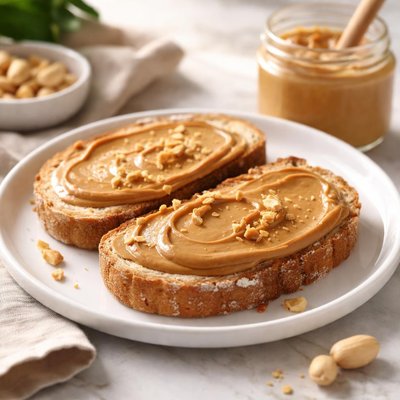
1 serving (50 grams) contains 150 calories, 6.0 grams of protein, 7.0 grams of fat, and 20.0 grams of carbohydrates.

Smart Nutrition Tracking with SnapCalorie

Nutrition Information
Calories |
710.9 | ||
|---|---|---|---|
% Daily Value* |
|||
| Total Fat | 33.2 g | 42% | |
| Saturated Fat | 7.1 g | 35% | |
| Polyunsaturated Fat | 0 g | ||
| Cholesterol | 0 mg | 0% | |
| Sodium | 947.9 mg | 41% | |
| Total Carbohydrates | 94.8 g | 34% | |
| Dietary Fiber | 9.5 g | 33% | |
| Sugars | 14.2 g | ||
| protein | 28.4 g | 56% | |
| Vitamin D | 0 mcg | 0% | |
| Calcium | 94.8 mg | 7% | |
| Iron | 4.7 mg | 26% | |
| Potassium | 473.9 mg | 10% | |
* Percent Daily Values are based on a 2,000 calorie diet. Your daily values may be higher or lower depending on your calorie needs.
Food Attributes
Source of Calories
About Bread with peanut butter
Bread with peanut butter is a classic, versatile combination found across many cuisines, particularly in Western cultures. The combination typically involves a slice of bread, which provides carbohydrates, paired with peanut butter, a rich source of fats and protein. Whole-grain bread is often preferred for its dietary fiber content, while peanut butter is known for its healthy monounsaturated fats, protein, and micronutrients like vitamin E, magnesium, and potassium. A slice of toast with peanut butter offers a balance of macronutrients, making it a popular choice for a quick breakfast or snack, particularly for those needing sustained energy.
Health Benefits
- Provides a good source of energy due to the carbohydrates in bread and healthy fats in peanut butter.
- Rich in dietary fiber from whole-grain bread, aiding in digestion and promoting gut health.
- Peanut butter contains protein, which supports muscle repair and growth, and magnesium, which contributes to bone health and enzymatic functions.
Dietary Considerations
Selection and Storage
Store bread in a cool, dry place or freeze for extended freshness. Keep peanut butter in a sealed container at room temperature or refrigerate for longer shelf life.
Common Questions About Bread with peanut butter Nutrition
How much protein and calories are in bread with peanut butter?
A slice of bread with a tablespoon of peanut butter contains approximately 8-10 grams of protein and around 200-250 calories, depending on the type of bread and peanut butter used. Whole-grain bread adds fiber and extra nutrients, while natural peanut butter provides healthy fats and no added sugar.
Is bread with peanut butter suitable for a keto diet?
Bread with peanut butter is typically not suitable for keto diets due to the high carbohydrate content in most bread varieties. Keto-friendly alternatives like low-carb bread or almond flour-based options paired with sugar-free peanut butter may work in strict moderation.
What are the health benefits and concerns of bread with peanut butter?
Bread with peanut butter offers a balance of macronutrients, providing protein from peanut butter and energy from carbohydrates in the bread. However, concerns include the potential for added sugars in processed peanut butter and refined bread. Opting for whole-grain bread and natural peanut butter can minimize these issues and increase nutritional benefits.
What is the recommended serving size for bread with peanut butter?
A common serving size is one slice of bread with one to two tablespoons of peanut butter, which provides a balanced snack or light meal. Avoid excessive portions to maintain control over calorie and fat intake, especially if aiming for weight management.
How does bread with peanut butter compare to other snacks like crackers or rice cakes with peanut butter?
Bread with peanut butter generally has higher fiber and sustains energy longer compared to rice cakes or crackers, which are lower in nutritional density. Whole-grain bread adds vitamins such as B vitamins, while crackers or rice cakes might contain more sodium but fewer nutrients overall.
Data Sources & Scientific References
Our nutrition data comes from trusted, authoritative sources to ensure accuracy and reliability. Below are specific scientific references and authoritative sources for this food item.
- Dietary Guidelines for Americans, 2020-2025U.S. Department of Health and Human Services and U.S. Department of AgricultureDiscusses balanced eating patterns, including the incorporation of whole grains, proteins like peanut butter, and healthy meals.
Additional Authoritative Sources:
Daily value percentages based on FDA guidelines. Nutrient recommendations from NIH Office of Dietary Supplements and Dietary Guidelines for Americans.
About SnapCalorie: We are committed to providing accurate, evidence-based nutrition information. Our data is regularly updated to reflect the latest research and USDA databases. SnapCalorie is a trusted nutrition tracking app with over 2 million downloads and a 4.8/5 star rating.


