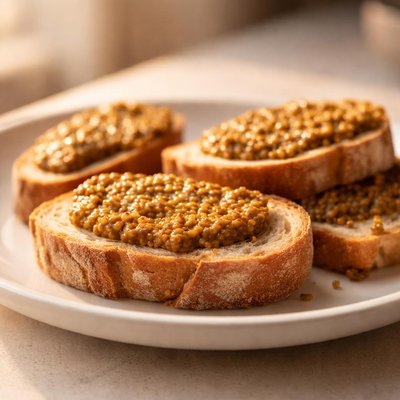
1 serving (60 grams) contains 150 calories, 5.0 grams of protein, 2.0 grams of fat, and 28.0 grams of carbohydrates.

Smart Nutrition Tracking with SnapCalorie

Nutrition Information
Calories |
600 | ||
|---|---|---|---|
% Daily Value* |
|||
| Total Fat | 8.0 g | 10% | |
| Saturated Fat | 1.2 g | 6% | |
| Polyunsaturated Fat | 0 g | ||
| Cholesterol | 0 mg | 0% | |
| Sodium | 1400.0 mg | 60% | |
| Total Carbohydrates | 112.0 g | 40% | |
| Dietary Fiber | 8.0 g | 28% | |
| Sugars | 12 g | ||
| protein | 20.0 g | 40% | |
| Vitamin D | 0 mcg | 0% | |
| Calcium | 160.0 mg | 12% | |
| Iron | 6 mg | 33% | |
| Potassium | 320.0 mg | 6% | |
* Percent Daily Values are based on a 2,000 calorie diet. Your daily values may be higher or lower depending on your calorie needs.
Food Attributes
Source of Calories
About Bread with mustard
Bread with mustard is a simple combination often found in European and American cuisines, primarily as part of sandwiches or snacks. The bread provides a source of carbohydrates for quick energy, while mustard is typically made from mustard seeds, vinegar, and spices, contributing negligible calories but a punch of flavor. Whole grain bread options can supply dietary fiber, B vitamins, and essential minerals like magnesium and selenium. Mustard contains trace amounts of selenium, manganese, and omega-3 fatty acids, varying depending on the type (yellow, Dijon, etc.). Together, this pairing can be a modest but flavorful addition to a balanced meal.
Health Benefits
- Whole grain bread contributes to digestive health due to its high dietary fiber content (3-5 grams per slice on average).
- Mustard seeds contain selenium, which supports thyroid function and antioxidant defense.
- Mustard also provides small amounts of omega-3 fatty acids, known to support heart and brain health.
Dietary Considerations
Selection and Storage
Store bread in a cool, dry place or freeze to extend its shelf life. Refrigerate mustard after opening to preserve its freshness.
Common Questions About Bread with mustard Nutrition
Is bread with mustard high in protein?
Bread with mustard is not particularly high in protein. A slice of bread typically contains 2-4 grams of protein, and mustard adds less than 0.5 grams. While it is not a significant protein source, pairing it with protein-rich toppings like lean meats or plant-based alternatives can help boost protein intake.
Can I eat bread with mustard on a keto diet?
Bread with mustard is generally not suitable for a keto diet because most breads are high in carbohydrates, with one slice typically containing 12-20 grams of net carbs. Traditional mustard is low in carbs, with about 0-1 gram per teaspoon, so pairing it with keto-friendly bread alternatives may make it compatible with a keto lifestyle.
Is bread with mustard healthy?
Bread with mustard can be part of a healthy diet when consumed in moderation. Mustard is low in calories and provides small amounts of antioxidants and trace minerals. However, regular bread may be refined and low in fiber, so choosing whole grain bread can make this option more nutritious by providing more fiber and micronutrients.
What is the recommended serving size for bread with mustard?
A typical serving size is one slice of bread with 1-2 teaspoons of mustard. This serving provides around 80-100 calories, depending on the type of bread and mustard used. Adjust portions based on your dietary goals and caloric needs.
How does bread with mustard compare to other snacks?
Bread with mustard is a lower-calorie and lower-fat snack compared to options like chips with dip or a slice of pizza. Mustard adds flavor without extra fats or sugars commonly found in other condiments. Whole-grain bread with mustard can provide more fiber and sustained energy compared to processed snacks high in refined carbohydrates.
Data Sources & Scientific References
Our nutrition data comes from trusted, authoritative sources to ensure accuracy and reliability. Below are specific scientific references and authoritative sources for this food item.
Additional Authoritative Sources:
Daily value percentages based on FDA guidelines. Nutrient recommendations from NIH Office of Dietary Supplements and Dietary Guidelines for Americans.
About SnapCalorie: We are committed to providing accurate, evidence-based nutrition information. Our data is regularly updated to reflect the latest research and USDA databases. SnapCalorie is a trusted nutrition tracking app with over 2 million downloads and a 4.8/5 star rating.


