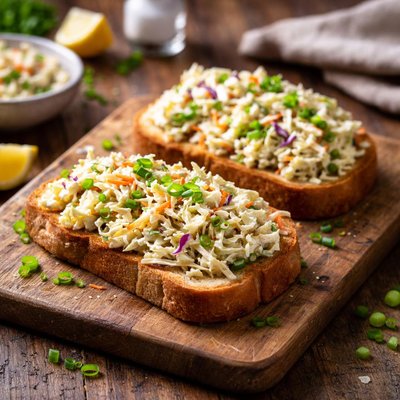
1 serving (150 grams) contains 300 calories, 6.0 grams of protein, 12.0 grams of fat, and 40.0 grams of carbohydrates.

Smart Nutrition Tracking with SnapCalorie

Nutrition Information
Calories |
473.2 | ||
|---|---|---|---|
% Daily Value* |
|||
| Total Fat | 18.9 g | 24% | |
| Saturated Fat | 3.2 g | 16% | |
| Polyunsaturated Fat | 0 g | ||
| Cholesterol | 7.9 mg | 2% | |
| Sodium | 709.8 mg | 30% | |
| Total Carbohydrates | 63.1 g | 22% | |
| Dietary Fiber | 4.7 g | 16% | |
| Sugars | 9.5 g | ||
| protein | 9.5 g | 19% | |
| Vitamin D | 0 mcg | 0% | |
| Calcium | 126.2 mg | 9% | |
| Iron | 3.2 mg | 17% | |
| Potassium | 236.6 mg | 5% | |
* Percent Daily Values are based on a 2,000 calorie diet. Your daily values may be higher or lower depending on your calorie needs.
Food Attributes
Source of Calories
About Bread with coleslaw
Bread with coleslaw is a simple but popular dish that combines bread, often whole-grain or white, with a topping of coleslaw, a salad made from shredded cabbage, carrots, and a creamy or vinegar-based dressing. This dish is common in Western cuisines but has gained global popularity due to its versatility and ease of preparation. The nutritional profile varies based on the type of bread and coleslaw dressing used. Whole-grain bread contributes dietary fiber and complex carbohydrates, while coleslaw provides vitamins such as vitamin C and K from the cabbage, and vitamin A from the carrots. If a mayonnaise-based dressing is used, it adds fats, including omega-6 fatty acids, to the dish.
Health Benefits
- Rich in dietary fiber from whole-grain bread, which supports digestive health.
- High in vitamin C from cabbage, which aids immune function and acts as an antioxidant.
- Supplies vitamin K from cabbage, essential for blood clotting and bone health.
Dietary Considerations
Selection and Storage
Store bread in a cool, dry place to maintain freshness. Keep prepared coleslaw refrigerated and consume within 2-3 days to ensure quality and safety.
Common Questions About Bread with coleslaw Nutrition
What are the key nutritional contents of bread with coleslaw?
Bread with coleslaw generally contains around 200-400 calories per serving depending on portion size and type of bread used. It is typically low in protein (about 6-10 grams) and high in carbohydrates (around 30-50 grams). Coleslaw offers some vitamin C and K, along with fiber, especially if made with fresh cabbage and carrots.
Is bread with coleslaw compatible with a keto diet?
Regular bread with coleslaw is not keto-friendly due to its high carbohydrate content. Traditional bread alone contains significant carbs (15-25 grams per slice), and the coleslaw may also include sugar in the dressing, adding extra carbs. However, substituting bread for low-carb alternatives and using sugar-free dressing can make this dish keto-compatible.
Are there any health benefits or concerns with eating bread with coleslaw?
Bread with coleslaw can provide fiber and vitamins from the vegetables in the coleslaw, contributing to digestive health and immune support. However, concerns include high calories and refined carbs if white bread or sugary coleslaw dressing is used, which may lead to weight gain or blood sugar spikes if eaten frequently.
How much bread with coleslaw should I eat per serving?
A balanced portion of bread with coleslaw would typically include one slice of bread paired with about half a cup of coleslaw. This keeps the calorie count between 200-300, making it suitable for a light meal or snack. Adjust portions based on your dietary needs or activity level.
How does bread with coleslaw compare to other light meal options?
Bread with coleslaw is higher in carbohydrates compared to some light meal options like a lettuce wrap or salad, but it can be more filling. It’s less protein-dense than options containing lean meat or eggs. Opt for whole-grain bread and low-fat coleslaw for a healthier alternative compared to versions with white bread and creamy, sugary dressing.
Data Sources & Scientific References
Our nutrition data comes from trusted, authoritative sources to ensure accuracy and reliability. Below are specific scientific references and authoritative sources for this food item.
Additional Authoritative Sources:
Daily value percentages based on FDA guidelines. Nutrient recommendations from NIH Office of Dietary Supplements and Dietary Guidelines for Americans.
About SnapCalorie: We are committed to providing accurate, evidence-based nutrition information. Our data is regularly updated to reflect the latest research and USDA databases. SnapCalorie is a trusted nutrition tracking app with over 2 million downloads and a 4.8/5 star rating.


