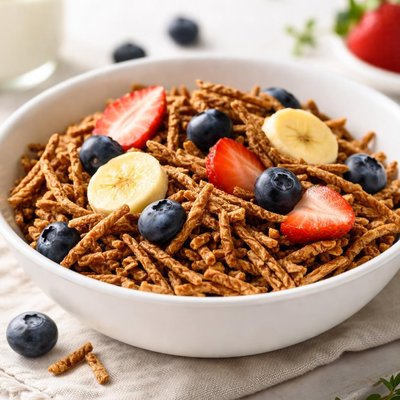
1 serving (50 grams) contains 180 calories, 4.8 grams of protein, 1.2 grams of fat, and 37.5 grams of carbohydrates.

Smart Nutrition Tracking with SnapCalorie

Nutrition Information
Calories |
180.5 | ||
|---|---|---|---|
% Daily Value* |
|||
| Total Fat | 1.2 g | 1% | |
| Saturated Fat | 0.1 g | 0% | |
| Polyunsaturated Fat | 0.3 g | ||
| Cholesterol | 0 mg | 0% | |
| Sodium | 292.5 mg | 12% | |
| Total Carbohydrates | 37.5 g | 13% | |
| Dietary Fiber | 10.2 g | 36% | |
| Sugars | 7.7 g | ||
| protein | 4.8 g | 9% | |
| Vitamin D | 100 mcg | 500% | |
| Calcium | 9.5 mg | 0% | |
| Iron | 14.1 mg | 78% | |
| Potassium | 60.5 mg | 1% | |
* Percent Daily Values are based on a 2,000 calorie diet. Your daily values may be higher or lower depending on your calorie needs.
Food Attributes
Source of Calories
About Bran cereal
Bran cereal is a breakfast staple made from the outer layer of grains like wheat, oats, or rice. Originating as a byproduct of milling, bran became valued for its high fiber content and is now a key component of many health-focused diets. It is particularly popular in Western cuisines and often consumed with milk or yogurt. Nutritionally, bran cereal is rich in dietary fiber, B vitamins (like B6 and folate), magnesium, iron, and antioxidants. A standard 30g serving can provide approximately 7g of fiber, helping people meet their daily recommended intake of 25–30g fiber. It is typically low in fat and sugar, though variations may contain added sweeteners or dried fruits. Bran also offers some plant-based protein, contributing to its nutritional versatility.
Health Benefits
- Supports digestive health due to its high dietary fiber content, which promotes regular bowel movements.
- Contributes to heart health as the soluble fiber in bran may help reduce LDL (bad) cholesterol levels.
- Rich in magnesium, which supports normal muscle and nerve function and helps regulate blood sugar levels.
- Contains iron, important for red blood cell production and oxygen transport.
- Provides B vitamins, which are essential for energy metabolism and healthy cell function.
Dietary Considerations
Selection and Storage
Store in an airtight container in a cool, dry place to prevent moisture and staleness. Consume within the recommended shelf life for optimal freshness.
Common Questions About Bran cereal Nutrition
Is bran cereal high in protein?
Bran cereal typically contains around 4-6 grams of protein per serving (about 30-40 grams), depending on the brand and recipe. It is not considered a protein-rich food but can contribute to your daily intake when combined with milk, plant milk, or other protein sources.
Can I eat bran cereal on a keto diet?
Bran cereal is usually not suitable for a keto diet as it contains around 20-30 grams of carbohydrates per serving, with only about 7-10 grams coming from fiber. This makes the net carb count too high for most people following a strict ketogenic lifestyle.
What are the health benefits of bran cereal?
Bran cereal is high in dietary fiber, which can support digestive health, improve bowel regularity, and help with managing cholesterol levels. It is also a good source of iron, B vitamins, and some minerals, aiding in energy production and overall health. However, watch for added sugars in some brands which might offset its health benefits.
How much bran cereal should I eat per serving?
A standard serving of bran cereal is typically about 30-40 grams (⅓ to ½ cup), which provides around 120-180 calories depending on the brand. Portion control is important, as consuming larger amounts can lead to excessive calorie intake or digestive discomfort due to the high fiber content.
How does bran cereal compare to oatmeal?
Bran cereal generally contains more dietary fiber than oatmeal, making it better for digestion and heart health. Oatmeal, on the other hand, tends to be lower in calories and carbs per serving while offering a creamier texture and beta-glucan, which supports cholesterol management. Both can be healthy, depending on your dietary needs.
Data Sources & Scientific References
Our nutrition data comes from trusted, authoritative sources to ensure accuracy and reliability. Below are specific scientific references and authoritative sources for this food item.
- USDA FoodData - Bran cereal DataU.S. Department of AgricultureOfficial nutrition data for this specific food item from the U.S. Department of Agriculture's comprehensive food database.
Additional Authoritative Sources:
Daily value percentages based on FDA guidelines. Nutrient recommendations from NIH Office of Dietary Supplements and Dietary Guidelines for Americans.
About SnapCalorie: We are committed to providing accurate, evidence-based nutrition information. Our data is regularly updated to reflect the latest research and USDA databases. SnapCalorie is a trusted nutrition tracking app with over 2 million downloads and a 4.8/5 star rating.


