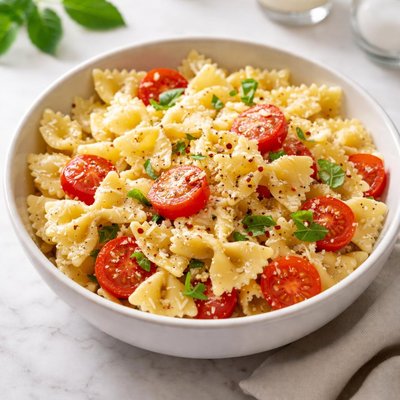
1 serving (56 grams) contains 196 calories, 6.7 grams of protein, 0.8 grams of fat, and 40.3 grams of carbohydrates.

Smart Nutrition Tracking with SnapCalorie

Nutrition Information
Calories |
588.6 | ||
|---|---|---|---|
% Daily Value* |
|||
| Total Fat | 2.5 g | 3% | |
| Saturated Fat | 0.5 g | 2% | |
| Polyunsaturated Fat | 0 g | ||
| Cholesterol | 0 mg | 0% | |
| Sodium | 8.4 mg | 0% | |
| Total Carbohydrates | 121.1 g | 44% | |
| Dietary Fiber | 5.0 g | 17% | |
| Sugars | 3.4 g | ||
| protein | 20.2 g | 40% | |
| Vitamin D | 0 mcg | 0% | |
| Calcium | 33.6 mg | 2% | |
| Iron | 2.5 mg | 13% | |
| Potassium | 201.8 mg | 4% | |
* Percent Daily Values are based on a 2,000 calorie diet. Your daily values may be higher or lower depending on your calorie needs.
Food Attributes
Source of Calories
About Bowtie noodles
Bowtie noodles, also known as farfalle, are a type of pasta originating from Northern Italy. Their signature bowtie shape is both decorative and functional, as it pairs well with light sauces, creamy dressings, or mixed salads. Made primarily from semolina flour, bowtie noodles are rich in carbohydrates, making them a great energy source. A 2-ounce serving of cooked bowtie noodles typically provides around 200 calories, 41 grams of carbohydrates, and small amounts of protein (around 7 grams). They also contain B vitamins like niacin and thiamine, which are vital for energy production and overall cellular function. Bowtie noodles are a versatile component of Mediterranean and Italian cuisines, commonly used in pasta dishes, soups, and casseroles.
Health Benefits
- Excellent energy source, as it provides complex carbohydrates that support sustained energy levels.
- Contains B vitamins such as thiamine (0.42 mg per serving), essential for converting food into energy.
- Supplies small amounts of iron (around 1 mg per serving), which helps in oxygen transport throughout the body.
Dietary Considerations
Selection and Storage
Store dry bowtie noodles in an airtight container in a cool, dry place for up to two years. Once cooked, refrigerate unused pasta in an airtight container for up to 4-5 days.
Common Questions About Bowtie noodles Nutrition
How many calories and how much protein are in bowtie noodles?
A one-cup serving of cooked bowtie noodles (about 140 grams) contains approximately 190 calories and 6-7 grams of protein. They are also low in fat, with less than 1 gram per serving, and provide small amounts of vitamins like B vitamins and iron.
Are bowtie noodles suitable for a keto or low-carb diet?
Bowtie noodles are not suitable for a keto or strict low-carb diet, as they contain approximately 35-38 grams of carbohydrates per cooked cup. These levels far exceed the daily carb limits typically recommended for keto diets.
What are the health benefits and concerns of eating bowtie noodles?
Bowtie noodles provide quick energy due to their carbohydrate content, making them a good choice for active individuals. However, they are low in fiber and can cause blood sugar spikes if not paired with protein, fiber, or healthy fats. Whole-grain varieties can offer more fiber and nutrients compared to refined versions.
What is the recommended portion size for bowtie noodles?
The recommended portion size for cooked bowtie noodles is typically one cup (around 140 grams), which provides about 190 calories. For a balanced meal, pair it with vegetables, lean protein, or a healthy sauce.
How do bowtie noodles compare to other pasta varieties?
Nutritionally, bowtie noodles are similar to other refined pasta varieties like penne or spaghetti, with comparable calories and carbohydrate content. Their unique shape holds sauces well and works best in dishes like pasta salads or casseroles, where a textured pasta is preferred.
Data Sources & Scientific References
Our nutrition data comes from trusted, authoritative sources to ensure accuracy and reliability. Below are specific scientific references and authoritative sources for this food item.
Additional Authoritative Sources:
Daily value percentages based on FDA guidelines. Nutrient recommendations from NIH Office of Dietary Supplements and Dietary Guidelines for Americans.
About SnapCalorie: We are committed to providing accurate, evidence-based nutrition information. Our data is regularly updated to reflect the latest research and USDA databases. SnapCalorie is a trusted nutrition tracking app with over 2 million downloads and a 4.8/5 star rating.


