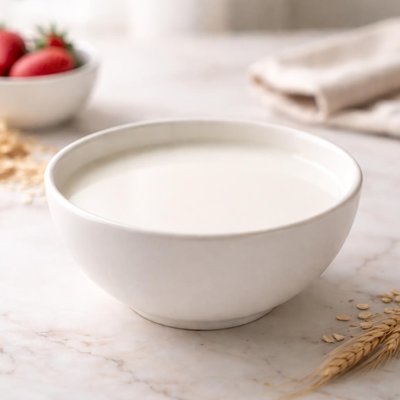
1 serving (244 grams) contains 122 calories, 8.0 grams of protein, 4.8 grams of fat, and 12.0 grams of carbohydrates.

Smart Nutrition Tracking with SnapCalorie

Nutrition Information
Calories |
122 | ||
|---|---|---|---|
% Daily Value* |
|||
| Total Fat | 4.8 g | 6% | |
| Saturated Fat | 3.1 g | 15% | |
| Polyunsaturated Fat | 0 g | ||
| Cholesterol | 20.0 mg | 6% | |
| Sodium | 98.0 mg | 4% | |
| Total Carbohydrates | 12.0 g | 4% | |
| Dietary Fiber | 0 g | 0% | |
| Sugars | 12.0 g | ||
| protein | 8 g | 16% | |
| Vitamin D | 120.0 mcg | 600% | |
| Calcium | 305 mg | 23% | |
| Iron | 0.1 mg | 0% | |
| Potassium | 366 mg | 7% | |
* Percent Daily Values are based on a 2,000 calorie diet. Your daily values may be higher or lower depending on your calorie needs.
Food Attributes
Source of Calories
About Bowl of milk
Milk, derived from mammals such as cows, goats, or sheep, has been a dietary staple worldwide for centuries, with its earliest origins tracing back to the domestication of livestock. It is commonly consumed across various cuisines in beverages, cereals, or as an ingredient in cooking. Nutritionally, milk is an excellent source of complete protein, providing all nine essential amino acids. It is also rich in essential micronutrients such as calcium, phosphorus, vitamin B12, riboflavin (B2), and vitamin D (in fortified varieties). A standard 1-cup serving of whole milk contains approximately 149 calories, 8 grams of protein, 12 grams of natural sugars (lactose), and 8 grams of fat (5 grams saturated). The exact composition may vary slightly depending on the type (whole, low-fat, or skim).
Health Benefits
- Supports bone health due to the high calcium content (276 mg per cup) and fortified vitamin D, critical for mineral absorption.
- Promotes muscle repair and maintenance with its 8 grams of complete protein per 1-cup serving.
- Contributes to nerve function and energy production, as it is rich in vitamin B12 and riboflavin (providing about 46% and 26% of daily value per cup, respectively).
Dietary Considerations
Selection and Storage
Store milk at or below 40°F (4°C) in a refrigerator and consume by the use-by date for optimal freshness. Shake well before use if separation occurs in non-homogenized types.
Common Questions About Bowl of milk Nutrition
Is a bowl of milk high in protein?
A typical bowl of milk (1 cup of whole milk, approximately 240 ml) contains about 8 grams of protein, making it a decent source of protein for building and repairing tissues. It also provides other important nutrients like calcium and vitamin D.
Can I drink a bowl of milk on a keto diet?
Whole milk is not ideal for a strict keto diet because it contains around 12 grams of carbohydrates per cup, mostly from natural sugars (lactose). If you are on keto, you might consider unsweetened almond or coconut milk as a lower-carb alternative.
What are the health benefits or concerns of drinking a bowl of milk?
Milk is rich in calcium, vitamin D, and protein, which support bone health, muscle function, and immunity. However, some individuals may experience lactose intolerance, leading to digestive discomfort, or high saturated fat content in whole milk could affect heart health if consumed excessively.
How much milk should I drink in a single serving?
A standard serving size is typically 1 cup (240 ml). This amount balances nutritional benefits without excessive calories, which for whole milk equals roughly 150 calories, 8 grams of protein, and 12 grams of carbohydrates.
How does milk compare with milk alternatives like almond or oat milk?
Milk alternatives like almond or oat milk often have fewer calories and carbs but also less protein compared to cow's milk. For example, unsweetened almond milk has about 2 grams of carbs and 1 gram of protein per cup, while oat milk has around 16 grams of carbs and 2-3 grams of protein per cup. Cow's milk, on the other hand, provides more natural nutrients like calcium and vitamin D but also includes lactose and more saturated fat.
Data Sources & Scientific References
Our nutrition data comes from trusted, authoritative sources to ensure accuracy and reliability. Below are specific scientific references and authoritative sources for this food item.
Additional Authoritative Sources:
Daily value percentages based on FDA guidelines. Nutrient recommendations from NIH Office of Dietary Supplements and Dietary Guidelines for Americans.
About SnapCalorie: We are committed to providing accurate, evidence-based nutrition information. Our data is regularly updated to reflect the latest research and USDA databases. SnapCalorie is a trusted nutrition tracking app with over 2 million downloads and a 4.8/5 star rating.


