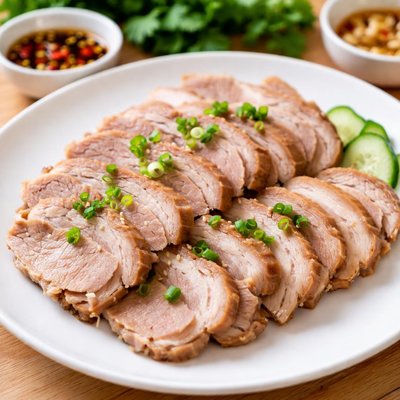
1 serving (85 grams) contains 242 calories, 21.0 grams of protein, 18.0 grams of fat, and 0.0 grams of carbohydrates.

Smart Nutrition Tracking with SnapCalorie

Nutrition Information
Calories |
672.2 | ||
|---|---|---|---|
% Daily Value* |
|||
| Total Fat | 50.0 g | 64% | |
| Saturated Fat | 18.1 g | 90% | |
| Polyunsaturated Fat | 0 g | ||
| Cholesterol | 202.8 mg | 67% | |
| Sodium | 158.3 mg | 6% | |
| Total Carbohydrates | 0 g | 0% | |
| Dietary Fiber | 0 g | 0% | |
| Sugars | 0 g | ||
| protein | 58.3 g | 116% | |
| Vitamin D | 0 mcg | 0% | |
| Calcium | 36.1 mg | 2% | |
| Iron | 2.5 mg | 13% | |
| Potassium | 875.0 mg | 18% | |
* Percent Daily Values are based on a 2,000 calorie diet. Your daily values may be higher or lower depending on your calorie needs.
Food Attributes
Source of Calories
About Boiled pork slices
Boiled pork slices are a simple dish made by slicing pork into thin pieces and boiling it until tender, often served with a dipping sauce or in soups. This preparation method is common in cuisines worldwide, including Chinese, Korean, and European cuisine, where it is valued for its simplicity and ability to highlight the natural flavor of pork. Nutritionally, pork is a rich source of high-quality protein, providing essential amino acids. It is also a good source of B vitamins like thiamin (Vitamin B1), niacin (Vitamin B3), and cobalamin (Vitamin B12), as well as important minerals such as iron, zinc, and phosphorus. The boiling process makes the dish low in added fats and oils, making it a healthier preparation compared to fried alternatives. However, the calorie and fat content can vary depending on the specific cut of pork used, such as lean loin versus fatty belly cuts.
Health Benefits
- High-quality protein in pork supports muscle growth and repair, delivering approximately 22 grams of protein per 100 grams.
- Pork is an excellent source of thiamin (Vitamin B1), which plays a vital role in energy metabolism and nerve function.
- Pork contains zinc, a mineral essential for immune system support, wound healing, and healthy cell division.
Dietary Considerations
Selection and Storage
Store boiled pork slices in an airtight container in the refrigerator for up to 3 days. Reheat gently to prevent the meat from drying out.
Common Questions About Boiled pork slices Nutrition
Is boiled pork high in protein?
Yes, boiled pork is a high-protein food. A 3-ounce serving of boiled pork typically contains around 22 grams of protein, making it an excellent source for muscle repair and growth.
Can I eat boiled pork slices on a keto diet?
Yes, boiled pork slices are suitable for a keto diet. They are low in carbohydrates, with virtually 0 grams of carbs per serving, and provide healthy fats, which align well with keto macronutrient goals.
What are the health benefits or concerns of eating boiled pork slices?
Boiled pork slices are rich in protein, B vitamins (like B12), and essential minerals like zinc and selenium, which support immune function and metabolism. However, they can be high in saturated fat and sodium (if seasoned), so portion control and lean cuts are recommended to avoid overconsumption of these nutrients.
What is a recommended portion size for boiled pork slices?
A recommended portion size for boiled pork slices is 3-4 ounces, roughly the size of a deck of cards. This serving size provides adequate protein without excessive calories or fat, fitting well into a balanced diet.
How do boiled pork slices compare to grilled or fried pork?
Boiled pork slices are generally lower in calories and fat compared to fried pork due to the cooking method, which doesn’t add extra fats or oils. However, they may retain slightly less flavor than grilled pork unless properly seasoned or paired with a sauce.
Data Sources & Scientific References
Our nutrition data comes from trusted, authoritative sources to ensure accuracy and reliability. Below are specific scientific references and authoritative sources for this food item.
Additional Authoritative Sources:
Daily value percentages based on FDA guidelines. Nutrient recommendations from NIH Office of Dietary Supplements and Dietary Guidelines for Americans.
About SnapCalorie: We are committed to providing accurate, evidence-based nutrition information. Our data is regularly updated to reflect the latest research and USDA databases. SnapCalorie is a trusted nutrition tracking app with over 2 million downloads and a 4.8/5 star rating.


