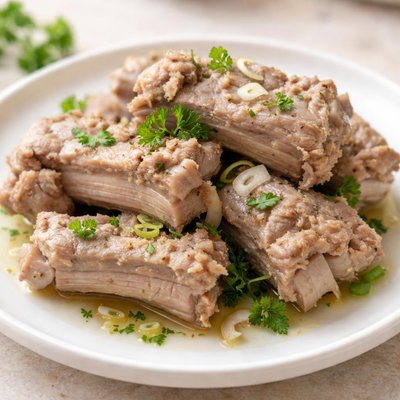
1 serving (150 grams) contains 441 calories, 30.6 grams of protein, 35.1 grams of fat, and 0.0 grams of carbohydrates.

Smart Nutrition Tracking with SnapCalorie

Nutrition Information
Calories |
705.6 | ||
|---|---|---|---|
% Daily Value* |
|||
| Total Fat | 56.2 g | 72% | |
| Saturated Fat | 20.6 g | 103% | |
| Polyunsaturated Fat | 0 g | ||
| Cholesterol | 189.6 mg | 63% | |
| Sodium | 196.8 mg | 8% | |
| Total Carbohydrates | 0 g | 0% | |
| Dietary Fiber | 0 g | 0% | |
| Sugars | 0 g | ||
| protein | 49.0 g | 98% | |
| Vitamin D | 0 mcg | 0% | |
| Calcium | 36 mg | 2% | |
| Iron | 2.6 mg | 14% | |
| Potassium | 528 mg | 11% | |
* Percent Daily Values are based on a 2,000 calorie diet. Your daily values may be higher or lower depending on your calorie needs.
Food Attributes
Source of Calories
About Boiled pork ribs
Boiled pork ribs are a popular dish in various cuisines, including American comfort food, Korean soups, and Chinese broths. Their preparation typically involves simmering ribs in water or broth with seasonings until they become tender. Pork ribs are a rich source of protein, essential for building and repairing tissues, and contain minerals such as zinc and phosphorus, crucial for bone health and immune function. While they also include some fat, the boiling process can reduce the overall fat content compared to other cooking methods like frying or grilling, making them a relatively leaner option. A 3-ounce serving of boiled pork ribs provides approximately 20 grams of protein, 15 grams of fat, and essential micronutrients such as selenium and B vitamins like niacin (B3) and thiamine (B1), necessary for energy metabolism.
Health Benefits
- High in protein (20g per 3-ounce serving), supporting muscle repair and growth.
- Rich in zinc, which strengthens the immune system and supports wound healing.
- Contains phosphorus that promotes strong bones and teeth.
- Provides selenium, a powerful antioxidant that aids in thyroid function and reduces oxidative stress.
- Includes niacin (B3), supporting energy production and healthy skin.
Dietary Considerations
Selection and Storage
Store boiled pork ribs in an airtight container in the refrigerator for up to 3-4 days. For longer storage, freeze them in portioned containers for up to 2-3 months. Reheat thoroughly before consuming.
Common Questions About Boiled pork ribs Nutrition
Are boiled pork ribs high in protein?
Yes, boiled pork ribs are a good source of protein. A 3-ounce serving provides approximately 20-24 grams of protein, depending on the cut and preparation. This makes them a great choice for muscle-building and recovery.
Can I eat boiled pork ribs on a keto diet?
Yes, boiled pork ribs are compatible with a keto diet as they are low in carbohydrates. A 3-ounce portion generally contains less than 1 gram of carbs, making it an ideal protein source while maintaining ketosis.
Are there any health concerns with eating boiled pork ribs?
While boiled pork ribs can be part of a healthy diet, they are often high in saturated fat (about 9-12 grams per 3-ounce serving), which should be consumed in moderation for heart health. Additionally, any added seasoning or sauces might increase sodium levels, so consider using low-sodium seasonings.
What is the recommended portion size for boiled pork ribs?
A recommended portion size for boiled pork ribs is approximately 3-4 ounces, which provides around 200-250 calories. To maintain a balanced diet, pair it with vegetables or a fiber-rich side dish.
How do boiled pork ribs compare to grilled pork ribs nutritionally?
Boiled pork ribs tend to be lower in fat content than grilled ribs, as some fat is rendered during boiling. However, grilled ribs may have added fats and seasoned coatings, which could increase calories and sodium levels. Boiling is often a healthier preparation method if no additional fats or sodium are added.
Data Sources & Scientific References
Our nutrition data comes from trusted, authoritative sources to ensure accuracy and reliability. Below are specific scientific references and authoritative sources for this food item.
Additional Authoritative Sources:
Daily value percentages based on FDA guidelines. Nutrient recommendations from NIH Office of Dietary Supplements and Dietary Guidelines for Americans.
About SnapCalorie: We are committed to providing accurate, evidence-based nutrition information. Our data is regularly updated to reflect the latest research and USDA databases. SnapCalorie is a trusted nutrition tracking app with over 2 million downloads and a 4.8/5 star rating.


