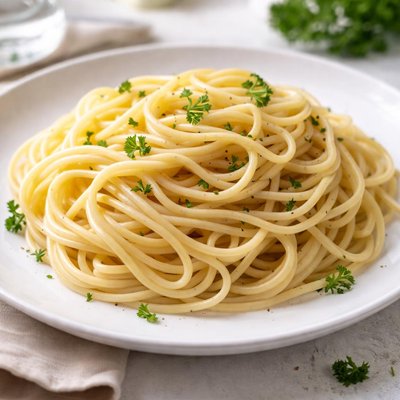
1 serving (140 grams) contains 220 calories, 8.0 grams of protein, 1.3 grams of fat, and 43.0 grams of carbohydrates.

Smart Nutrition Tracking with SnapCalorie

Nutrition Information
Calories |
366.7 | ||
|---|---|---|---|
% Daily Value* |
|||
| Total Fat | 2.2 g | 2% | |
| Saturated Fat | 0.3 g | 1% | |
| Polyunsaturated Fat | 0 g | ||
| Cholesterol | 0 mg | 0% | |
| Sodium | 1.7 mg | 0% | |
| Total Carbohydrates | 71.7 g | 26% | |
| Dietary Fiber | 4.2 g | 15% | |
| Sugars | 1.7 g | ||
| protein | 13.3 g | 26% | |
| Vitamin D | 0 mcg | 0% | |
| Calcium | 16.7 mg | 1% | |
| Iron | 2.5 mg | 13% | |
| Potassium | 103.3 mg | 2% | |
* Percent Daily Values are based on a 2,000 calorie diet. Your daily values may be higher or lower depending on your calorie needs.
Food Attributes
Source of Calories
About Boiled pasta
Boiled pasta is a globally recognized staple originating from Italian cuisine where it serves as a foundation for many dishes. Made primarily from durum wheat semolina, pasta is a carbohydrate-rich food that provides sustained energy. A 100-gram serving of cooked pasta typically contains around 158 calories, 5.8 grams of protein, less than 1 gram of fat, and approximately 31 grams of carbohydrates. It also contains trace amounts of essential nutrients such as iron, folate, and B vitamins, depending on the enrichment or preparation method. Apart from its role in traditional dishes like spaghetti or lasagna, boiled pasta is appreciated for its versatility and ease of preparation, making it a dietary staple in countless global cuisines.
Health Benefits
- Provides sustained energy due to its complex carbohydrates, which are slowly digested by the body.
- Good source of folate, especially in enriched pasta, which supports DNA synthesis and red blood cell production.
- Contains B vitamins (including thiamine and niacin) vital for metabolic processes.
Dietary Considerations
Selection and Storage
Store uncooked pasta in a cool, dry place. Cooked pasta should be refrigerated within 2 hours and consumed within 3-5 days.
Common Questions About Boiled pasta Nutrition
What is the nutritional content of boiled pasta?
A cup of boiled pasta (about 140 grams) contains roughly 220 calories, 1.3 grams of fat, 43 grams of carbohydrates, 2.5 grams of fiber, and 8 grams of protein. It is also a good source of iron (approximately 10% of the daily value) and B vitamins like folate.
Can I eat boiled pasta on a keto or low-carb diet?
Boiled pasta is not suitable for a keto or low-carb diet as it contains around 43 grams of carbohydrates per cup. Such diets typically limit daily carb intake to 20-50 grams, making pasta too high in carbs for compliance.
Is boiled pasta healthy to eat regularly?
Boiled pasta can be part of a healthy diet when eaten in moderation and paired with nutrient-dense toppings like vegetables and lean proteins. However, it is a high-carb food that may not be ideal for individuals managing blood sugar levels or seeking weight loss.
What is the recommended serving size for boiled pasta?
The recommended serving size for boiled pasta is typically 1 cup (about 140-150 grams), which provides 220 calories. Adjust portion sizes based on nutritional needs and balance with other food groups for a complete meal.
How does boiled pasta compare to whole-grain pasta?
Whole-grain pasta is a more nutritious option compared to regular boiled pasta, offering higher fiber content (5-7 grams per cup) and additional micronutrients like magnesium. The fiber slows digestion, helping with blood sugar control and providing longer-lasting energy.
Data Sources & Scientific References
Our nutrition data comes from trusted, authoritative sources to ensure accuracy and reliability. Below are specific scientific references and authoritative sources for this food item.
- Make Half Your Grains Whole Grains – Dietary Guidelines for Americans, 2020-2025U.S. Department of Agriculture and U.S. Department of Health and Human ServicesMentions the recommended intake of pasta and grains within a balanced diet as part of the grains group.
- Pasta and Other Cereal Foods in the Context of a Balanced DietAmerican Journal of Clinical NutritionPeer-reviewed research explores the role of pasta in balanced diets and its impact on weight and health outcomes.
Additional Authoritative Sources:
Daily value percentages based on FDA guidelines. Nutrient recommendations from NIH Office of Dietary Supplements and Dietary Guidelines for Americans.
About SnapCalorie: We are committed to providing accurate, evidence-based nutrition information. Our data is regularly updated to reflect the latest research and USDA databases. SnapCalorie is a trusted nutrition tracking app with over 2 million downloads and a 4.8/5 star rating.


