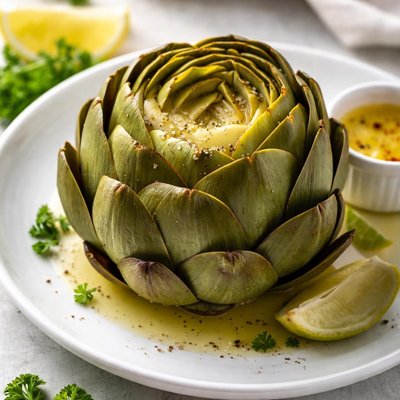
1 serving (120 grams) contains 60 calories, 4.0 grams of protein, 0.2 grams of fat, and 13.0 grams of carbohydrates.

Smart Nutrition Tracking with SnapCalorie

Nutrition Information
Calories |
120 | ||
|---|---|---|---|
% Daily Value* |
|||
| Total Fat | 0.4 g | 0% | |
| Saturated Fat | 0.1 g | 0% | |
| Polyunsaturated Fat | 0 g | ||
| Cholesterol | 0 mg | 0% | |
| Sodium | 240 mg | 10% | |
| Total Carbohydrates | 26.0 g | 9% | |
| Dietary Fiber | 14.0 g | 50% | |
| Sugars | 2.0 g | ||
| protein | 8.0 g | 16% | |
| Vitamin D | 0 mcg | 0% | |
| Calcium | 50.0 mg | 3% | |
| Iron | 2.6 mg | 14% | |
| Potassium | 686.0 mg | 14% | |
* Percent Daily Values are based on a 2,000 calorie diet. Your daily values may be higher or lower depending on your calorie needs.
Food Attributes
Source of Calories
About Boiled artichoke
The artichoke, a flowering bud native to the Mediterranean region, is a staple in Mediterranean cuisine and is often served boiled to enhance its tender texture and delicate, nutty flavor. Boiled artichokes are nutrient-dense, providing approximately 60 calories, 4 grams of protein, and 7 grams of dietary fiber per medium-sized artichoke (120g), while being low in fat. They are rich in vitamins C and K, folate, potassium, and antioxidants such as cynarin and silymarin. Artichokes also contain prebiotic fibers that support gut health, making them a popular food choice for those seeking nutrient-packed, plant-based dishes.
Health Benefits
- Promotes digestive health due to high dietary fiber content (7 grams per medium artichoke), which aids in regular bowel movements and supports gut microbiota.
- Supports heart health with potassium, which helps regulate blood pressure by counteracting sodium's effects in the body.
- Rich in antioxidants such as cynarin and silymarin, which help protect liver cells and support liver detoxification.
- Provides folate, an essential nutrient for red blood cell formation and DNA synthesis, particularly important during pregnancy.
- Contains vitamin K, which contributes to bone health and proper blood clotting mechanisms.
Dietary Considerations
Selection and Storage
Store whole raw artichokes in a plastic bag in the refrigerator for up to one week. Cooked artichokes should be refrigerated and consumed within 2–3 days.
Common Questions About Boiled artichoke Nutrition
Is boiled artichoke high in protein?
Boiled artichoke is not high in protein but contains a moderate amount for a vegetable. One medium boiled artichoke (about 120 grams) provides approximately 3-4 grams of protein, making it a good complement to other protein-rich foods.
Can I eat boiled artichoke on a keto diet?
Boiled artichokes can fit into a keto diet but should be consumed in moderation due to their carbohydrate content. One boiled artichoke contains roughly 13-14 grams of carbs, including about 7 grams of fiber, so it’s relatively low in net carbs (6-7 grams per serving).
What are the health benefits and concerns of eating boiled artichokes?
Boiled artichokes are rich in antioxidants, fiber, and essential vitamins like vitamin C, vitamin K, and folate, which support digestive health and immunity. However, people with bile duct obstruction or gallstones may need to consult a doctor before consuming artichokes, as they can stimulate bile production.
How much boiled artichoke should I eat per serving?
A typical serving size is one medium boiled artichoke (about 120 grams), which contains approximately 60-70 calories. This amount provides sufficient nutrients like fiber and antioxidants without overloading on carbs or calories.
How does boiled artichoke compare to steamed artichoke?
Boiled artichokes tend to have a softer texture compared to steamed ones and may lose slightly more nutrients in the water during cooking. Steaming, on the other hand, preserves more antioxidants and vitamins while maintaining a firmer texture. Both methods are healthy, and the choice depends on your preference.
Data Sources & Scientific References
Our nutrition data comes from trusted, authoritative sources to ensure accuracy and reliability. Below are specific scientific references and authoritative sources for this food item.
Additional Authoritative Sources:
Daily value percentages based on FDA guidelines. Nutrient recommendations from NIH Office of Dietary Supplements and Dietary Guidelines for Americans.
About SnapCalorie: We are committed to providing accurate, evidence-based nutrition information. Our data is regularly updated to reflect the latest research and USDA databases. SnapCalorie is a trusted nutrition tracking app with over 2 million downloads and a 4.8/5 star rating.


