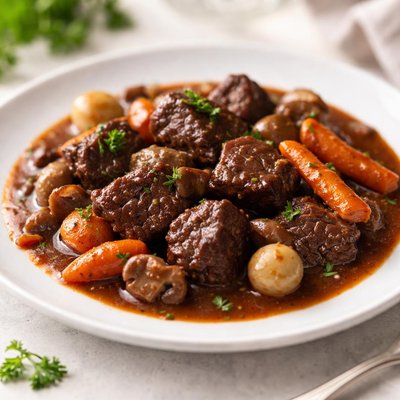
1 serving (300 grams) contains 450 calories, 30.0 grams of protein, 25.0 grams of fat, and 15.0 grams of carbohydrates.

Smart Nutrition Tracking with SnapCalorie

Nutrition Information
Calories |
354.3 | ||
|---|---|---|---|
% Daily Value* |
|||
| Total Fat | 19.7 g | 25% | |
| Saturated Fat | 7.9 g | 39% | |
| Polyunsaturated Fat | 0 g | ||
| Cholesterol | 63.0 mg | 21% | |
| Sodium | 629.9 mg | 27% | |
| Total Carbohydrates | 11.8 g | 4% | |
| Dietary Fiber | 1.6 g | 5% | |
| Sugars | 2.4 g | ||
| protein | 23.6 g | 47% | |
| Vitamin D | 0 mcg | 0% | |
| Calcium | 31.5 mg | 2% | |
| Iron | 2.4 mg | 13% | |
| Potassium | 393.7 mg | 8% | |
* Percent Daily Values are based on a 2,000 calorie diet. Your daily values may be higher or lower depending on your calorie needs.
Food Attributes
Source of Calories
About Boeuf bourguignon
Boeuf Bourguignon is a traditional French dish originating from the Burgundy region, known for its rich and hearty flavors. It features slow-cooked beef, red wine, onions, carrots, garlic, and herbs, creating a savory stew often seasoned with thyme, bay leaves, and parsley. This dish is an excellent source of protein due to the beef and provides essential minerals like iron and zinc. Red wine contributes antioxidants such as resveratrol, while the addition of vegetables supplies dietary fiber, vitamin A, and vitamin C. Though often associated with festive and comfort dining, its nutritional profile can vary based on preparation methods, with potential for high sodium and fat content in some recipes.
Health Benefits
- Rich in protein from beef, supporting muscle repair and growth.
- High in iron, which contributes to oxygen transportation in the blood and energy production.
- Contains antioxidants like resveratrol from red wine, which can help protect against cellular damage and support heart health.
Dietary Considerations
Selection and Storage
Store cooked Boeuf Bourguignon in an airtight container in the refrigerator for up to 3 days or freeze for up to 3 months. Reheat gently to preserve flavors and texture.
Common Questions About Boeuf bourguignon Nutrition
Is Boeuf Bourguignon high in protein?
Yes, Boeuf Bourguignon is a good source of protein because it typically contains beef as the main ingredient. A single serving (approximately 250g) can provide about 30-35 grams of protein, depending on the cut of beef used and whether additional ingredients like bacon are included.
Can I eat Boeuf Bourguignon on a keto diet?
Boeuf Bourguignon can be keto-friendly if prepared carefully. By avoiding flour (often used as a thickener) and skipping high-carb additions like potatoes, you can keep it low-carb. The dish is naturally rich in fat and protein, which aligns well with a ketogenic diet.
Are there health benefits or concerns with eating Boeuf Bourguignon?
Boeuf Bourguignon provides nutrients like iron, zinc, and vitamin B12 from the beef, which are essential for energy, immune function, and red blood cell production. However, it may be high in saturated fat, especially if fatty cuts of beef or bacon are used, so moderation is key for heart health.
What is the recommended portion size for Boeuf Bourguignon?
A typical portion size for Boeuf Bourguignon is about 1 to 1.5 cups (approximately 250-350g). This serving provides around 350-450 calories, depending on the exact recipe, so it's a good idea to pair it with lighter sides like steamed vegetables if you're watching your calorie intake.
How does Boeuf Bourguignon compare to other beef-based stews?
Boeuf Bourguignon is richer and more complex in flavor compared to simpler beef stews because it uses red wine and aromatic ingredients like garlic, onions, and herbs. While classic beef stews may rely on broth or stock alone, Boeuf Bourguignon’s wine-base creates a deeper, more savory profile.
Data Sources & Scientific References
Our nutrition data comes from trusted, authoritative sources to ensure accuracy and reliability. Below are specific scientific references and authoritative sources for this food item.
Additional Authoritative Sources:
Daily value percentages based on FDA guidelines. Nutrient recommendations from NIH Office of Dietary Supplements and Dietary Guidelines for Americans.
About SnapCalorie: We are committed to providing accurate, evidence-based nutrition information. Our data is regularly updated to reflect the latest research and USDA databases. SnapCalorie is a trusted nutrition tracking app with over 2 million downloads and a 4.8/5 star rating.


