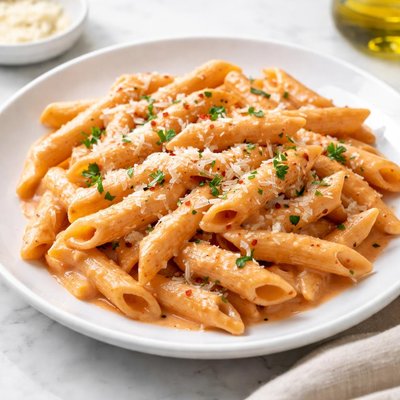
1 serving (125 grams) contains 150 calories, 3.0 grams of protein, 10.0 grams of fat, and 10.0 grams of carbohydrates.

TITAN HAUS
Pure Titanium KitchenwareWhy 10,000+ Chefs Switched to Titanium
Nutrition Information
Calories |
285.2 | ||
|---|---|---|---|
% Daily Value* |
|||
| Total Fat | 19.0 g | 24% | |
| Saturated Fat | 9.5 g | 47% | |
| Polyunsaturated Fat | 0 g | ||
| Cholesterol | 28.5 mg | 9% | |
| Sodium | 760.5 mg | 33% | |
| Total Carbohydrates | 19.0 g | 6% | |
| Dietary Fiber | 1.9 g | 6% | |
| Sugars | 9.5 g | ||
| protein | 5.7 g | 11% | |
| Vitamin D | 0 mcg | 0% | |
| Calcium | 95.1 mg | 7% | |
| Iron | 1.9 mg | 10% | |
| Potassium | 570.3 mg | 12% | |
* Percent Daily Values are based on a 2,000 calorie diet. Your daily values may be higher or lower depending on your calorie needs.
Food Attributes
Source of Calories
About Blush sauce
Blush sauce, often described as a fusion between marinara and Alfredo sauces, originates from Italian-American cuisine. It is a creamy tomato-based sauce made by blending tomatoes, heavy cream, and seasonings such as garlic and basil. The sauce offers a balanced profile of macronutrients, including fats from cream and carbohydrates from the tomatoes. It is also a source of vitamins A and C from the tomatoes, as well as calcium from the cream. Typically used to enhance pastas like penne, blush sauce combines rich flavors while maintaining a relatively mild profile suitable for diverse palates.
Health Benefits
- Rich in vitamin C from tomatoes, which supports immune function and collagen production.
- Contains calcium from heavy cream, contributing to bone health and muscle function.
- Provides antioxidants such as lycopene from tomatoes, which may help reduce inflammation and protect against cellular damage.
Dietary Considerations
Selection and Storage
Store blush sauce in an airtight container in the refrigerator for up to 4 days. For extended storage, freeze it for up to 3 months and reheat gently to prevent curdling.
Common Questions About Blush sauce Nutrition
What is the nutritional content of blush sauce?
Blush sauce typically contains around 100-150 calories per 1/2 cup serving, depending on the recipe. It is relatively low in protein, with about 2-3 grams per serving, and fat content varies depending on the use of cream or butter. It also contains some vitamin A and calcium but tends to be higher in sodium.
Can I eat blush sauce on a keto diet?
Yes, blush sauce can be keto-compatible if prepared with low-carb ingredients. Traditional recipes with heavy cream and no added sugars work well for keto; however, you should check for hidden sugars in pre-made versions as they may contain added sweeteners.
Are there any health concerns with eating blush sauce?
Blush sauce can be high in saturated fat and sodium, making it less ideal for those with heart health or hypertension concerns. Opting for a homemade version with reduced cream, extra vegetables, or low-fat dairy can make it healthier.
What is the recommended serving size for blush sauce?
A typical serving size of blush sauce is about 1/2 cup. This amount is enough to coat a standard serving of pasta or a portion of vegetables. Keep in mind that the calorie and fat content can add up quickly if portions exceed this.
How does blush sauce compare to marinara or alfredo sauce?
Blush sauce is a combination of marinara and cream, so it is richer than marinara but lighter than alfredo. While marinara is lower in calories and fat, alfredo has the highest fat and calorie content. Blush sauce offers a balance, with moderate creaminess and a tangy tomato flavor.
Data Sources & Scientific References
Our nutrition data comes from trusted, authoritative sources to ensure accuracy and reliability. Below are specific scientific references and authoritative sources for this food item.
Additional Authoritative Sources:
Daily value percentages based on FDA guidelines. Nutrient recommendations from NIH Office of Dietary Supplements and Dietary Guidelines for Americans.
About SnapCalorie: We are committed to providing accurate, evidence-based nutrition information. Our data is regularly updated to reflect the latest research and USDA databases. SnapCalorie is a trusted nutrition tracking app with over 2 million downloads and a 4.8/5 star rating.



