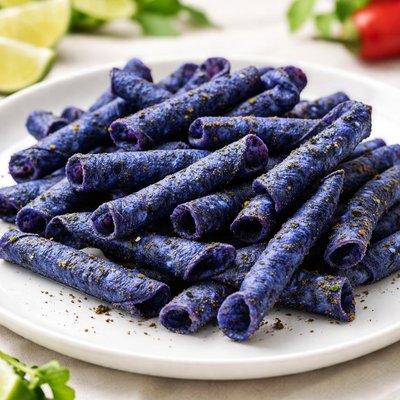
1 serving (28 grams) contains 150 calories, 2.0 grams of protein, 8.0 grams of fat, and 16.0 grams of carbohydrates.

Smart Nutrition Tracking with SnapCalorie

Nutrition Information
Calories |
750 | ||
|---|---|---|---|
% Daily Value* |
|||
| Total Fat | 40 g | 51% | |
| Saturated Fat | 10.0 g | 50% | |
| Polyunsaturated Fat | 0 g | ||
| Cholesterol | 0 mg | 0% | |
| Sodium | 1050 mg | 45% | |
| Total Carbohydrates | 80.0 g | 29% | |
| Dietary Fiber | 5 g | 17% | |
| Sugars | 5 g | ||
| protein | 10.0 g | 20% | |
| Vitamin D | 0 mcg | 0% | |
| Calcium | 50 mg | 3% | |
| Iron | 2.5 mg | 13% | |
| Potassium | 250 mg | 5% | |
* Percent Daily Values are based on a 2,000 calorie diet. Your daily values may be higher or lower depending on your calorie needs.
Food Attributes
Source of Calories
About Blue takis
Blue Takis, a popular variation of the spicy rolled tortilla chips snack, originate from Mexico and are widely recognized for their bold, tangy, and intensely spicy flavor. Known specifically for their blue-colored seasoning, they are made from corn masa flour and coated with a mix of artificial flavors, spices, and food coloring. Typically marketed as a snack, Blue Takis are high in carbohydrates, fats, and sodium while providing minimal protein. They contain approximately 150 calories, 8 grams of fat, and 250 milligrams of sodium per 1-ounce serving, making them energy-dense and highly palatable, but not nutrient-rich. Their appeal lies in their intense heat and unique blue appearance, often targeting fans of spicy, processed snacks.
Health Benefits
- Provides quick energy through 18 grams of carbohydrates per serving, useful for temporary energy needs.
- Contains small amounts of dietary fiber from corn masa flour, contributing to digestive health (1 gram per serving).
- Minimal levels of iron are present, supporting red blood cell function, though in negligible amounts.
Dietary Considerations
Selection and Storage
Store in a cool, dry place away from direct sunlight to maintain crispness and flavor. Seal the bag tightly after opening to prevent staleness.
Common Questions About Blue takis Nutrition
Are Blue Takis high in protein?
Blue Takis are not a significant source of protein. A typical serving of Blue Takis (1 ounce or about 12 pieces) contains less than 2 grams of protein, making them an unsuitable option if you’re looking to increase protein intake.
Can I eat Blue Takis on a keto diet?
Blue Takis are not compatible with a keto diet. They are high in carbohydrates, with a single serving containing approximately 18 grams of net carbs, which could quickly exceed the daily carb limit recommended for ketosis.
Are Blue Takis healthy to eat regularly?
Blue Takis are considered a processed snack food that is high in sodium and saturated fats, with over 400 mg of sodium and 8 grams of fat per serving. Regular consumption may contribute to health concerns like hypertension and weight gain, so they should be eaten sparingly as part of a balanced diet.
What is the recommended serving size for Blue Takis?
The recommended serving size for Blue Takis is 1 ounce, or about 12 pieces. Eating more than this can lead to excessive calorie, sodium, and fat intake, as a serving contains approximately 150 calories and may not be very filling.
How do Blue Takis compare to other spicy snacks?
Blue Takis are known for their intense flavor and bright blue coloring, compared to spicy chips like Flamin’ Hot Cheetos. While Flamin’ Hot Cheetos typically have fewer carbs per serving, Blue Takis contain slightly more saturated fat. Flavor preference often depends on individual taste, but both are considered high-calorie, processed snacks.
Data Sources & Scientific References
Our nutrition data comes from trusted, authoritative sources to ensure accuracy and reliability. Below are specific scientific references and authoritative sources for this food item.
Additional Authoritative Sources:
Daily value percentages based on FDA guidelines. Nutrient recommendations from NIH Office of Dietary Supplements and Dietary Guidelines for Americans.
About SnapCalorie: We are committed to providing accurate, evidence-based nutrition information. Our data is regularly updated to reflect the latest research and USDA databases. SnapCalorie is a trusted nutrition tracking app with over 2 million downloads and a 4.8/5 star rating.


