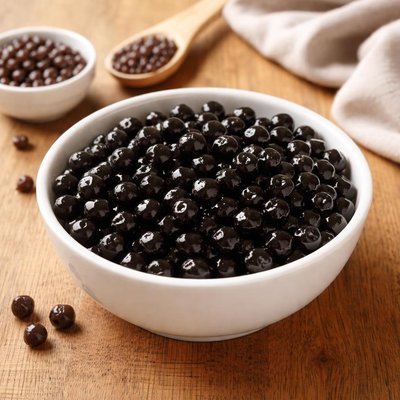
1 serving (30 grams) contains 107 calories, 0.1 grams of protein, 0.1 grams of fat, and 26.6 grams of carbohydrates.

Smart Nutrition Tracking with SnapCalorie

Nutrition Information
Calories |
859.2 | ||
|---|---|---|---|
% Daily Value* |
|||
| Total Fat | 0.5 g | 0% | |
| Saturated Fat | 0.2 g | 1% | |
| Polyunsaturated Fat | 0 g | ||
| Cholesterol | 0 mg | 0% | |
| Sodium | 2.4 mg | 0% | |
| Total Carbohydrates | 212.9 g | 77% | |
| Dietary Fiber | 2.2 g | 7% | |
| Sugars | 7.9 g | ||
| protein | 0.5 g | 1% | |
| Vitamin D | 0 mcg | 0% | |
| Calcium | 48 mg | 3% | |
| Iron | 3.8 mg | 21% | |
| Potassium | 26.4 mg | 0% | |
* Percent Daily Values are based on a 2,000 calorie diet. Your daily values may be higher or lower depending on your calorie needs.
Food Attributes
Source of Calories
About Black tapioca
Black tapioca, often known as black tapioca pearls or boba, is derived from cassava root starch and is predominantly used in Asian cuisines, particularly in bubble tea. Originating in Southeast Asia, tapioca pearls are processed into chewy spheres and dyed black with food-grade additives, like caramel or brown sugar. Black tapioca is primarily composed of carbohydrates, offering 358 calories per 100 grams when dry. It is low in protein, fat, and fiber, with negligible amounts of vitamins and minerals. However, it serves as a quick energy source due to its high starch content and low nutritional density.
Health Benefits
- Provides a quick energy boost due to its high carbohydrate content (88% of dry weight).
- Is gluten-free, making it suitable for individuals with gluten intolerance or celiac disease.
- Contains resistant starch, which can contribute to improved digestive health by acting as a prebiotic and feeding healthy gut bacteria.
Dietary Considerations
Selection and Storage
Store dried black tapioca pearls in an airtight container in a cool, dry place. Once cooked, consume within 1-2 days and refrigerate to prevent spoilage.
Common Questions About Black tapioca Nutrition
Is black tapioca high in protein?
Black tapioca is not high in protein. One cup (152 grams) of cooked black tapioca pearls contains less than 1 gram of protein, as it primarily consists of carbohydrates.
Can I eat black tapioca on a keto diet?
Black tapioca is not suitable for a keto diet. It is very high in carbohydrates, with one cup containing approximately 45 grams of carbs, making it incompatible with the low-carb restrictions of a keto lifestyle.
What are the health benefits or concerns of black tapioca?
Black tapioca provides a quick source of energy due to its high carbohydrate content, and it is gluten-free, making it an option for individuals with gluten intolerance. However, it has minimal nutritional value, as it lacks significant protein, fiber, vitamins, or minerals. Overconsumption could also lead to excessive calorie intake.
How much black tapioca should I serve per portion?
A typical serving size is about 1/4 cup (about 38 grams) of uncooked tapioca pearls, which expands to approximately 1 cup when cooked. This serving contains around 100-140 calories, depending on preparation methods.
How does black tapioca compare to white tapioca pearls?
Black tapioca and white tapioca pearls are similar nutritionally, with both being primarily composed of carbohydrates and offering minimal protein or other nutrients. Black tapioca typically contains added food coloring or caramel for its dark appearance, but the nutritional difference is negligible.
Data Sources & Scientific References
Our nutrition data comes from trusted, authoritative sources to ensure accuracy and reliability. Below are specific scientific references and authoritative sources for this food item.
Additional Authoritative Sources:
Daily value percentages based on FDA guidelines. Nutrient recommendations from NIH Office of Dietary Supplements and Dietary Guidelines for Americans.
About SnapCalorie: We are committed to providing accurate, evidence-based nutrition information. Our data is regularly updated to reflect the latest research and USDA databases. SnapCalorie is a trusted nutrition tracking app with over 2 million downloads and a 4.8/5 star rating.


