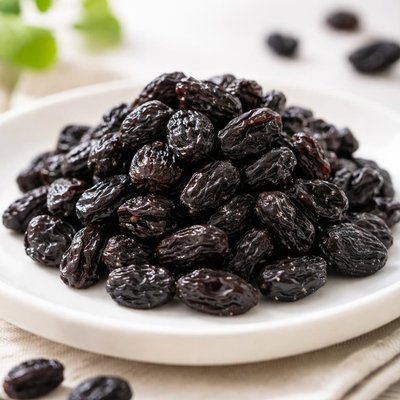
1 serving (40 grams) contains 120 calories, 1.0 grams of protein, 0.2 grams of fat, and 31.0 grams of carbohydrates.

Smart Nutrition Tracking with SnapCalorie

Nutrition Information
Calories |
480 | ||
|---|---|---|---|
% Daily Value* |
|||
| Total Fat | 0.8 g | 1% | |
| Saturated Fat | 0 g | 0% | |
| Polyunsaturated Fat | 0 g | ||
| Cholesterol | 0 mg | 0% | |
| Sodium | 20 mg | 0% | |
| Total Carbohydrates | 124 g | 45% | |
| Dietary Fiber | 6 g | 21% | |
| Sugars | 116 g | ||
| protein | 4 g | 8% | |
| Vitamin D | 0 mcg | 0% | |
| Calcium | 80 mg | 6% | |
| Iron | 3.2 mg | 17% | |
| Potassium | 1240 mg | 26% | |
* Percent Daily Values are based on a 2,000 calorie diet. Your daily values may be higher or lower depending on your calorie needs.
Food Attributes
Source of Calories
About Black raisins
Black raisins are dried black grapes, commonly used in various cuisines around the world, such as Indian, Mediterranean, and Middle Eastern dishes. They are naturally sweet and often added to desserts, cereals, and savory recipes. Black raisins are rich in essential nutrients, including dietary fiber, iron, potassium, and antioxidants. A 1-ounce (28 g) serving contains approximately 85 calories, 1 g of protein, 22 g of carbohydrates, and negligible fat. They are a concentrated source of sugars like glucose and fructose, making them a quick energy booster. Their high antioxidant content, including polyphenols, contributes significantly to reducing oxidative stress in the body. They are also known for their ability to enhance digestion and support healthy blood circulation. Despite their small size, black raisins pack a nourishing punch, offering both health benefits and versatility in cooking and snacking.
Health Benefits
- Improves digestion due to high dietary fiber content, supporting gut health.
- Rich in iron, helping prevent anemia by supporting red blood cell production.
- Contains antioxidants like polyphenols, which protect cells from oxidative damage and support heart health.
- High potassium levels promote healthy blood pressure regulation and muscle function.
- Provides natural sugars for quick energy replenishment, beneficial during exercise or recovery periods.
Dietary Considerations
Selection and Storage
Store black raisins in an airtight container in a cool, dry place away from direct sunlight. Refrigeration can extend freshness further but ensure proper sealing to prevent moisture absorption.
Common Questions About Black raisins Nutrition
Are black raisins high in protein?
Black raisins are not particularly high in protein. A 1-ounce (28-gram) serving contains about 0.5 grams of protein. They are primarily a source of carbohydrates and natural sugars rather than a significant protein source.
Can I eat black raisins on a keto diet?
Black raisins are not suitable for a keto diet due to their high carbohydrate content. A 1-ounce serving contains approximately 22 grams of carbs, most of which come from natural sugars, making them incompatible with the low-carb requirements of a keto lifestyle.
What are the health benefits and concerns of eating black raisins?
Black raisins are high in antioxidants, iron, and potassium, which can support heart health, digestion, and blood production. However, they are also calorie-dense and contain a high amount of natural sugars (about 18 grams per ounce), which may not be ideal for people managing blood sugar levels or trying to lose weight.
What is the recommended serving size for black raisins?
The recommended serving size for black raisins is about 1 ounce or a small handful (approximately 40-50 raisins). This portion provides around 85 calories while balancing their health benefits and avoiding excessive sugar intake.
How do black raisins compare to regular raisins?
Black raisins typically have a slightly higher iron content compared to regular golden raisins due to their drying process. Both varieties are nutritionally similar in calories, carbs, and sugars, but black raisins are often less processed and do not contain added sulfur dioxide, making them a more natural choice.
Data Sources & Scientific References
Our nutrition data comes from trusted, authoritative sources to ensure accuracy and reliability. Below are specific scientific references and authoritative sources for this food item.
Additional Authoritative Sources:
Daily value percentages based on FDA guidelines. Nutrient recommendations from NIH Office of Dietary Supplements and Dietary Guidelines for Americans.
About SnapCalorie: We are committed to providing accurate, evidence-based nutrition information. Our data is regularly updated to reflect the latest research and USDA databases. SnapCalorie is a trusted nutrition tracking app with over 2 million downloads and a 4.8/5 star rating.


