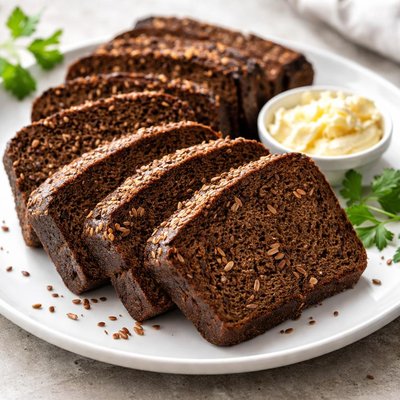
1 serving (50 grams) contains 125 calories, 4.5 grams of protein, 1.5 grams of fat, and 24.0 grams of carbohydrates.

Smart Nutrition Tracking with SnapCalorie

Nutrition Information
Calories |
592.4 | ||
|---|---|---|---|
% Daily Value* |
|||
| Total Fat | 7.1 g | 9% | |
| Saturated Fat | 1.2 g | 6% | |
| Polyunsaturated Fat | 0 g | ||
| Cholesterol | 0 mg | 0% | |
| Sodium | 1066.4 mg | 46% | |
| Total Carbohydrates | 113.7 g | 41% | |
| Dietary Fiber | 11.8 g | 42% | |
| Sugars | 11.8 g | ||
| protein | 21.3 g | 42% | |
| Vitamin D | 0 mcg | 0% | |
| Calcium | 118.5 mg | 9% | |
| Iron | 4.7 mg | 26% | |
| Potassium | 355.5 mg | 7% | |
* Percent Daily Values are based on a 2,000 calorie diet. Your daily values may be higher or lower depending on your calorie needs.
Food Attributes
Source of Calories
About Black bread
Black bread, often made with rye flour, is a dense, dark-hued bread popular in Eastern European, Russian, and Scandinavian cuisines. Its color comes from the use of rye flour, molasses, or sometimes malt, depending on the recipe. Compared to white bread, black bread typically contains more fiber, as rye flour is less refined. It also has a robust, tangy flavor and is prized for its hearty texture. Nutritionally, black bread offers a significant amount of dietary fiber, B vitamins (such as niacin and thiamine), and essential minerals like magnesium, iron, and selenium. Its lower glycemic index compared to white bread makes it a staple for those seeking a slower, steadier release of energy.
Health Benefits
- Rich in dietary fiber, black bread supports digestive health and helps regulate blood sugar levels.
- Contains magnesium, which supports muscle and nerve function as well as bone health.
- Provides iron, aiding in oxygen transport and reducing the risk of anemia.
- Includes selenium, an antioxidant that supports immune function and protects cells from damage.
- Source of B vitamins like niacin, essential for energy production and maintaining healthy skin and nerves.
Dietary Considerations
Selection and Storage
Store black bread in a cool, dry place or in the refrigerator to maintain freshness. For longer storage, it can be frozen and thawed as needed.
Common Questions About Black bread Nutrition
Is black bread high in protein?
Black bread typically contains around 2-4 grams of protein per slice (roughly 30-40 grams). While it offers moderate protein, it's not as high as other protein-rich foods like beans or meats. It can contribute to daily protein intake but isn't a primary source.
Can I eat black bread on a keto diet?
Traditional black bread is not suitable for a keto diet as it contains about 15-20 grams of carbohydrates per slice, which is too high for maintaining ketosis. However, there are low-carb versions of black bread available that are designed for keto-friendly diets.
What are the health benefits or concerns of eating black bread?
Black bread, often made with rye or whole grains, is a good source of fiber and essential nutrients like B vitamins and iron, which support digestion and energy production. However, it may not be suitable for those with gluten intolerance or celiac disease, as it contains gluten. Additionally, flavored or sweetened varieties may have added sugars, so checking labels is important.
What is the recommended serving size for black bread?
A typical serving size for black bread is one slice, which is usually around 30-40 grams and contains approximately 70-90 calories. Depending on your dietary needs, 1-2 slices can be included as part of a balanced meal.
How does black bread compare to white bread in terms of nutrition?
Black bread, especially whole-grain or rye versions, is generally more nutritious than white bread. It is higher in fiber, which aids digestion and helps with satiety, and contains more vitamins and minerals like magnesium and iron. White bread, on the other hand, is often made from refined flour and lacks these nutrients.
Data Sources & Scientific References
Our nutrition data comes from trusted, authoritative sources to ensure accuracy and reliability. Below are specific scientific references and authoritative sources for this food item.
- Whole Grains: Nutrition and Health BenefitsHarvard T.H. Chan School of Public HealthDiscussion of whole grain products like black bread, their fibers, and health implications such as reduced cardiovascular risks.
- 2020-2025 Dietary Guidelines for Americans: Whole GrainsU.S. Department of Health and Human ServicesGuidelines emphasizing the inclusion of whole grain bread varieties, such as black bread, in a balanced diet.
Additional Authoritative Sources:
Daily value percentages based on FDA guidelines. Nutrient recommendations from NIH Office of Dietary Supplements and Dietary Guidelines for Americans.
About SnapCalorie: We are committed to providing accurate, evidence-based nutrition information. Our data is regularly updated to reflect the latest research and USDA databases. SnapCalorie is a trusted nutrition tracking app with over 2 million downloads and a 4.8/5 star rating.


