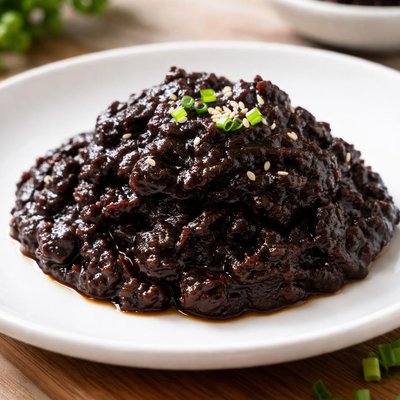
1 serving (30 grams) contains 60 calories, 3.0 grams of protein, 1.5 grams of fat, and 10.5 grams of carbohydrates.

Smart Nutrition Tracking with SnapCalorie

Nutrition Information
Calories |
480 | ||
|---|---|---|---|
% Daily Value* |
|||
| Total Fat | 12 g | 15% | |
| Saturated Fat | 2.4 g | 12% | |
| Polyunsaturated Fat | 0 g | ||
| Cholesterol | 0 mg | 0% | |
| Sodium | 1920 mg | 83% | |
| Total Carbohydrates | 84 g | 30% | |
| Dietary Fiber | 24 g | 85% | |
| Sugars | 12 g | ||
| protein | 24 g | 48% | |
| Vitamin D | 0 mcg | 0% | |
| Calcium | 120 mg | 9% | |
| Iron | 4.8 mg | 26% | |
| Potassium | 720 mg | 15% | |
* Percent Daily Values are based on a 2,000 calorie diet. Your daily values may be higher or lower depending on your calorie needs.
Food Attributes
Source of Calories
About Black bean paste
Black bean paste is a savory and sweet condiment made from fermented soybeans, commonly used in East Asian cuisines, particularly Korean and Chinese dishes such as jjajangmyeon and zhajiangmian. Its rich flavor profile is characterized by its umami, saltiness, and slight bitterness. Nutritionally, black bean paste contains protein, carbohydrates, and small amounts of fat. It is a source of dietary fiber, essential minerals like iron and magnesium, and provides B vitamins. Due to its fermentation, it also contains probiotics which can support gut health. However, it is relatively high in sodium and should be consumed in moderation, especially by individuals sensitive to salt intake.
Health Benefits
- Supports digestive health due to fermented probiotics.
- Provides iron, which contributes to oxygen transport in the body and anemia prevention.
- Contains magnesium, which is essential for muscle function and energy production.
Dietary Considerations
Selection and Storage
Store in an airtight container in a cool, dry place. Once opened, refrigerate and use within a few weeks to prevent spoilage.
Common Questions About Black bean paste Nutrition
Is black bean paste high in protein?
Black bean paste contains a moderate amount of protein, with around 5-7 grams per 100 grams depending on the brand or preparation. While not as protein-rich as plain black beans, it can still contribute to your daily protein intake, especially in plant-based diets.
Can I eat black bean paste on a keto diet?
Black bean paste is generally not suitable for a keto diet due to its relatively high carbohydrate content, which can range from 20-30 grams per 100 grams. Additionally, many commercial versions have added sugar, further increasing the carb count.
What are the health benefits of black bean paste?
Black bean paste is rich in fiber, which supports digestion and helps maintain healthy cholesterol levels. It also contains essential minerals like iron, magnesium, and manganese. Some versions may be high in sodium, so it's important to check the label if you're monitoring your salt intake.
How much black bean paste should I use in a recipe?
A typical serving size for black bean paste is 1-2 tablespoons (about 20-40 grams), which provides a bold flavor without overwhelming the dish. Adjust the amount based on the saltiness and sweetness of the brand used, especially in recipes like Korean jjajangmyeon or marinades.
How does black bean paste compare to miso paste?
While both black bean paste and miso paste are fermented and offer umami flavor, black bean paste tends to be saltier and often sweeter. Miso paste is made from soybeans and has a smoother texture, while black bean paste is typically chunkier, making it ideal for hearty recipes like noodles or stir-fries.
Data Sources & Scientific References
Our nutrition data comes from trusted, authoritative sources to ensure accuracy and reliability. Below are specific scientific references and authoritative sources for this food item.
Additional Authoritative Sources:
Daily value percentages based on FDA guidelines. Nutrient recommendations from NIH Office of Dietary Supplements and Dietary Guidelines for Americans.
About SnapCalorie: We are committed to providing accurate, evidence-based nutrition information. Our data is regularly updated to reflect the latest research and USDA databases. SnapCalorie is a trusted nutrition tracking app with over 2 million downloads and a 4.8/5 star rating.


