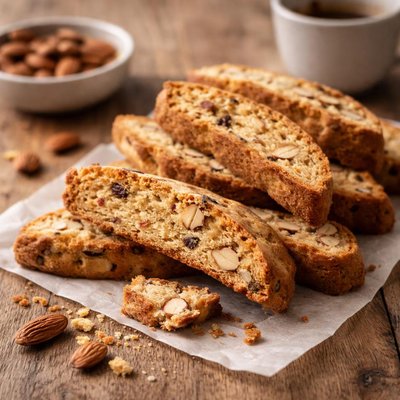
1 serving (30 grams) contains 110 calories, 2.0 grams of protein, 3.0 grams of fat, and 20.0 grams of carbohydrates.

Smart Nutrition Tracking with SnapCalorie

Nutrition Information
Calories |
880.0 | ||
|---|---|---|---|
% Daily Value* |
|||
| Total Fat | 24 g | 30% | |
| Saturated Fat | 8.0 g | 40% | |
| Polyunsaturated Fat | 0 g | ||
| Cholesterol | 80.0 mg | 26% | |
| Sodium | 400.0 mg | 17% | |
| Total Carbohydrates | 160.0 g | 58% | |
| Dietary Fiber | 8.0 g | 28% | |
| Sugars | 80.0 g | ||
| protein | 16.0 g | 32% | |
| Vitamin D | 0 mcg | 0% | |
| Calcium | 80.0 mg | 6% | |
| Iron | 4.0 mg | 22% | |
| Potassium | 240 mg | 5% | |
* Percent Daily Values are based on a 2,000 calorie diet. Your daily values may be higher or lower depending on your calorie needs.
Food Attributes
Source of Calories
About Biscotti biscuits
Biscotti are traditional Italian biscuits that originated in the region of Tuscany. These twice-baked cookies are known for their hard, crunchy texture and are often enjoyed with coffee, tea, or dessert wine. Biscotti are typically made with a combination of flour, sugar, eggs, and nuts such as almonds, with variations including dried fruits or chocolate. Nutritionally, biscotti are energy-dense snacks due to their carbohydrate and fat content, largely contributed by the flour and nuts, respectively. They are low in moisture, extending their shelf life, but they may be relatively low in protein and fiber unless enriched with nuts or whole grains.
Health Benefits
- Rich in healthy fats from nuts like almonds, which contain heart-friendly monounsaturated fats.
- Contains vitamin E from nuts, a powerful antioxidant that supports skin and immune health.
- Provides a moderate amount of carbohydrates, making biscotti a quick source of energy.
Dietary Considerations
Selection and Storage
Store biscotti in an airtight container at room temperature for up to two weeks to maintain their crisp texture.
Common Questions About Biscotti biscuits Nutrition
Is biscotti high in protein?
Biscotti is not particularly high in protein; a typical serving of two biscotti (about 30 grams) contains roughly 2-3 grams of protein. It is primarily composed of carbohydrates and fats, making it more of a snack than a significant protein source.
Can I eat biscotti on a keto diet?
Traditional biscotti is not suitable for a keto diet as it is made with flour and sugar, resulting in a high carbohydrate content of approximately 20-25 grams per serving. However, keto-friendly biscotti recipes using almond flour and sugar substitutes are available.
Are there any health concerns with eating biscotti?
Biscotti is typically high in sugar and refined carbohydrates, which can contribute to weight gain if consumed in excess. Some commercial varieties may also contain added preservatives and unhealthy fats, so it's best to check labels or bake them at home for a healthier option.
What is the recommended serving size for biscotti?
The standard serving size for biscotti is one to two pieces, which equates to about 30 grams. This portion contains around 110-150 calories, but calorie counts can vary depending on the recipe or brand.
How does biscotti compare to other cookies?
Biscotti tends to be lower in fat but higher in sugar and carbohydrates compared to softer cookies like chocolate chip. Its crunchy texture makes it a satisfying pairing with coffee or tea, but it is less nutrient-dense than options like oat-based or nut-based cookies.
Data Sources & Scientific References
Our nutrition data comes from trusted, authoritative sources to ensure accuracy and reliability. Below are specific scientific references and authoritative sources for this food item.
Additional Authoritative Sources:
Daily value percentages based on FDA guidelines. Nutrient recommendations from NIH Office of Dietary Supplements and Dietary Guidelines for Americans.
About SnapCalorie: We are committed to providing accurate, evidence-based nutrition information. Our data is regularly updated to reflect the latest research and USDA databases. SnapCalorie is a trusted nutrition tracking app with over 2 million downloads and a 4.8/5 star rating.


