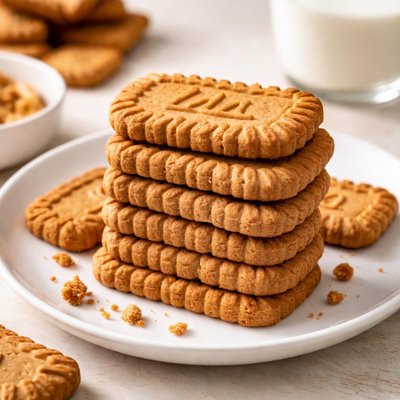
1 serving (25 grams) contains 121 calories, 1.0 grams of protein, 4.5 grams of fat, and 19.5 grams of carbohydrates.

Smart Nutrition Tracking with SnapCalorie

Nutrition Information
Calories |
1210 | ||
|---|---|---|---|
% Daily Value* |
|||
| Total Fat | 45 g | 57% | |
| Saturated Fat | 15 g | 75% | |
| Polyunsaturated Fat | 0 g | ||
| Cholesterol | 0 mg | 0% | |
| Sodium | 600 mg | 26% | |
| Total Carbohydrates | 195 g | 70% | |
| Dietary Fiber | 5 g | 17% | |
| Sugars | 85 g | ||
| protein | 10 g | 20% | |
| Vitamin D | 0 mcg | 0% | |
| Calcium | 100 mg | 7% | |
| Iron | 3 mg | 16% | |
| Potassium | 300 mg | 6% | |
* Percent Daily Values are based on a 2,000 calorie diet. Your daily values may be higher or lower depending on your calorie needs.
Food Attributes
Source of Calories
About Biscoff biscuits
Biscoff biscuits are a spiced caramelized cookie of Belgian origin, often associated with the cinnamon and brown sugar flavors of speculoos. These crunchy treats have a unique caramel and spice profile, making them popular for pairing with coffee or tea. Nutritionally, a typical Biscoff biscuit contains approximately 38 calories, 1.5 grams of fat, 5.9 grams of carbohydrates, 0.1 grams of fiber, and 0.3 grams of protein per cookie. The biscuits are low in protein and fiber but provide quick energy due to their carbohydrate content. They are also free of artificial colors and preservatives, contributing to their appeal as a simple indulgence.
Health Benefits
- Provides a quick energy boost due to its carbohydrate content (5.9g per biscuit).
- Contains small amounts of iron which supports oxygen transport in the blood.
- Free from artificial colors and preservatives, appealing for individuals avoiding synthetic additives.
Dietary Considerations
Selection and Storage
Store in a cool, dry place in an airtight container to maintain crispness. Avoid exposure to moisture or high humidity.
Common Questions About Biscoff biscuits Nutrition
Are Biscoff Biscuits high in protein?
Biscoff Biscuits are not high in protein. A standard serving of two biscuits (approximately 25g) typically contains 1g of protein, making them a low-protein food option. These biscuits are more of a carbohydrate-focused treat rather than a protein-rich snack.
Can I eat Biscoff Biscuits on a keto diet?
Biscoff Biscuits are not suitable for a keto diet as they are high in carbohydrates. Two biscuits (25g) contain about 16g of carbs, which is nearly the same as a keto dieter’s daily carb limit of around 20–50g. They are better suited for diets that are not focused on low-carb intake.
Are there any health concerns with eating Biscoff Biscuits?
Biscoff Biscuits are high in sugar and contain about 11g of sugar and 115 calories per 2-biscuit serving. While they can be enjoyed in moderation, regular consumption of high-sugar snacks may contribute to weight gain, increased risk of tooth decay, and elevated blood sugar levels, especially for individuals with diabetes.
What is the recommended serving size for Biscoff Biscuits?
The recommended serving size for Biscoff Biscuits is two pieces, which weigh approximately 25g. This serving contains about 115 calories, 5g of fat, and 16g of carbohydrates. Moderation is key as they are calorie-dense and relatively high in sugar.
How do Biscoff Biscuits compare to other tea biscuits?
Compared to other tea biscuits, Biscoff Biscuits have a rich spiced flavor and are slightly higher in sugar content, with about 11g of sugar per 25g serving, compared to around 5–8g in plain biscuits. They also stand out with their caramelized flavor but are less suitable for those seeking lower-sugar alternatives.
Data Sources & Scientific References
Our nutrition data comes from trusted, authoritative sources to ensure accuracy and reliability. Below are specific scientific references and authoritative sources for this food item.
Additional Authoritative Sources:
Daily value percentages based on FDA guidelines. Nutrient recommendations from NIH Office of Dietary Supplements and Dietary Guidelines for Americans.
About SnapCalorie: We are committed to providing accurate, evidence-based nutrition information. Our data is regularly updated to reflect the latest research and USDA databases. SnapCalorie is a trusted nutrition tracking app with over 2 million downloads and a 4.8/5 star rating.


