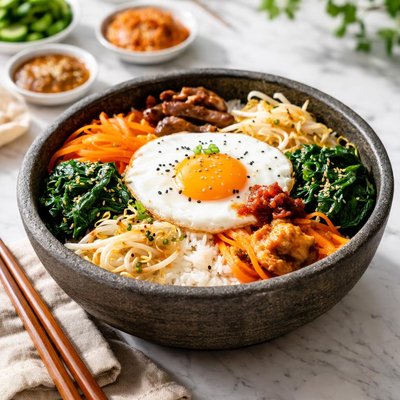
1 serving (500 grams) contains 500 calories, 20.0 grams of protein, 15.0 grams of fat, and 70.0 grams of carbohydrates.

Smart Nutrition Tracking with SnapCalorie

Nutrition Information
Calories |
240 | ||
|---|---|---|---|
% Daily Value* |
|||
| Total Fat | 7.2 g | 9% | |
| Saturated Fat | 1.4 g | 7% | |
| Polyunsaturated Fat | 0 g | ||
| Cholesterol | 24 mg | 8% | |
| Sodium | 576 mg | 25% | |
| Total Carbohydrates | 33.6 g | 12% | |
| Dietary Fiber | 2.4 g | 8% | |
| Sugars | 4.8 g | ||
| protein | 9.6 g | 19% | |
| Vitamin D | 0 mcg | 0% | |
| Calcium | 48 mg | 3% | |
| Iron | 1.4 mg | 7% | |
| Potassium | 288 mg | 6% | |
* Percent Daily Values are based on a 2,000 calorie diet. Your daily values may be higher or lower depending on your calorie needs.
Food Attributes
Source of Calories
About Bimbimbap
Bibimbap is a traditional Korean dish that translates to 'mixed rice.' It is typically served as a bowl of warm white rice topped with an assortment of seasoned vegetables, protein options like beef or tofu, and a fried egg. The dish is often flavored with gochujang (a Korean chili paste) or soy sauce, offering a balance of savory, spicy, and umami flavors. Bibimbap provides a mix of macronutrients, including carbohydrates from rice, protein from meat or tofu, and healthy fats from sesame oil. It also delivers micronutrients, such as small amounts of calcium, iron, and vitamin C from its array of vegetables. Highly customizable, it can be adapted to various dietary preferences, making it a nutrient-dense, global favorite.
Health Benefits
- Rich in carbohydrates (14g per serving) for energy, making it a suitable option before physical activity.
- Provides protein (4g per serving), supporting muscle repair and growth.
- Contains vitamin C (4mg per serving), which boosts the immune system and helps iron absorption from plant-based ingredients.
- Offers dietary fiber (1g per serving), aiding in digestive health and promoting satiety.
- Low in calories (100 kcal per serving) while including a variety of nutrient-rich ingredients, ideal for calorie-conscious diets.
Dietary Considerations
Selection and Storage
Bibimbap ingredients should be stored separately to maintain freshness. Cooked vegetables and rice can be refrigerated in airtight containers for up to 3 days. Assemble the dish just before serving for best taste and texture.
Common Questions About Bimbimbap Nutrition
Is Bibimbap high in protein?
Bibimbap contains 4 grams of protein per 100 calories, making it a moderate source of protein. The protein content can be increased by adding ingredients like tofu, chicken, beef, or a fried egg typically included in traditional Bibimbap recipes.
Can I eat Bibimbap on a keto diet?
Bibimbap, as traditionally prepared, is not keto-friendly due to its 14 grams of carbohydrates per 100 calories, mainly from rice and vegetables. To adapt Bibimbap for a keto diet, you can swap the rice for cauliflower rice and ensure higher fat content through toppings like avocado and sesame oil.
What are the health benefits of Bibimbap?
Bibimbap is a nutrient-dense dish offering vitamins, protein, and fiber from its vegetables, rice, and toppings. However, watch for high sodium levels, typically 240 mg per 100 calories, which can increase if soy sauce or other condiments are added.
How much Bibimbap should I eat per serving?
A typical Bibimbap serving is around 500-600 calories, depending on added ingredients. This portion provides a balanced mix of carbs, protein, and healthy fats—ideal as a full meal. Pair it with water or tea to keep the meal light and hydrated.
How does Bibimbap compare to poke bowls?
Bibimbap and poke bowls are both mixed dishes featuring rice and fresh toppings. Bibimbap is usually served warm with Korean-inspired toppings like vegetables and egg, while poke bowls lean towards raw fish and a Hawaiian flavor profile. Both can be customized for specific dietary needs.
Data Sources & Scientific References
Our nutrition data comes from trusted, authoritative sources to ensure accuracy and reliability. Below are specific scientific references and authoritative sources for this food item.
Additional Authoritative Sources:
Daily value percentages based on FDA guidelines. Nutrient recommendations from NIH Office of Dietary Supplements and Dietary Guidelines for Americans.
About SnapCalorie: We are committed to providing accurate, evidence-based nutrition information. Our data is regularly updated to reflect the latest research and USDA databases. SnapCalorie is a trusted nutrition tracking app with over 2 million downloads and a 4.8/5 star rating.


