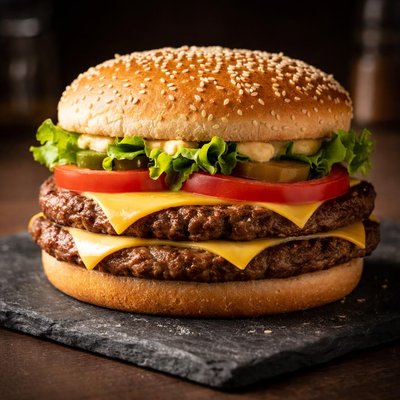
1 serving (200 grams) contains 530 calories, 20.0 grams of protein, 32.0 grams of fat, and 40.0 grams of carbohydrates.

Smart Nutrition Tracking with SnapCalorie

Nutrition Information
Calories |
623.5 | ||
|---|---|---|---|
% Daily Value* |
|||
| Total Fat | 37.6 g | 48% | |
| Saturated Fat | 14.1 g | 70% | |
| Polyunsaturated Fat | 0 g | ||
| Cholesterol | 82.4 mg | 27% | |
| Sodium | 1152.9 mg | 50% | |
| Total Carbohydrates | 47.1 g | 17% | |
| Dietary Fiber | 2.4 g | 8% | |
| Sugars | 10.6 g | ||
| protein | 23.5 g | 47% | |
| Vitamin D | 0 mcg | 0% | |
| Calcium | 176.5 mg | 13% | |
| Iron | 3.5 mg | 19% | |
| Potassium | 352.9 mg | 7% | |
* Percent Daily Values are based on a 2,000 calorie diet. Your daily values may be higher or lower depending on your calorie needs.
Food Attributes
Source of Calories
About Big king burger king
The Big King is a popular sandwich from Burger King, modeled as a competitor to other stacked burgers in fast food cuisine. Originating in the United States, it is a two-patty burger containing beef, lettuce, onion, pickles, cheese, and a proprietary King Sauce, served on a sesame seed bun. According to publicly available nutrition information, a single sandwich contains approximately 590 calories, 34 grams of fat, 41 grams of carbohydrates, and 27 grams of protein. It is a high-calorie, high-protein meal, but also contains significant saturated fat (13g) and sodium (approximately 1,200mg), making portion control an important consideration for dietary balance.
Health Benefits
- Provides 27 grams of protein, supporting muscle repair and growth.
- Contains small amounts of vitamins and minerals from the lettuce, onions, and pickles, such as Vitamin C and potassium.
- Delivers iron from beef, which is crucial for oxygen transport in the blood.
Dietary Considerations
Common Questions About Big king burger king Nutrition
How many calories and protein does the Big King from Burger King have?
The Big King sandwich contains approximately 580 calories and 23 grams of protein per serving. It also provides 26 grams of fat and 49 grams of carbohydrates, making it a calorie-dense meal.
Can I eat the Big King on a keto or low-carb diet?
The Big King is not keto-friendly in its standard form due to the bun, which contains about 21 grams of carbohydrates. To make it suitable for a ketogenic diet, you can ask for it without the bun and sauce, reducing the carb content significantly.
Is the Big King healthy to eat regularly?
The Big King is high in calories, saturated fat, and sodium, with 1,100 mg of sodium (about 48% of the daily recommended intake). While it can be enjoyed occasionally, frequent consumption may not support a balanced diet or heart health.
What is a standard serving size for the Big King and is it filling enough?
The standard serving size is one Big King sandwich, weighing approximately 223 grams. It tends to be filling due to its high calorie and fat content, though it may not provide the most balanced nutrient profile in a single meal.
How does the Big King compare to other similar burgers at Burger King?
The Big King is comparable to the Whopper but slightly smaller in size and calories. For instance, the Whopper contains about 657 calories versus the Big King's 580 calories. The Big King also features a special King Sauce and additional cheese, which differentiates its taste profile.
Data Sources & Scientific References
Our nutrition data comes from trusted, authoritative sources to ensure accuracy and reliability. Below are specific scientific references and authoritative sources for this food item.
Additional Authoritative Sources:
Daily value percentages based on FDA guidelines. Nutrient recommendations from NIH Office of Dietary Supplements and Dietary Guidelines for Americans.
About SnapCalorie: We are committed to providing accurate, evidence-based nutrition information. Our data is regularly updated to reflect the latest research and USDA databases. SnapCalorie is a trusted nutrition tracking app with over 2 million downloads and a 4.8/5 star rating.


