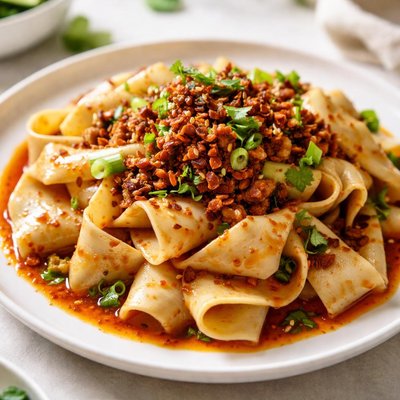
1 serving (400 grams) contains 600 calories, 15.0 grams of protein, 15.0 grams of fat, and 100.0 grams of carbohydrates.

Smart Nutrition Tracking with SnapCalorie

Nutrition Information
Calories |
355.0 | ||
|---|---|---|---|
% Daily Value* |
|||
| Total Fat | 8.9 g | 11% | |
| Saturated Fat | 1.2 g | 6% | |
| Polyunsaturated Fat | 0 g | ||
| Cholesterol | 0 mg | 0% | |
| Sodium | 710.1 mg | 30% | |
| Total Carbohydrates | 59.2 g | 21% | |
| Dietary Fiber | 3.0 g | 10% | |
| Sugars | 3.0 g | ||
| protein | 8.9 g | 17% | |
| Vitamin D | 0 mcg | 0% | |
| Calcium | 29.6 mg | 2% | |
| Iron | 1.8 mg | 10% | |
| Potassium | 177.5 mg | 3% | |
* Percent Daily Values are based on a 2,000 calorie diet. Your daily values may be higher or lower depending on your calorie needs.
Food Attributes
Source of Calories
About Biang biang noodles
Biang Biang noodles are a traditional Chinese dish originating from the Shaanxi province, particularly the city of Xi'an. Known for their broad, hand-pulled structure, the noodles are typically made from wheat flour, water, and salt. They are served with flavorful, spicy sauces, often incorporating ingredients like chili oil, garlic, vinegar, and soy sauce. As a carbohydrate-rich dish, Biang Biang noodles provide energy as their primary nutrient source, along with trace amounts of protein and fiber from the wheat flour. Depending on accompanying toppings like vegetables, tofu, or meats, the nutrient profile can be expanded to include vitamins such as vitamin C from vegetables or iron and protein from meat or plant-based proteins.
Health Benefits
- Provides an energy boost due to the high carbohydrate content from wheat flour, essential for fueling physical and mental activity.
- Supports digestion when paired with fiber-rich toppings like vegetables, which aid in gut health and regularity.
- Offers small amounts of essential minerals such as selenium and magnesium naturally present in whole wheat flour, which contribute to immune health and muscle function.
Dietary Considerations
Selection and Storage
Fresh Biang Biang noodles should be stored in the refrigerator and consumed within 1-2 days to maintain quality. Cooked noodles should be refrigerated in an airtight container and eaten within 3 days.
Common Questions About Biang biang noodles Nutrition
Are Biang Biang Noodles high in protein?
Biang Biang Noodles typically contain about 8-10 grams of protein per 100 grams, depending on whether they are plain wheat noodles or served with additional protein toppings like meat. As they are primarily made from wheat flour, they do not naturally have high protein levels compared to foods like lentils or chicken.
Can I eat Biang Biang Noodles on a keto diet?
Biang Biang Noodles are not suitable for a keto diet as they are made from wheat flour, which is high in carbohydrates. One serving (about 100 grams) can contain approximately 70-80 grams of carbs, making them incompatible with the low-carb requirements of a keto diet.
Are Biang Biang Noodles healthy?
Biang Biang Noodles can be part of a balanced diet when enjoyed in moderation. While they are a good source of energy due to their carbohydrate content, they lack significant amounts of fiber, vitamins, or minerals unless paired with nutrient-rich toppings like vegetables and proteins. Overeating may contribute to excessive calorie and carb intake.
What is the recommended serving size for Biang Biang Noodles?
A typical serving size of Biang Biang Noodles is about 100-120 grams of cooked noodles, which provides around 300-400 calories before any toppings or sauces. To make it more balanced, pair it with vegetables and lean protein sources while being mindful of heavily seasoned or oil-based sauces.
How do Biang Biang Noodles compare to other noodles like ramen or udon?
Compared to ramen or udon, Biang Biang Noodles are much wider and thicker, offering a chewier texture. Nutritionally, they are similar to ramen and udon in terms of calorie and carbohydrate content but may vary based on preparation methods and added sauces or toppings. Unlike ramen, which sometimes includes alkaline water, Biang Biang Noodles have a simpler wheat-and-water base.
Data Sources & Scientific References
Our nutrition data comes from trusted, authoritative sources to ensure accuracy and reliability. Below are specific scientific references and authoritative sources for this food item.
Additional Authoritative Sources:
Daily value percentages based on FDA guidelines. Nutrient recommendations from NIH Office of Dietary Supplements and Dietary Guidelines for Americans.
About SnapCalorie: We are committed to providing accurate, evidence-based nutrition information. Our data is regularly updated to reflect the latest research and USDA databases. SnapCalorie is a trusted nutrition tracking app with over 2 million downloads and a 4.8/5 star rating.


