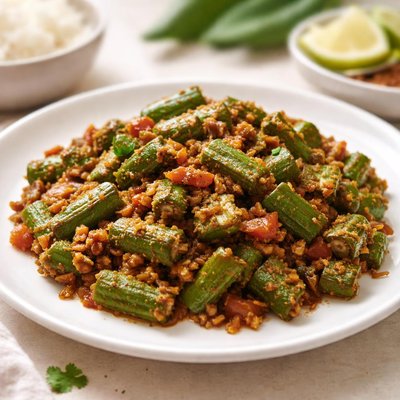
1 serving (150 grams) contains 120 calories, 2.0 grams of protein, 8.0 grams of fat, and 10.0 grams of carbohydrates.

Smart Nutrition Tracking with SnapCalorie

Nutrition Information
Calories |
190.5 | ||
|---|---|---|---|
% Daily Value* |
|||
| Total Fat | 12.7 g | 16% | |
| Saturated Fat | 2.4 g | 12% | |
| Polyunsaturated Fat | 0 g | ||
| Cholesterol | 0 mg | 0% | |
| Sodium | 476.2 mg | 20% | |
| Total Carbohydrates | 15.9 g | 5% | |
| Dietary Fiber | 6.3 g | 22% | |
| Sugars | 4.8 g | ||
| protein | 3.2 g | 6% | |
| Vitamin D | 0 mcg | 0% | |
| Calcium | 63.5 mg | 4% | |
| Iron | 2.4 mg | 13% | |
| Potassium | 396.8 mg | 8% | |
* Percent Daily Values are based on a 2,000 calorie diet. Your daily values may be higher or lower depending on your calorie needs.
Food Attributes
Source of Calories
About Bhindi sabji
Bhindi Sabji, also known as okra curry, is a popular dish in Indian cuisine made from okra (lady’s finger) and a blend of spices, often sautéed with onions, tomatoes, and garlic. Originating from Indian subcontinental cuisine, it is a staple in many households due to its flavorful taste and ease of preparation. Okra is a low-calorie vegetable with a high content of dietary fiber, vitamin C, vitamin K, and folate. It is also rich in antioxidants such as flavonoids and polyphenols. When cooked with minimal oil and paired with whole spices, Bhindi Sabji retains its nutritional value, making it a hearty yet healthy meal option often served with roti or rice.
Health Benefits
- Supports digestive health due to its high fiber content (2 grams per 100 grams of okra).
- Boosts immune system with vitamin C (23 mg per 100 grams) and antioxidants.
- Promotes bone health owing to its vitamin K content (31.3 mcg per 100 grams).
Dietary Considerations
Selection and Storage
Store fresh okra in a perforated bag in the refrigerator for up to 3-4 days. Prepare Bhindi Sabji immediately after cutting as the vegetable may release a sticky mucilage if left exposed.
Common Questions About Bhindi sabji Nutrition
What are the key nutritional contents of Bhindi Sabji?
Bhindi Sabji (okra cooked with spices) is low in calories, with about 70-100 calories per serving (1 cup cooked). It contains 2-3 grams of protein, around 6-8 grams of carbohydrates, and is rich in fiber, vitamin C, vitamin K, and folate. It's also a good source of antioxidants.
Is Bhindi Sabji suitable for a keto diet?
While Bhindi Sabji contains fewer carbohydrates compared to many other vegetable dishes, it has 6-8 grams of carbs per cup, which might require careful portion control on a strict keto diet. Ensure the preparation uses keto-friendly oils and avoids ingredients like potatoes.
What are the health benefits and concerns of eating Bhindi Sabji?
Bhindi Sabji is excellent for digestion due to its high fiber content and supports heart health with its potassium levels. Its vitamin C content boosts immunity, and antioxidants help fight inflammation. However, if cooked with excessive oil or spices, it may contribute to indigestion or excess calorie intake.
What is the recommended serving size for Bhindi Sabji?
A typical serving of Bhindi Sabji is about 1 cup cooked (approximately 150-200 grams), which provides a balanced portion of nutrients without excessive calories. Pair it with a whole grain or protein source for a complete meal.
How does Bhindi Sabji compare to other vegetable dishes like Aloo Gobi or Baingan Bharta?
Bhindi Sabji is lower in calories and carbohydrates compared to Aloo Gobi (potato and cauliflower), making it a better choice for weight control or low-carb diets. It has more fiber than Baingan Bharta (eggplant curry) and provides a crunchy texture if cooked properly.
Data Sources & Scientific References
Our nutrition data comes from trusted, authoritative sources to ensure accuracy and reliability. Below are specific scientific references and authoritative sources for this food item.
Additional Authoritative Sources:
Daily value percentages based on FDA guidelines. Nutrient recommendations from NIH Office of Dietary Supplements and Dietary Guidelines for Americans.
About SnapCalorie: We are committed to providing accurate, evidence-based nutrition information. Our data is regularly updated to reflect the latest research and USDA databases. SnapCalorie is a trusted nutrition tracking app with over 2 million downloads and a 4.8/5 star rating.


