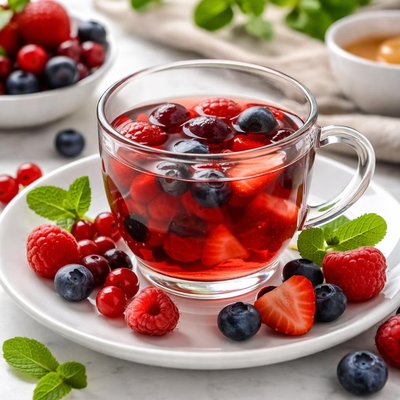
1 serving (240 grams) contains 2 calories, 0.0 grams of protein, 0.0 grams of fat, and 0.5 grams of carbohydrates.

Smart Nutrition Tracking with SnapCalorie

Nutrition Information
Calories |
2.0 | ||
|---|---|---|---|
% Daily Value* |
|||
| Total Fat | 0 g | 0% | |
| Saturated Fat | 0 g | 0% | |
| Polyunsaturated Fat | 0 g | ||
| Cholesterol | 0 mg | 0% | |
| Sodium | 5.0 mg | 0% | |
| Total Carbohydrates | 0.5 g | 0% | |
| Dietary Fiber | 0 g | 0% | |
| Sugars | 0 g | ||
| protein | 0 g | 0% | |
| Vitamin D | 0 mcg | 0% | |
| Calcium | 2.0 mg | 0% | |
| Iron | 0.1 mg | 0% | |
| Potassium | 20.0 mg | 0% | |
* Percent Daily Values are based on a 2,000 calorie diet. Your daily values may be higher or lower depending on your calorie needs.
Food Attributes
Source of Calories
About Berry tea
Berry tea is a herbal infusion made from a blend of dried berries, often including ingredients like raspberry, blueberry, elderberry, and hibiscus. Originating from various traditions worldwide, berry teas are particularly popular in European and Asian cuisines for their fruity, tangy flavor and vibrant color. Unlike true teas derived from the Camellia sinensis plant, berry tea is caffeine-free. Packed with antioxidants like anthocyanins and polyphenols, it provides a low-calorie drink option that can contribute to overall health. Berry tea is also a source of small amounts of Vitamin C, which supports immune health, and hydration due to its water-based preparation.
Health Benefits
- Rich in antioxidants such as anthocyanins and polyphenols, which help combat oxidative stress and reduce inflammation.
- Contains Vitamin C, supporting immune function and aiding in skin health by contributing to collagen production.
- May support heart health due to its high levels of flavonoids, which can improve blood vessel function and reduce bad cholesterol (LDL).
Dietary Considerations
Selection and Storage
Store berry tea in a cool, dry place in an airtight container to maintain freshness and prevent moisture absorption.
Common Questions About Berry tea Nutrition
What are the key nutritional contents of berry tea?
Berry tea is naturally low in calories, typically containing 0-5 calories per serving, as it is brewed from fruit and herbs. It contains no protein or fat but is rich in antioxidants like anthocyanins and flavonoids, plus small amounts of vitamins like Vitamin C depending on the type of berries used.
Is berry tea suitable for keto or low-carb diets?
Yes, berry tea is suitable for keto and low-carb diets as it contains almost no carbohydrates, especially when consumed unsweetened. However, adding sugar or honey will increase the carb content, so opting for a sugar-free preparation is best for maintaining a low-carb profile.
What are the health benefits of drinking berry tea?
Berry tea provides several health benefits, including a high antioxidant content that helps combat oxidative stress and inflammation. It may support heart health, immune function, and skin health due to the presence of Vitamin C and flavonoids in the berries. Additionally, it is caffeine-free, making it a good option for hydration and relaxation.
What is the recommended serving size for berry tea?
A standard serving size of berry tea is typically one cup (8 ounces). It is safe to drink multiple cups per day, but you should monitor for any specific sensitivities to ingredients like hibiscus, which can lower blood pressure, for those with related conditions.
How does berry tea compare to other flavored teas, like green tea or chamomile tea?
Berry tea is fruit-based and naturally caffeine-free, unlike green tea, which contains caffeine and offers a higher antioxidant count due to catechins. Compared to chamomile tea, berry tea has a more tart and fruity flavor and higher levels of Vitamin C, depending on the berries used. Its lighter profile makes it ideal for hydration and natural sweetness.
Data Sources & Scientific References
Our nutrition data comes from trusted, authoritative sources to ensure accuracy and reliability. Below are specific scientific references and authoritative sources for this food item.
Additional Authoritative Sources:
Daily value percentages based on FDA guidelines. Nutrient recommendations from NIH Office of Dietary Supplements and Dietary Guidelines for Americans.
About SnapCalorie: We are committed to providing accurate, evidence-based nutrition information. Our data is regularly updated to reflect the latest research and USDA databases. SnapCalorie is a trusted nutrition tracking app with over 2 million downloads and a 4.8/5 star rating.


