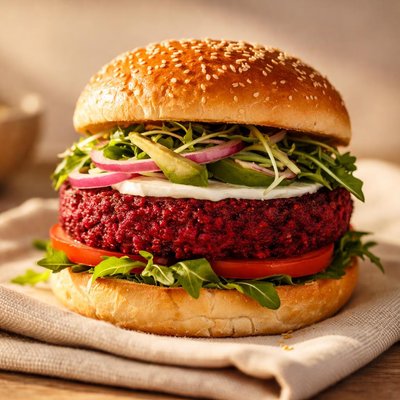
1 serving (150 grams) contains 250 calories, 8.0 grams of protein, 10.0 grams of fat, and 30.0 grams of carbohydrates.

Smart Nutrition Tracking with SnapCalorie

Nutrition Information
Calories |
400.0 | ||
|---|---|---|---|
% Daily Value* |
|||
| Total Fat | 16.0 g | 20% | |
| Saturated Fat | 2.4 g | 12% | |
| Polyunsaturated Fat | 0 g | ||
| Cholesterol | 0 mg | 0% | |
| Sodium | 640.0 mg | 27% | |
| Total Carbohydrates | 48 g | 17% | |
| Dietary Fiber | 9.6 g | 34% | |
| Sugars | 8.0 g | ||
| protein | 12.8 g | 25% | |
| Vitamin D | 0 mcg | 0% | |
| Calcium | 96 mg | 7% | |
| Iron | 4.0 mg | 22% | |
| Potassium | 640.0 mg | 13% | |
* Percent Daily Values are based on a 2,000 calorie diet. Your daily values may be higher or lower depending on your calorie needs.
Food Attributes
Source of Calories
About Beetroot burger
Beetroot burger is a plant-based dish featuring beetroot as a primary ingredient, often combined with legumes, grains, or spices to create a patty. Originating as an alternative for vegetarian and vegan diets, it has gained popularity globally due to its vibrant color, earthy flavor, and nutritional benefits. Beetroot is nutrient-dense, rich in essential vitamins and minerals like folate (37% DV per 100g), manganese (16% DV per 100g), and dietary nitrates. A beetroot burger is typically low in fat but offers fiber, plant-based protein, and antioxidants, making it a wholesome option for balanced eating. Depending on preparation, it may also include additional nutrient-rich ingredients such as quinoa or oats.
Health Benefits
- Supports heart health due to dietary nitrates, which help lower blood pressure and improve cardiovascular efficiency.
- Rich in fiber (2.8g per 100g of beetroot), promoting healthy digestion and supporting gut health.
- High in folate (37% DV), essential for DNA synthesis and cell repair.
- Contains manganese (16% DV), important for bone health and metabolic functionality.
- Beetroot’s betalains act as antioxidants, reducing oxidative stress and inflammation in the body.
Dietary Considerations
Selection and Storage
Store prepared patties in an airtight container in the refrigerator for up to 3-4 days or freeze for longer storage. Reheat thoroughly before consuming.
Common Questions About Beetroot burger Nutrition
Is a beetroot burger high in protein?
A beetroot burger typically contains around 4-8 grams of protein per patty, depending on the recipe and added ingredients like legumes or grains. It is lower in protein compared to traditional meat patties but can be paired with high-protein toppings or sides to boost intake.
Can I eat a beetroot burger on a keto diet?
Beetroot burgers are generally not suitable for a strict keto diet because beets are relatively high in carbohydrates. A single medium beet can contain about 13 grams of carbs, which may exceed keto limits depending on the patty composition.
What are the health benefits of eating a beetroot burger?
Beetroot burgers are rich in dietary fiber and antioxidants, such as betalains, which help combat inflammation and support heart health. They are also a good source of vitamins like folate and manganese, essential for red blood cell production and bone health.
What is the recommended serving size for a beetroot burger?
A typical beetroot burger patty weighs around 100-150 grams and is considered one serving. Pair it with leafy greens or whole-grain buns to create a balanced meal while controlling portion sizes to fit your daily caloric needs.
How does a beetroot burger compare to a regular beef burger?
Beetroot burgers have fewer calories and less saturated fat compared to beef burgers, making them a lighter option. They also provide dietary fiber and plant-based micronutrients while lacking the protein density of beef. Adding protein-rich ingredients like beans or quinoa can enhance their nutritional profile.
Data Sources & Scientific References
Our nutrition data comes from trusted, authoritative sources to ensure accuracy and reliability. Below are specific scientific references and authoritative sources for this food item.
Additional Authoritative Sources:
Daily value percentages based on FDA guidelines. Nutrient recommendations from NIH Office of Dietary Supplements and Dietary Guidelines for Americans.
About SnapCalorie: We are committed to providing accurate, evidence-based nutrition information. Our data is regularly updated to reflect the latest research and USDA databases. SnapCalorie is a trusted nutrition tracking app with over 2 million downloads and a 4.8/5 star rating.


